Parks and Palaces of Pushkin
Parks and Palaces of Pushkin
Located 25 km south of Saint Petersburg, the former Tsarskoye Selo brings together the Catherine and Alexander Palaces, their imperial parks and five historic museums.
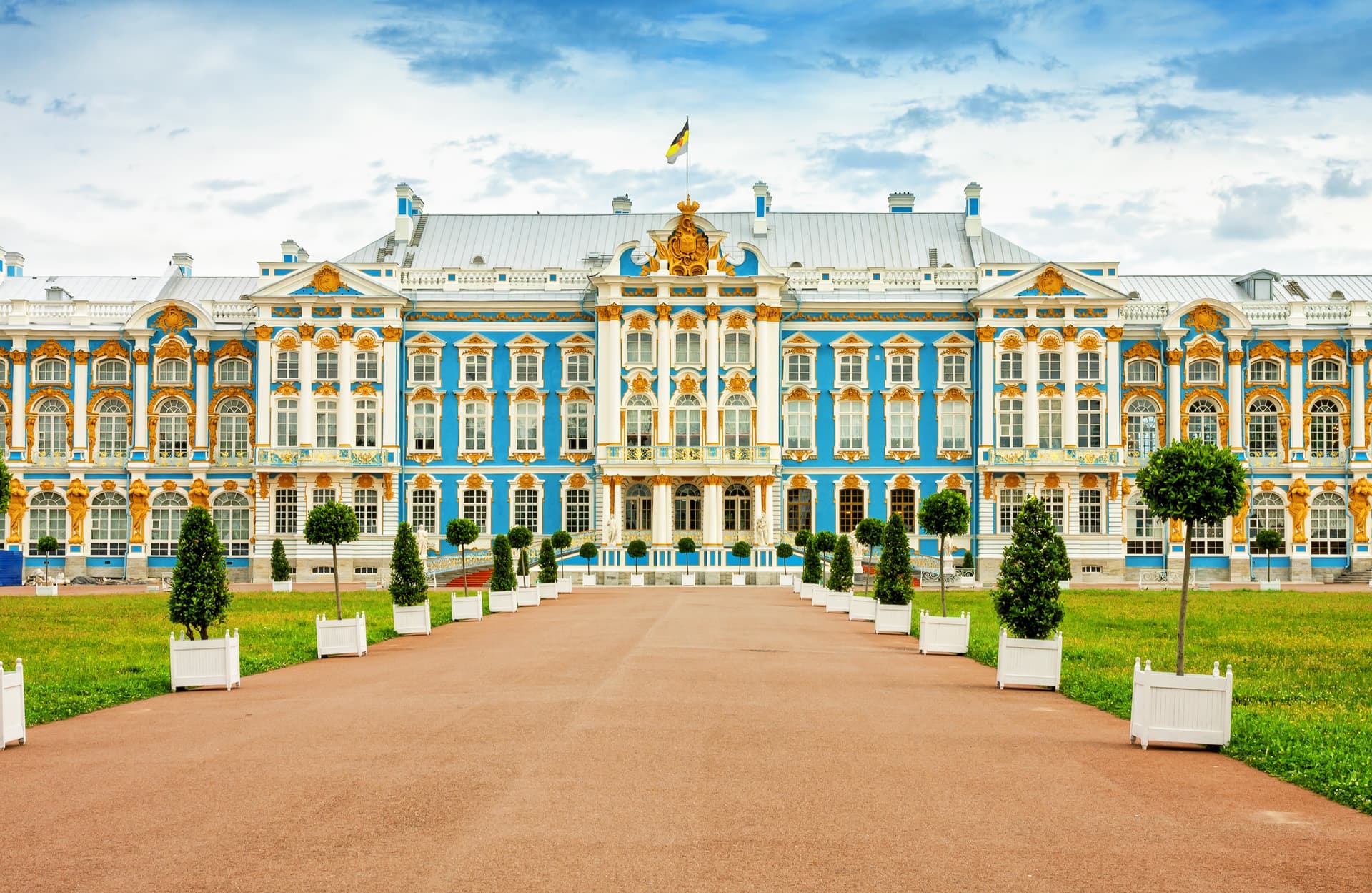
Twenty-five kilometers south of Saint Petersburg, the town of Pushkin preserves the ensemble of palaces, parks and pavilions built under the name of Tsarskoye Selo, the "village of the Tsars." Summer residence of the Russian imperial court for two centuries, the site today brings together Catherine Palace, Alexander Palace, several museums and vast landscaped gardens.
Why visit Pushkin?
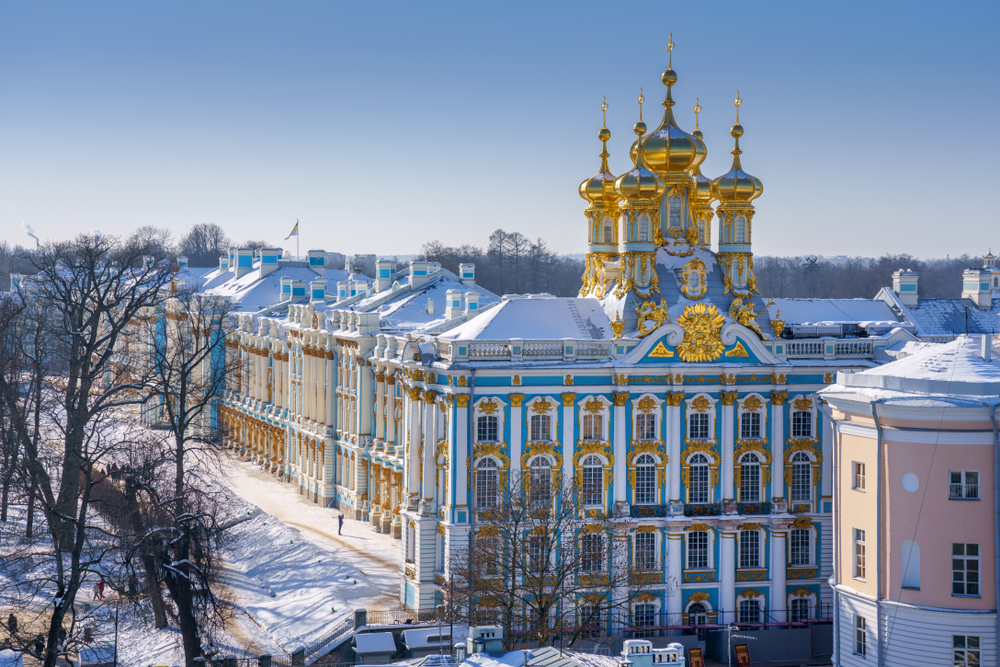
Pushkin concentrates, within a restricted perimeter, two major imperial palaces and their historic parks. The Catherine Palace, a baroque masterpiece by Bartolomeo Francesco Rastrelli, is renowned for its blue and gold façade and interiors reconstructed after the devastation of World War II. The Alexander Palace, more austere in style, was the last residence of Nicholas II and his family before their exile.
Beyond the palaces, the site lends itself to leisurely walks: tree-lined avenues bordered by basins, ornamental bridges, Chinese pavilions and religious buildings punctuate the gardens. It is the most visited day excursion from Saint Petersburg.
History of Tsarskoye Selo
The estate was founded in the early eighteenth century as a gift from Peter the Great to his second wife, the future empress Catherine I. In 1711, a small first palace was built there. Upon Catherine I's death, the estate passed to her daughter Elizabeth Petrovna, who became empress in 1744 and commissioned the transformation and expansion of the complex. Entrusted to Rastrelli, the new baroque residence became known as the Catherine Palace.
During the nineteenth century, the complex was enriched with pavilions, English-style landscaped gardens and a second residence, the Alexander Palace. The town was renamed Detskoye Selo ("village of children") in 1918, then Pushkin in 1937, on the occasion of the centennial of the death of poet Alexander Pushkin.
During the Siege of Leningrad, the town lay at the heart of the fighting, particularly in September 1941 and January 1944. The Catherine Palace suffered heavy destruction from German troops during their retreat. The restoration of the interiors, begun after the war, continues to this day for certain rooms.
What to see
The Catherine Palace
The succession of grand reception halls constitutes the highlight of the visit. The Great Hall, or ballroom, designed by Rastrelli, spans approximately 840 square meters beneath a painted ceiling and gilded mirrors. The White Dining Room features a table arranged in the shape of an "E," the monogram of Elizabeth Petrovna. The Gallery of the Romanovs preserves several pieces of historical dress, including the ceremonial gown of the empress. The private apartments of Paul I, son of Catherine II, illustrate a more restrained neoclassical style than the baroque halls.
The famous Amber Room, lost during the war, has been faithfully reconstructed and ranks among the most visited chambers in the palace.
The Alexander Palace
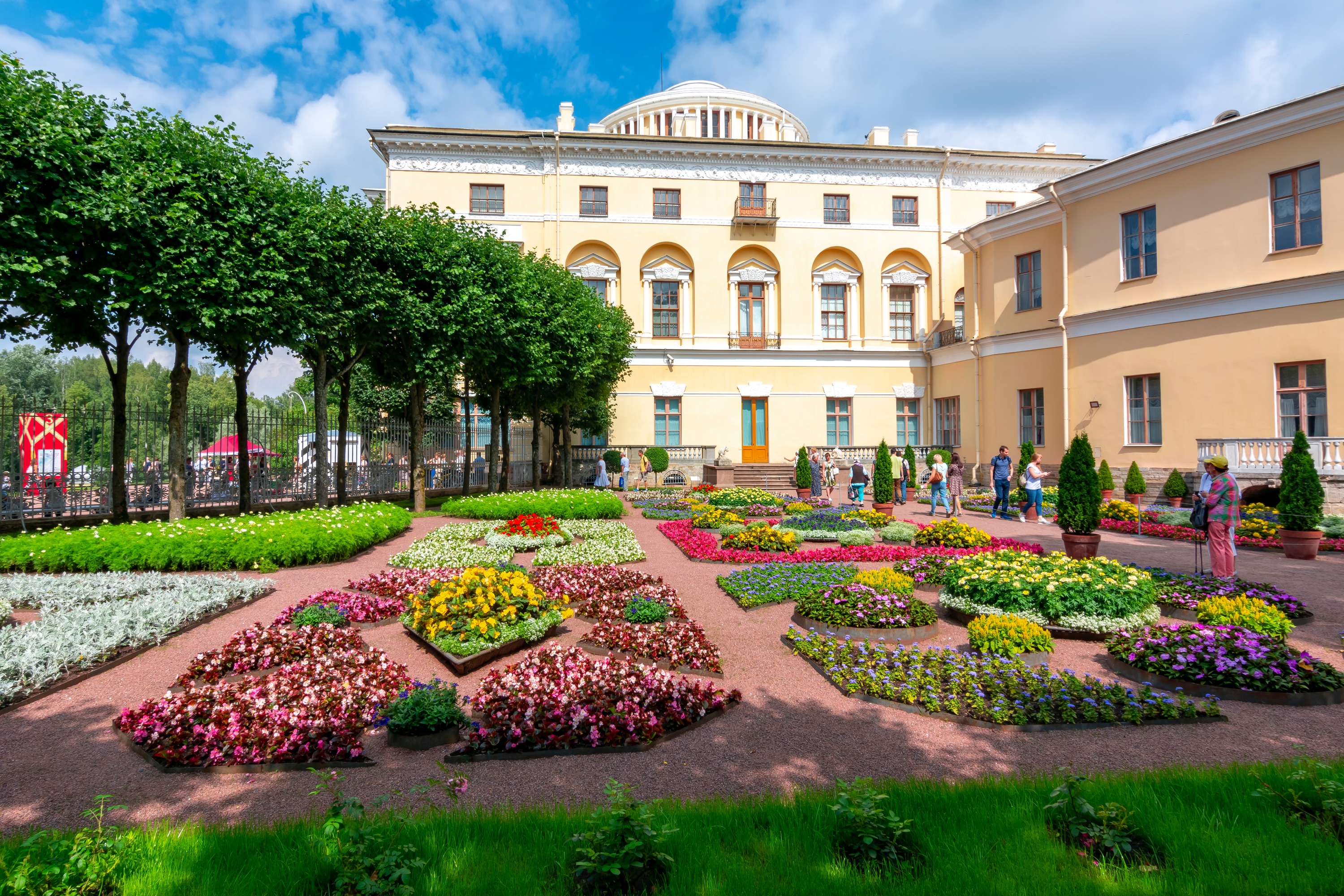
Built at the close of the eighteenth century in neoclassical spirit, the Alexander Palace was occupied by Nicholas II and his family until their arrest in 1917. The imperial apartments, now restored, display original furnishings and bear witness to the daily life of the last Romanovs. The landscaped park surrounding it is punctuated by pavilions and the Great Chinese Bridge, one of the site's most photographed features.
Other buildings and museums
- The Palace of Princess Paley, built by Karl Schmidt between 1911 and 1912, today houses a faculty of the Military Engineering University (exterior viewing only).
- Religious buildings: Cathedral of Sophia, Cathedral of Feodorovsky, Church of Our Lady of the Sign.
- Five thematic museums: Pushkin Museum, Historical-Literary Museum, Tchistiakov Museum, Collection Museum of Tsarskoye Selo and Akhmatova Museum (S.D. Oumnikov Collection).
- A chapel near the Alexander Palace is associated with the brief burial of Grigori Rasputin, whose body was exhumed and burned in March 1917 by order of the revolutionary government.
The parks
The Catherine Park, structured around the Grand Pond, combines a formal French-style garden with an English-style landscape garden. The Alexander Park, more expansive and heavily wooded, harbors bridges, pavilions and structures of Chinese inspiration. The gardens of Babolovo, the Farm and Bufernyi, less frequented, are suited to quiet strolls.
Practical information
- Duration of visit: allow half a day for the Catherine Palace and its park alone, a full day if you add the Alexander Palace.
- Ticketing: separate entrance fees for each palace and for the parks. Online tickets are recommended during peak season, as crowds can be substantial.
- Hours: vary by season, with a weekly closure day for the Catherine Palace. Check before you go.
- Photography permitted in most rooms, without flash.
When to visit
The parks are accessible year-round. Late spring (May-June) and early autumn (September) offer the best conditions for strolling, with favorable light for gardens and façades. Summer remains peak tourist season: expect queues. Winter transforms the parks into snow-covered landscapes, but some pavilions and fountains are closed.
How to get there
Pushkin is located 25 km south of Saint Petersburg. Several options from the city center:
- Suburban train from Vitebsky Station to the Tsarskoye Selo station (approximately 30 minutes), then bus or minibus to the Catherine Palace.
- Metro to Moskovskaya or Kupchino stations, then direct bus or minibus to Pushkin.
- Taxi or car: journey of approximately 40 minutes depending on traffic.
In the vicinity
Pushkin is part of the crown of imperial residences south of Saint Petersburg, to be combined with a visit to the historic center. From Vitebsky Station, you can quickly return to the major sites of Russia's Northern capital:
- The Admiralty of Saint Petersburg, the former imperial shipyard.
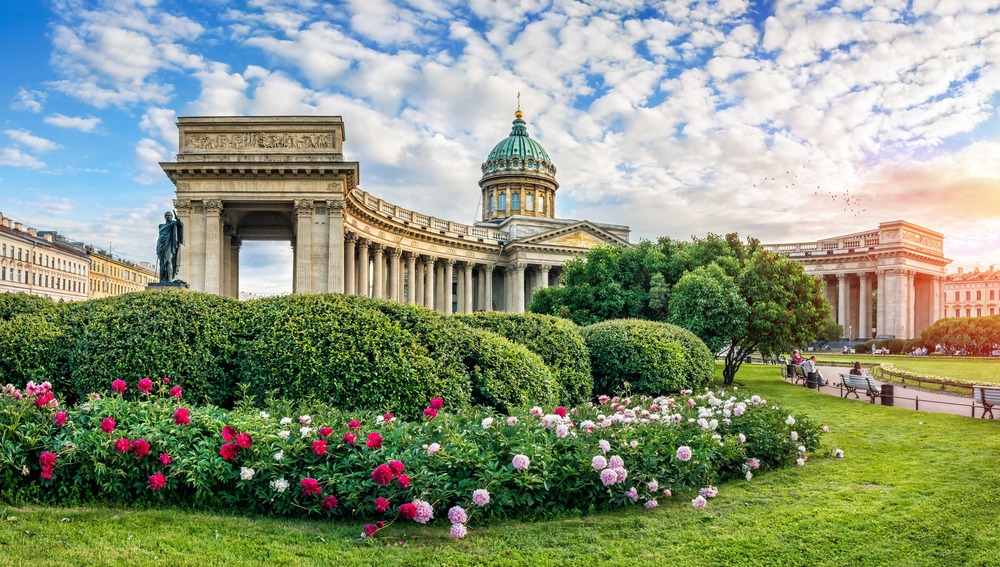
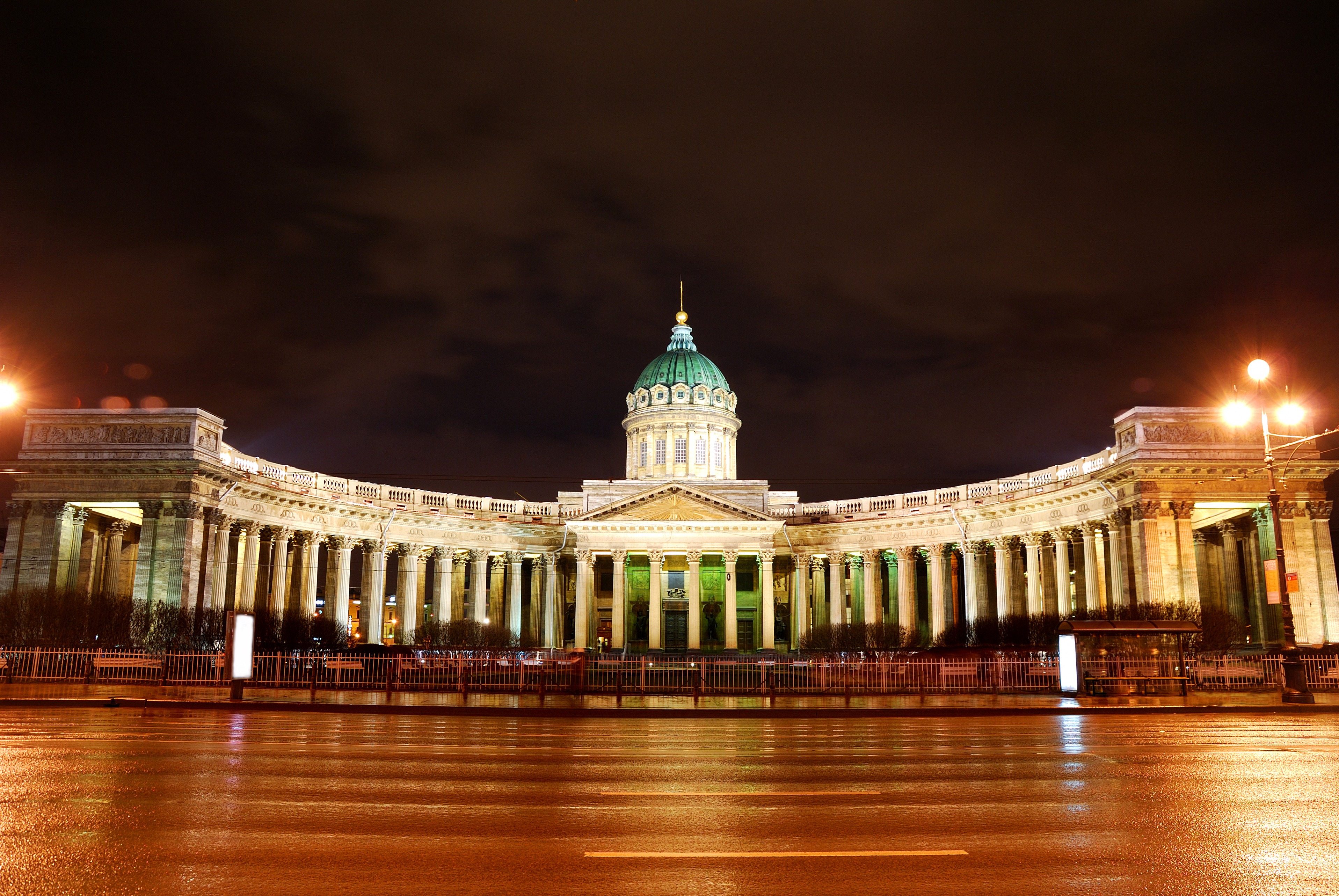
- The Cathedral of Our Lady of Kazan, on Nevsky Prospect.
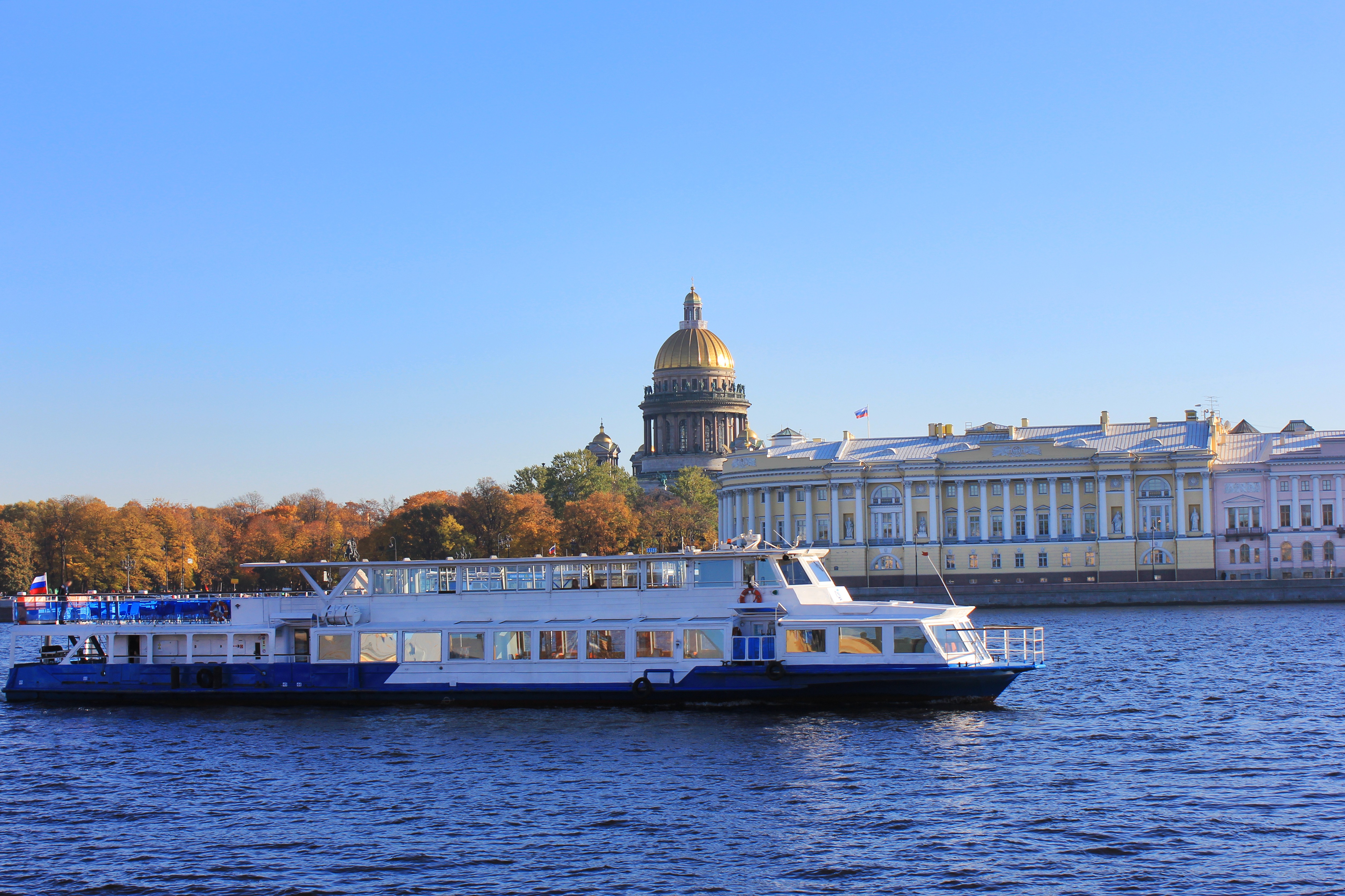
- For a river excursion, see also the Radisson Cruise on the Neva.
Frequently asked questions
Frequently asked questions
Allow at least half a day for the Catherine Palace and its park. To add the Alexander Palace and landscaped gardens, plan for a full day of travel from Saint Petersburg.
Yes, but with a weekly closure day and hours varying by season. Certain rooms may be closed for restoration. Check the access conditions before your visit.
The town was renamed in 1937 for the centennial of the death of poet Alexander Pushkin, who studied at the imperial lyceum of Tsarskoye Selo. It had previously been called Tsarskoye Selo, then Detskoye Selo from 1918 onward.
Yes, both imperial residences are served by the same train line from Vitebsky Station and lie a few kilometers apart. The combination remains ambitious: you must be prepared to shorten each visit.
No. The original Amber Room disappeared during World War II. The chamber visible today is a reconstruction completed in 2003, created after archival photographs and original techniques.
Plan your trip
Pushkin integrates naturally into a stay in Saint Petersburg. To build an itinerary combining imperial residences, the historic center and other Russian destinations, consult our travels in Russia.
Nearby
Interested in this visit?
We can include it in your personalised itinerary.