The Admiralty of Saint Petersburg
The Admiralty of Saint Petersburg
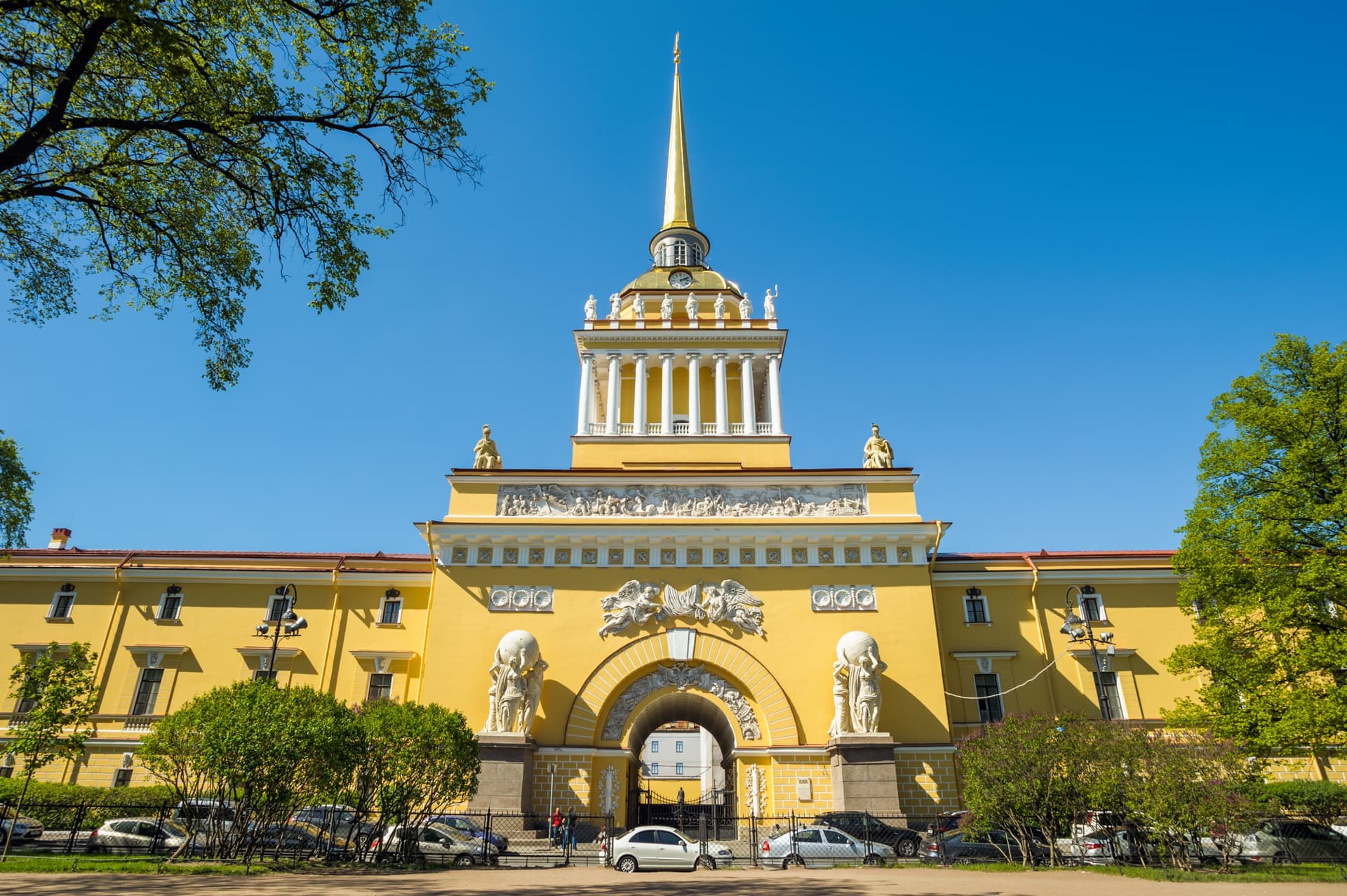
A former shipyard commissioned by Peter the Great, the Admiralty of Saint Petersburg rises with its golden spire 72 meters above the historic center, facing the Winter Palace on the banks of the Neva.
The Admiralty of Saint Petersburg rises with its golden spire 72 meters above the historic center, facing the Winter Palace on the banks of the Neva. A former shipyard commissioned by Peter the Great, the building marks the convergence point of three major city axes: Nevsky Prospect, Gorokhovaya Ulitsa, and Voznesenski Prospekt.
Why visit the Admiralty
The site condenses three centuries of Russian naval history into a single building. Its 400-meter-long façade, sculptural décor, and spire topped with a boat-shaped weather vane make it one of Saint Petersburg's most recognizable visual landmarks. The interior is not open to visitors, but the exterior can be freely admired from the Admiralty Quay or the adjacent Aleksandrovski Garden.
- Major architectural landmark of the center, visible from afar thanks to the golden spire.
- Rich sculptural ensemble: 28 statues beneath the spire, friezes and high reliefs dedicated to the navy.
- Free visit (exterior only), no ticket or queue required.
- Central location, just steps from the Winter Palace and the Neva.
History of the Admiralty
The original shipyard was built in 1706 according to Peter the Great's plans. It was a U-shaped earthen structure pierced by an internal canal serving as a shipyard for the young Russian navy. In 1719, the entire structure was rebuilt in stone. This marked the first stage of a long transformation of the building.
In the early 19th century, architect Adrian Zakharov led the major neoclassical reconstruction (1806-1823) that gave the Admiralty its current appearance, in the lofty classical style of the Russian Empire. Its spire tower crowned with a boat-shaped weather vane became one of Saint Petersburg's symbols.
Nearly 262 warships left the shipyard before its closure in 1844. The building subsequently housed the Ministry of the Navy, naval headquarters, the naval museum, and the revolutionary naval committee. Since 1925, it has been home to the Dzerzhinski Higher Naval College.
What to see on site
The tower and spire
The central tower and its golden spire constitute the most photographed element. At the summit, the boat-shaped weather vane (the "korablik") has become a city emblem as iconic as the spire of the Peter and Paul Cathedral.
The sculptural décor
The sculptural ensemble is among the city's richest:
- 28 statues still visible beneath the golden spire.
- The goddess Isis, protector of ships, and Urania, muse of astronomy.
- At the corners of the tower's attic, statues of Peter the Great, Pyrrhus, Ajax, and Achilles.
- A 22-meter sculpture representing Neptune handing his trident to Peter the Great, an allegory of the founding of the Russian fleet.
The façade
It extends for 400 meters and unfolds in three blocks along the Admiralty Quay. The classical rhythm of columns, arches, and pavilions merits taking the time to walk the entire length.
Practical information
- Visit: exterior only. The Admiralty is an active military establishment and is not open to the public.
- Fee: free (admiration from public space).
- Recommended duration: 30 minutes to 1 hour to tour the façade and observe the sculptural décor.
- Best time: late afternoon for light on the golden spire, or in the evening during summer's white nights when the building is highlighted by lighting.
- Accessibility: level access, wide sidewalks around the building.
Nearby
The Admiralty sits at the heart of the historic center, making it easy to visit several major sites in succession:
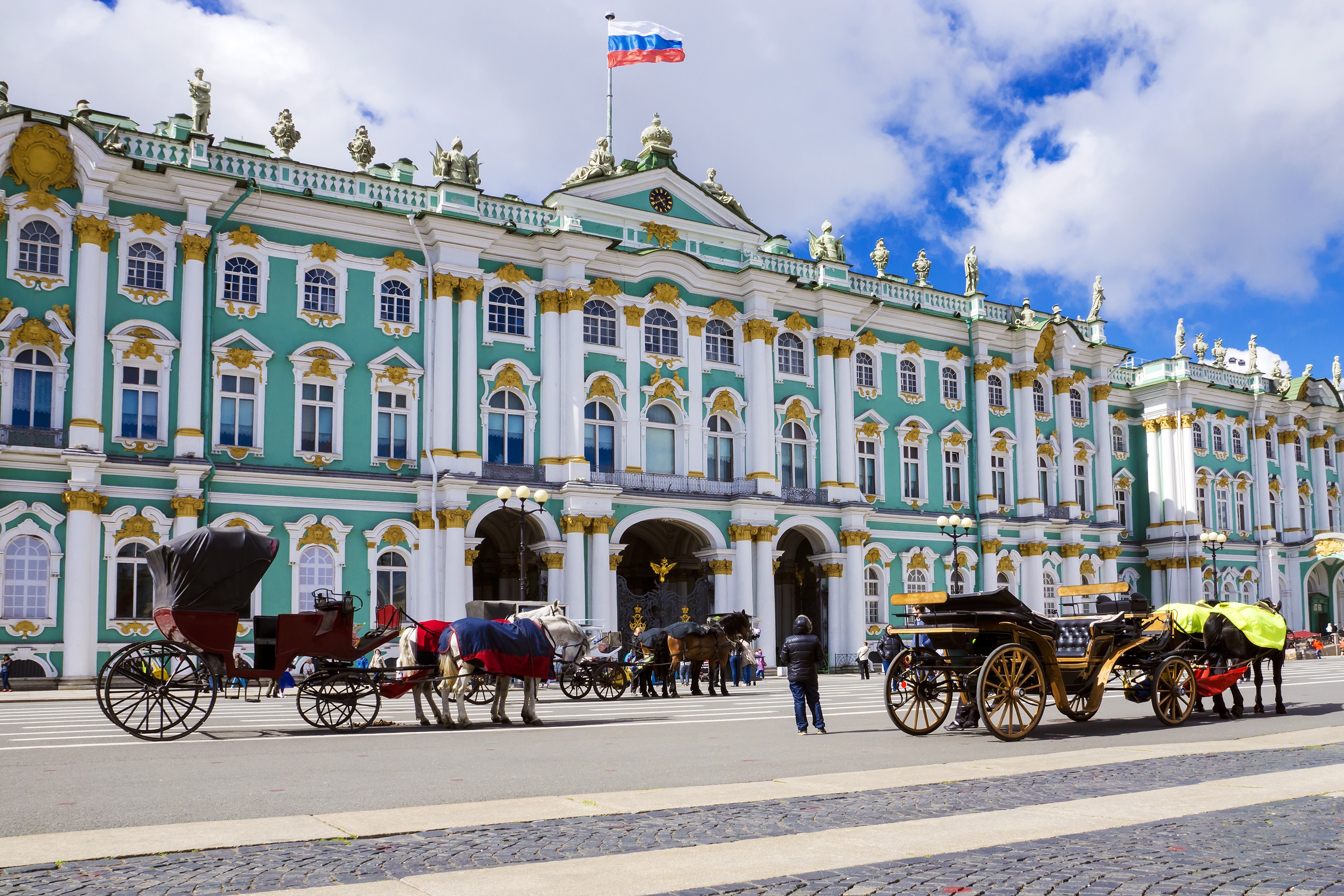
- The Winter Palace and the Hermitage Museum, directly opposite across Palace Square.
- The Aleksandrovski Garden, which borders the south façade and offers the best vantage point to photograph the entire ensemble.
- The Bronze Horseman (equestrian statue of Peter the Great) on Decembrists' Square, a few minutes' walk away.
- Nevsky Prospect, which starts at the foot of the Admiralty and forms the main commercial and cultural axis.
- The Neva embankments, ideal for a stroll to Saint Isaac's Cathedral.
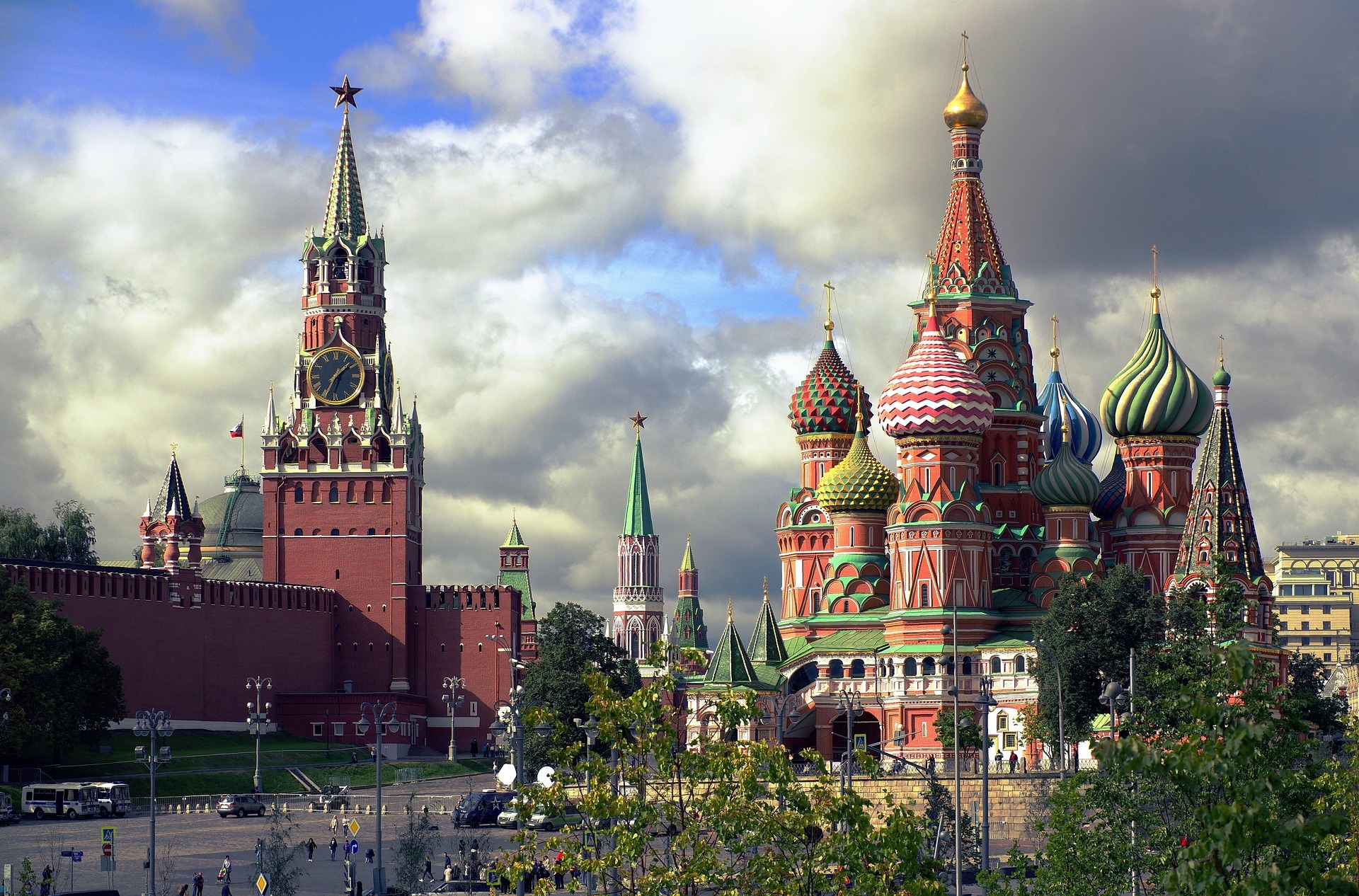
For a broader view of Russian highlights, you can extend your visit with Red Square and the Cathedral of Christ the Savior in Moscow, or remain in Saint Petersburg by visiting Kuznechny Market.
How to get there
- On foot: from Nevsky Prospect, follow the avenue to its western end; the Admiralty marks the terminus.
- By metro: Admiralteyskaya station (line 5, purple), 5 minutes' walk away. Nevski Prospekt and Gostiny Dvor stations are also accessible.
- By bus / trolleybus: several lines serve Nevsky Prospect and the Admiralty Quay.
- Via the Neva: river cruises and water buses pass the façade facing the river, offering a privileged view of the entire ensemble. See for example Radisson Cruise.
Frequently asked questions
Frequently asked questions
No. The building has housed the Dzerzhinski Higher Naval College since 1925 and remains closed to the public. Only the exterior, façade, and sculptural décor can be freely discovered.
Allow 30 minutes to 1 hour to tour the 400-meter-long façade and observe the statues, including the 28 figures beneath the golden spire.
On the banks of the Neva, facing the Winter Palace, at the convergence point of three major axes: Nevsky Prospect, Gorokhovaya Ulitsa, and Voznesenski Prospekt.
The Aleksandrovski Garden, located against the south façade, offers the best vantage point to photograph the entire building and spire. A boat ride on the Neva provides another angle from the river side.
Yes, the spire and façade are lit at night. In summer, during the white nights, the effect is particularly striking.
Prepare your trip
The Admiralty naturally integrates into a Saint Petersburg stay centered on the Winter Palace, the Neva, and Nevsky Prospect. To build a comprehensive itinerary across Russie, consult our voyages en Russie.
Nearby
Interested in this visit?
We can include it in your personalised itinerary.