Peter and Paul Cathedral
Peter and Paul Cathedral
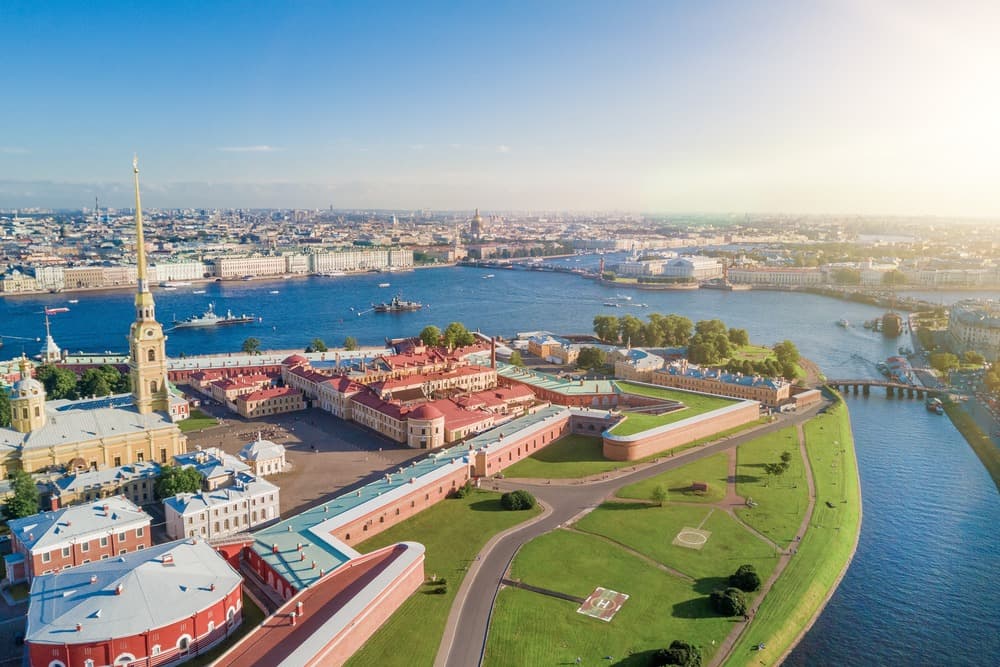
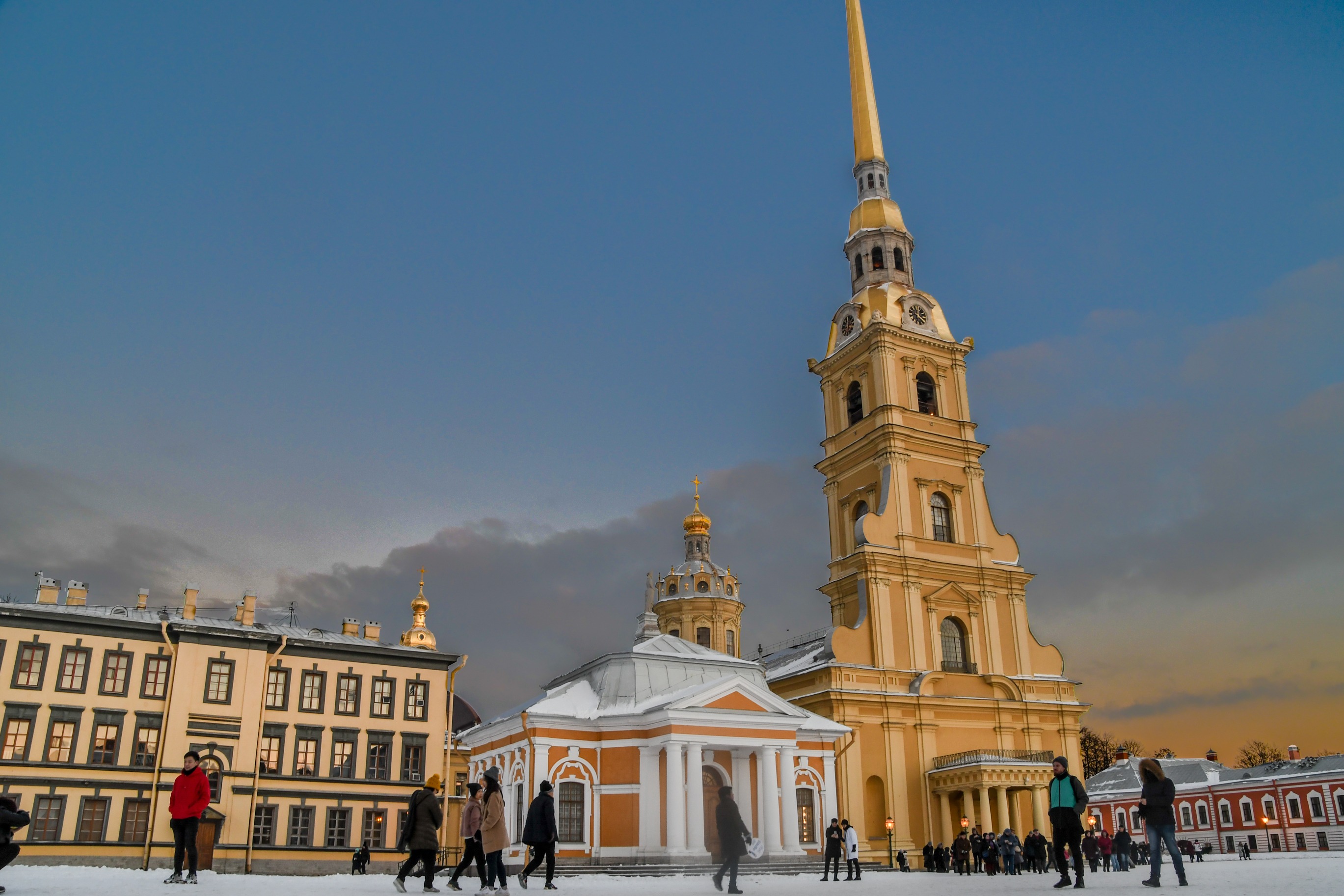
The first stone cathedral in Saint Petersburg, a Romanov necropolis, and the city's symbol with its gilded spire of 122 meters topped by an angel.
The Peter and Paul Cathedral dominates Hare Island in the historic heart of Saint Petersburg. Its gilded spire, rising 122 meters and crowned with an angel bearing a cross, remains visible from much of the city. The first stone collegiate church of the new capital founded by Peter the Great, it houses the Romanov necropolis and ranks among Saint Petersburg's oldest buildings.
Why Visit Peter and Paul Cathedral
Three elements make this visit essential. First, the architecture: the cathedral breaks with Orthodox tradition's onion domes, adopting a basilica plan with triple aisles and a bell tower-spire inspired by Northern European design—the signature of Italian architect Domenico Trezzini. Second, the imperial necropolis: with the exception of Peter II and Ivan V, all Russian emperors and empresses rest here, from Peter the Great to Nicholas II. Finally, the view from the bell tower, which sweeps across the Neva, the Admiralty, and the historic center.
Allow 1 to 2 hours for a visit including the nave, tombs, and Catherine Chapel. The surrounding Peter and Paul Fortress deserves a half-day of its own.
History of the Cathedral
Construction spanned 1719 to 1733, during the reign of Peter the Great. The tsar wished to endow his new capital with a building that reflected the Western Europe he admired. Trezzini designed a stone structure with an elegant silhouette, replacing an earlier wooden church. It became Saint Petersburg's first cathedral built in stone.
A Dynasty's Necropolis
Several of Peter the Great's children were interred here before the construction was even complete. When the tsar died in 1725, his body was placed here as well, establishing the site's funerary purpose. For nearly two centuries, the cathedral welcomed the burials of the Romanov dynasty.
The tombs follow a common model: white marble, Orthodox cross, and for emperors, four double-headed eagles at the corners. Two exceptions stand out: the tomb of Alexander II, carved from jasper, and that of his wife Maria of Hesse-Darmstadt, in rose rhodonite mined from the Urals. At the end of the 19th century, the Catherine Chapel was added to accommodate grand dukes and grand duchesses.
Nicholas II and the 20th Century
Nicholas II, his wife, and their children were assassinated in Yekaterinburg in 1918 during the civil war. Their remains, identified after the Soviet collapse, were transferred and interred in the Catherine Chapel in 1998, during an official ceremony. During the Soviet era, the cathedral was closed to worship and converted into a museum. Religious services resumed in 2000.
What to See
Exterior and Bell Tower
The bell tower rises to 122 meters, with 40 meters dedicated to the spire topped by a gilded angel. It stands as one of Saint Petersburg's defining visual symbols and was long the city's tallest structure. Climbing the bell tower is offered separately and provides a panoramic viewing platform.
Interior and Iconostasis
The triple-aisle plan, unusual in Russian Orthodox tradition, creates a luminous, open volume. The carved wooden iconostasis in Baroque style forms the centerpiece: gilded with leaf gold, it displays 18th-century icons and painted panels. Pastel frescoes adorn the walls, and marble columns line the space.
Imperial Tombs
Roughly fifty burials are housed here. Look in particular for:
- The tomb of Peter the Great, near the iconostasis, often adorned with flowers.
- The tombs of Alexander II and Maria of Hesse-Darmstadt, in jasper and rhodonite.
- The Catherine Chapel, where Nicholas II's family rests.
The Carillon
The bell tower houses a Flemish carillon of 51 bells, installed in 2001. It rings during services and hosts concerts throughout the summer season, with a repertoire ranging from classical music to contemporary pieces.
Practical Information
The cathedral is open daily, with one weekly closure and reduced hours on Sunday mornings (reserved for services). Hours vary by season, so verify before your visit. Access to Hare Island and the fortress is free; only cathedral, bell tower, and museum visits within the walls require admission. Prices remain moderate, and a combination ticket lets you visit the cathedral and several fortress museums over two days—a sensible option if you plan to spend the full day here.
Dress appropriately (shoulders covered), as you would in any active Orthodox place of worship.
Nearby Attractions
The cathedral sits within the broader Peter and Paul Fortress, which houses several museums: the Museum of Saint Petersburg History, the former Trubetskoy Prison, and the Mint Museum. On foot, you can reach the opposite bank and the Admiralty in fifteen to twenty minutes, then Nevsky Prospect and the Cathedral of Our Lady of Kazan. For a different perspective, a cruise on the Neva passes the fortress and offers one of the finest views of the gilded spire.
How to Get There
Hare Island connects to the mainland via two pedestrian bridges: the Ioanovsky Bridge to the northeast and the Kronverksky Bridge to the northwest. The nearest metro station is Gorkovskaya (Line 2), a ten-minute walk away. Several bus and trolleybus lines also serve the fortress area. In season, sightseeing boats dock at the fortress landing.
Frequently Asked Questions
Frequently asked questions
All Russian emperors and empresses since Peter the Great rest here, with the exception of Peter II and Ivan V. The Catherine Chapel, added in the late 19th century, houses grand dukes and grand duchesses, and since 1998, Nicholas II and his family.
Plan 1 to 2 hours for the cathedral alone, and a half-day if you also explore the Peter and Paul Fortress and its museums.
Yes, bell tower access is available as a separate visit with its own ticket. It offers a viewing platform with vistas across the Neva and the historic center.
Yes. Closed during the Soviet period and converted into a museum, it reopened for Orthodox services in 2000. Today it functions as both a museum and an active place of worship.
The simplest route is the metro to Gorkovskaya station, then a ten-minute walk via the Ioanovsky Bridge. In summer, boat excursions on the Neva also call at the fortress.
To include Peter and Paul Cathedral in a comprehensive itinerary between Saint Petersburg and Moscow, explore our Russia travel packages.
Nearby
Interested in this visit?
We can include it in your personalised itinerary.