The Pushkin Museum of Fine Arts
The Pushkin Museum of Fine Arts
With 670,000 artworks spanning from ancient Egypt to the Impressionists, the Pushkin Museum of Fine Arts in Moscow is Russia's second-largest art collection.
The Pushkin Museum of Fine Arts houses more than 670,000 artworks in the heart of Moscow, just steps from the Kremlin. Russia's second-largest art collection after the Hermitage in Saint Petersburg, it spans Egyptian, Greek and Roman antiquity, the Italian Renaissance, and European painting from the 17th to 20th centuries, through to the Impressionists and modern masters.
Why visit the Pushkin Museum
The museum stands as one of art history's undisputed landmarks in Russia. Three reasons make it essential:
- An encyclopaedic collection of 670,000 pieces, from Egyptian sarcophagi to canvases by Picasso and Monet.
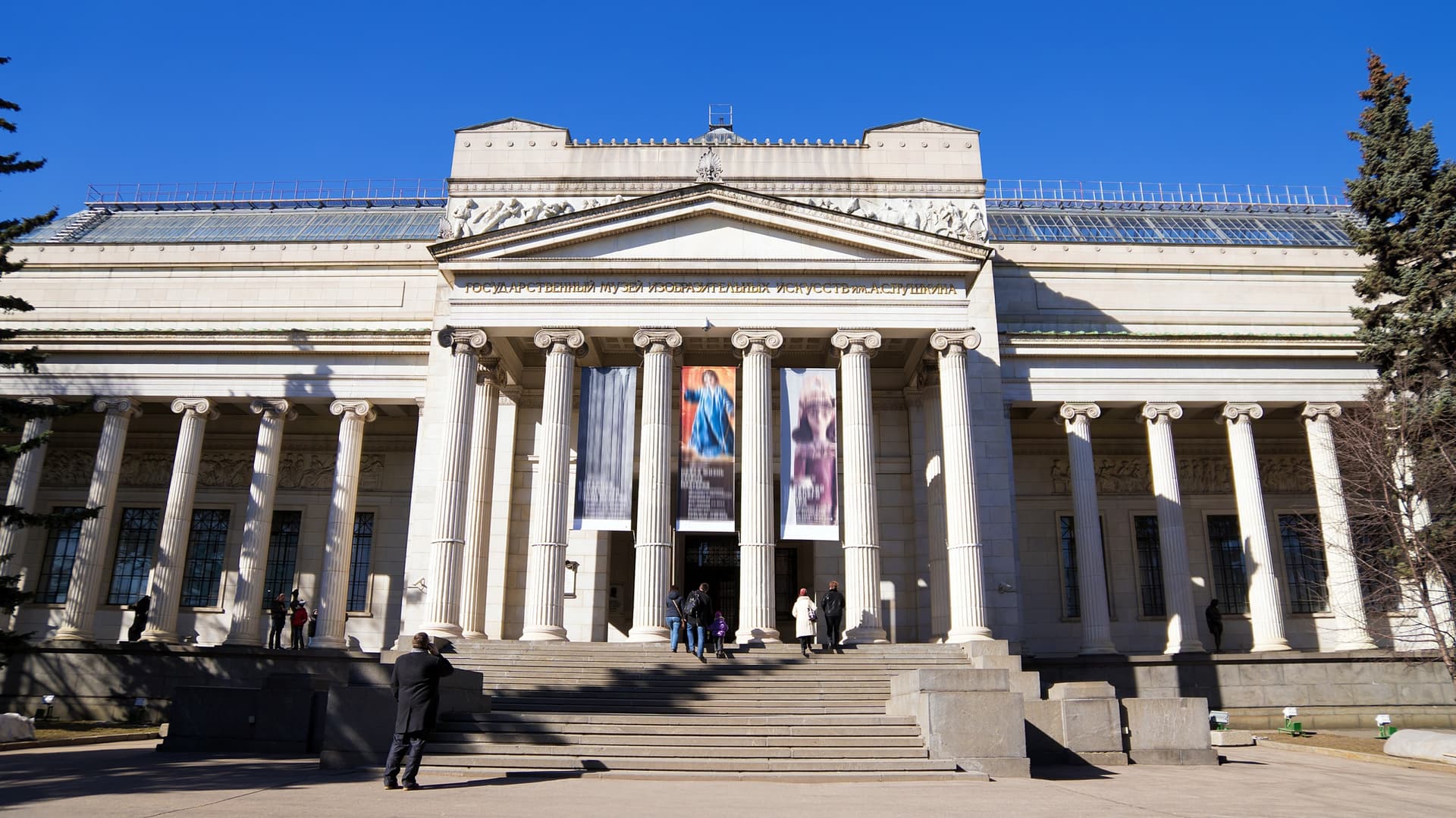
- A neoclassical building conceived as a Greek temple, with an entrance faithfully reproducing the portico of the Erechtheion in Athens.
- A central location, within easy walking distance of the Kremlin, the Bolshoi Theatre and the Cathedral of Christ the Saviour.
Museum history
The idea of a classical art museum in Moscow dates back to 1750, but the project only took shape in the 19th century. In 1894, Ivan Tsvetaïev, head of the art history chair at Moscow University, launched a fundraising campaign to finance construction. The foundation stone was laid in 1898, and work lasted fourteen years.
The museum was officially inaugurated on 31 May 1912 under the name Museum of Fine Arts of Emperor Alexander III. It was renamed the National Museum of Fine Arts in 1932, then took the name of poet Alexander Pushkin in 1937, marking the centenary of his death.
During the Second World War, over 100,000 pieces were evacuated to Siberia to protect them from combat. At the end of the conflict, the collections returned to Moscow, accompanied by paintings from the Gemäldegalerie Alte Meister in Dresden, saved by the Red Army; these works were returned to East Germany in 1955. In 1991, the institution was registered in the national registry of high-importance cultural establishments of the Russian Federation.
What to see at the museum
The building's architecture
The building is the work of architect Roman Klein, winner of the construction competition. The brief required a structure inspired by antiquity or the Renaissance, explaining the Greek temple appearance adopted by the edifice. The entrance reproduces the portico of the Erechtheion on the Athens Acropolis. Klein worked with two major figures of Russian architecture of the period, Ivan Rerberg and Vladimir Shukhov. The antique façade and Ionic colonnade give way to a largely glazed interior, designed to display artworks in natural light.
Collections in the main building
The historic wing is devoted to ancient art: Egyptian pieces, Greek and Roman sculptures, antique vessels, and a significant collection of Italian Renaissance paintings. Rooms dedicated to European masters feature works by Rembrandt, Rubens and Van Dyck, among other signatures from the 17th to 19th centuries.
The modern and contemporary wing
A dedicated wing opened in 2006 to house American and Western European collections. Here you'll find canvases by Van Gogh, Renoir, Matisse, Picasso, Monet, Cézanne and Degas, comprising one of Russia's finest collections of modern art.
Practical information
Address: 12 Volkhonka Street, Moscow.
The museum is open year-round, except Mondays, typically from late morning until early evening, with a weekly evening opening. Admission rates remain moderate and free entry is offered to young visitors; since hours and prices are regularly adjusted, check the official website before your visit. Allow 2 to 3 hours to explore the main wing, and a half-day if including the modern wing.
How to get there
The museum is located in central Moscow, near the Kremlin, Bolshoi Theatre and Cathedral of Christ the Saviour, all reachable on foot within minutes.
- Metro: Red Line (Line 1 Sokolniki Line), Kropotkinskaïa or Borovitskaïa stations.
- On foot from Red Square: approximately 15 minutes via Volkhonka Street.
Nearby attractions
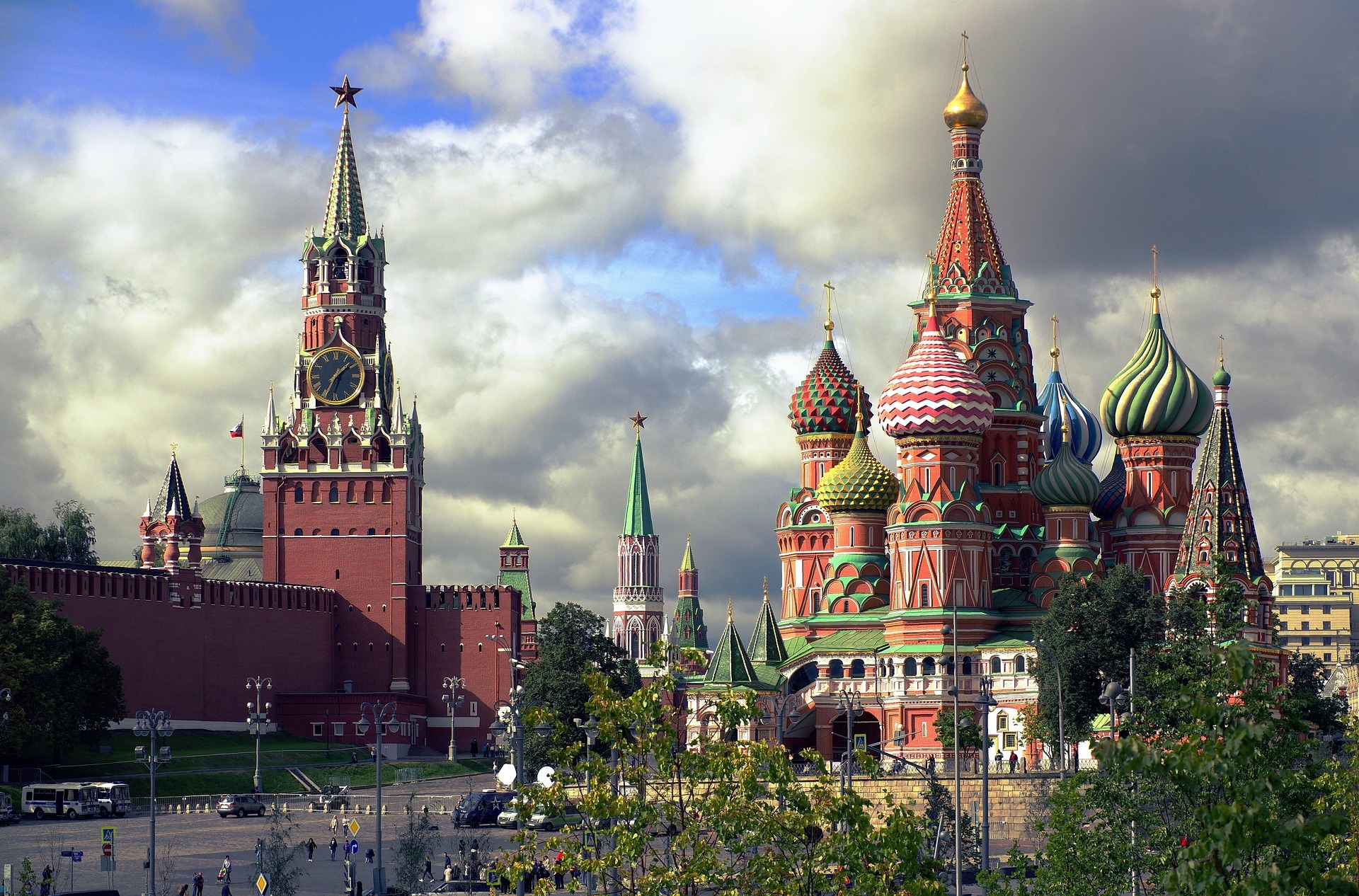
- Saint Basil's Cathedral, on Red Square.
- The Bolshoi Theatre, about twenty minutes on foot.
- A Radisson cruise on the Moskva River for another perspective of the city.
Frequently asked questions
Frequently asked questions
Allow 2 to 3 hours for the main building and a half-day if you include the wing dedicated to modern and contemporary art.
The Pushkin Museum in Moscow is Russia's second-largest art collection. The Hermitage in Saint Petersburg remains the largest, but Pushkin distinguishes itself through its modern section (Picasso, Monet, Cézanne) and its Egyptian and Greco-Roman antiquities.
Yes. Artwork labels exist in Russian and English in the main sections, and audio guides in several languages are available at the entrance.
Prefer opening hours in the morning or the weekly evening opening to avoid crowds of school groups and tourists. Weekdays are quieter than weekends.
Yes, the Egyptian sections (sarcophagi, mummies) and antiquities are particularly popular with younger visitors. Free entry applies to minors under certain conditions, to be confirmed before your visit.
Include the Pushkin Museum in your journey
The Pushkin Museum naturally integrates into a cultural discovery of Moscow, complementing the Kremlin, Red Square and the Bolshoi. To build a bespoke itinerary blending great capitals, art and history, explore our travels in Russia.
Interested in this visit?
We can include it in your personalised itinerary.