Saint Basil's Cathedral
Saint Basil's Cathedral
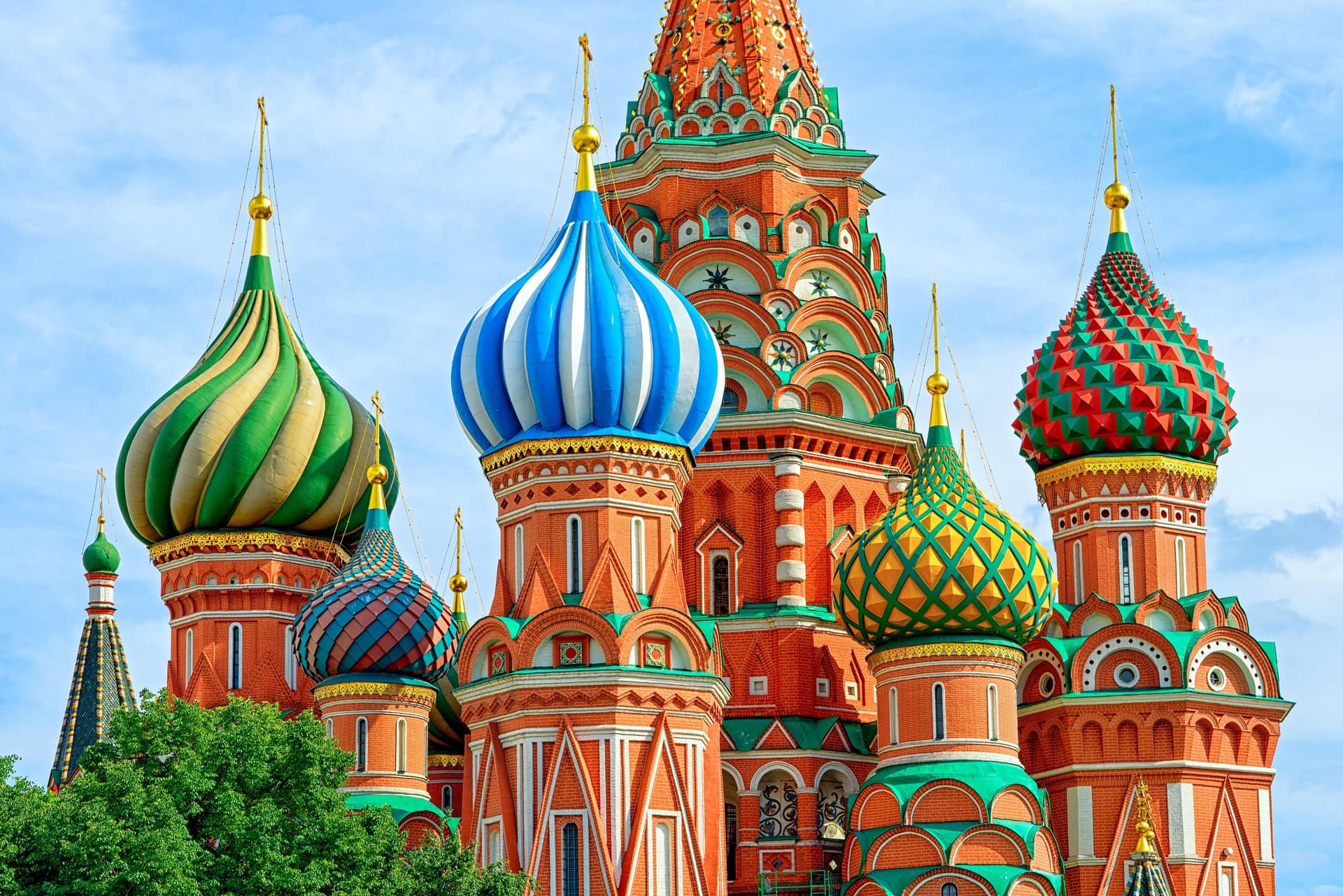
At the southern end of Red Square, Saint Basil's Cathedral concentrates four centuries of Russian history beneath its colorful cupolas.
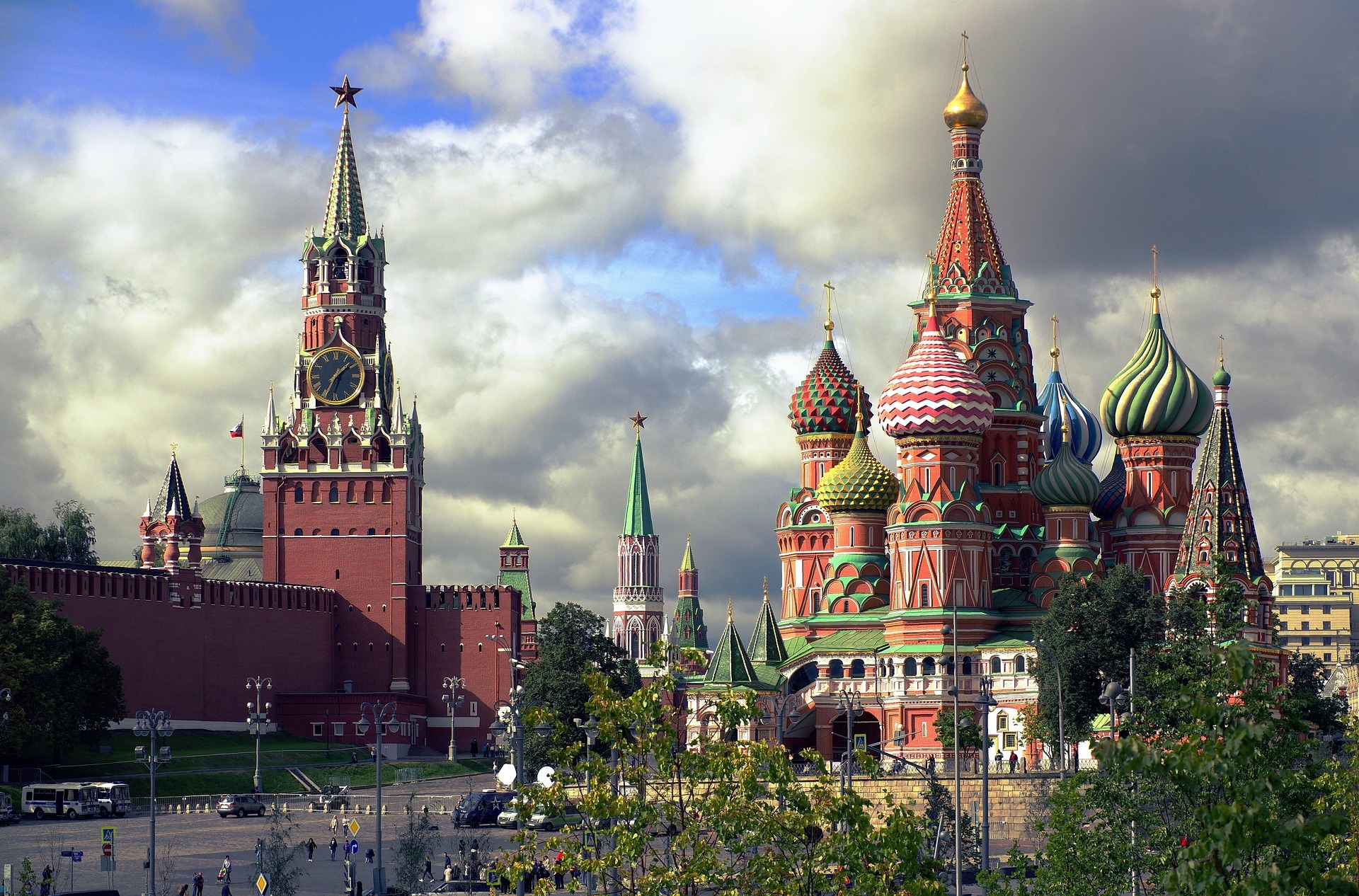
Saint Basil's Cathedral stands at the southern end of Red Square, in Moscow. Recognizable by its spiraling colored cupolas, it was inscribed as a UNESCO World Heritage site in 1990 and remains one of the most identifiable silhouettes of 16th-century Russian religious architecture.
Why Visit Saint Basil's Cathedral
The building condenses several layers of Russian history in a single location: a military commission from Ivan the Terrible, successive restorations, and transformation into a museum under the Soviet regime. The visit allows you to observe unusual architecture, originally composed of nine distinct churches united on the same foundation, and to walk through chapels whose icons some date back to the 16th century.
Unlike most Orthodox cathedrals, the interior does not form one large unified space: you pass from one small chapel to another through narrow corridors with painted walls. This singularity, as much as the façade, justifies the visit.
History of the Cathedral
The cathedral was constructed between 1555 and 1561 during the reign of Tsar Ivan IV Vasilievich, known as Ivan the Terrible, to celebrate the Russian victory against the Khanate of Kazan in 1552. Its original name was the Cathedral of the Intercession of the Virgin on the Moat: the victory over the Tatars coincided with the Feast of the Intercession of the Virgin, and the building stood near the moats that protected the Kremlin (until 1813, two water-filled moats surrounded the fortress).
The complex originally united nine small churches. After the fire of 1595, the restoration added the sculpted domes that are its visual signature today.
Two Avoided Destructions
The cathedral escaped demolition twice. In 1812, Napoleon's army used it as a stable and the Emperor ordered it dynamited, though the operation was never completed. Later, under Stalin, a destruction project was considered: the building obstructed traffic at the entrance to Red Square and constituted a place of worship in the heart of the Soviet capital. Again, the project was not carried through.
The Legend of the Blinded Architects
Tradition recounts that Ivan the Terrible, dazzled by the result, had the architects blinded so they could never reproduce the building elsewhere. This story is contradicted by facts: the same craftsmen subsequently participated in the construction of the Cathedral of the Annunciation in Kazan.
Basil the Blessed
The current name comes from a holy fool, Basil the Blessed, who begged near the cathedral. Respected by Muscovites, he was one of the rare men who dared openly criticize the tsar without suffering reprisals. He died in 1557 and was canonized in 1558, buried on site: a tenth church was then added to house his remains, and the whole complex took his name.
What to See On Site
Exterior Architecture
The façade plays with asymmetry: nine chapels arranged around a central chapel, each crowned with a cupola of different design — twisted, faceted, scaled — and painted in distinct colors. This polychromy is not original: it was imposed gradually, particularly in the 17th century.
The Interior and Museum
Since the revolution, the cathedral has functioned as a state museum. The building is visited on two levels: the ground floor features museum displays, the upper floor houses the central chapel and lateral chapels, adorned with frescoes and icons, some dating to the 16th century. The volumes are narrow, the passages sometimes painted from floor to ceiling, giving the walk an intimate character far removed from the monumentality of neighboring Red Square.
Practical Information
- Visit Duration: allow 45 minutes to 1 hour depending on your pace.
- Admission: paid entry at a moderate rate; verify current conditions before your visit.
- Hours: open daily with wider hours in summer than in winter, with one monthly closing day. Check the official calendar before traveling.
- Good to Know: ticket windows can have waits during peak season; arriving at opening time is advised.
How to Get There
The cathedral is located at the southern end of Red Square. From Moscow's international airports, access is by taxi, bus, or metro (with connections via Aeroexpress).
Nearest Metro Stations:
- Okhotny Ryad — Line 1
- Teatralnaya — Line 2
- Ploshchad Revolyutsii — Line 3
- Kitay-Gorod — Lines 6 and 7
Nearby Attractions
The cathedral is part of a dense perimeter of monuments and cultural institutions. Within walking distance you'll find:
- Red Square, Lenin's Mausoleum, and the Kremlin walls.
- The GUM department store opposite, for its late 19th-century architecture.
- The Pushkin Museum of Fine Arts, about twenty minutes away, for a dive into European painting collections.
- A cruise on the Moscow River with Radisson Cruise, to see the historic center from the river.
Frequently Asked Questions
Frequently asked questions
Between 45 minutes and 1 hour are sufficient to walk through both levels and observe the chapels. Allow more time if you read the museum notices.
Its official name remains the Cathedral of the Intercession of the Virgin on the Moat, given at the consecration in 1561. The common name, Saint Basil's Cathedral, comes from a tenth church added to house the remains of Basil, a holy fool canonized in 1558.
The interior can be visited: since the revolution, the building has functioned as a state museum, with access to the chapels, frescoes, and ancient icons.
No. The legend claims Ivan the Terrible had the builders blinded; however, the same craftsmen subsequently worked on the Cathedral of the Annunciation in Kazan, which contradicts this tradition.
Plan Your Trip
To incorporate Saint Basil's Cathedral into a broader itinerary, consult our suggestions for travel in Russia and the Moscow guide.
Interested in this visit?
We can include it in your personalised itinerary.