Kolomenskoye
Kolomenskoye
Former princely estate south of Moscow, inscribed in UNESCO World Heritage in 1994: 17 monuments, including the Church of the Ascension from 1532 and the reconstructed wooden palace of Alexei I.
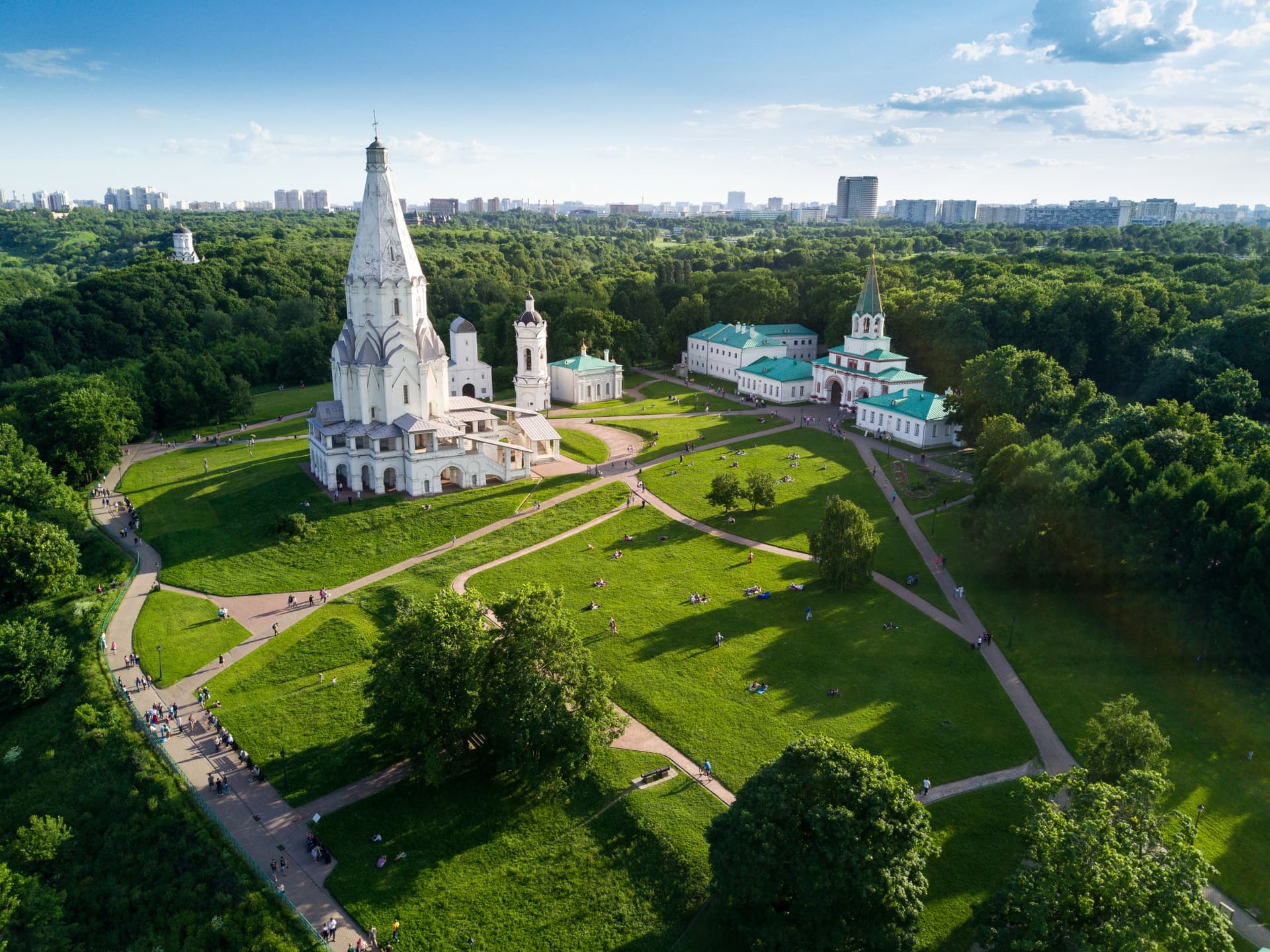
About ten kilometers south of central Moscow, the Kolomenskoye estate gathers on a hilltop overlooking the Moskva River a collection of churches, wooden palaces, and monuments transported from various regions of the former USSR. Once a princely village that became the summer residence of the tsars, it has been inscribed in UNESCO World Heritage since 1994 and now functions as an open-air park-museum.
Why visit Kolomenskoye
The site combines three interests rarely found together in the same location in Russia's capital: outstanding Orthodox religious architectural heritage, a reconstructed wooden palace that illustrates 17th-century court life, and a landscaped park along the Moskva River suited for both walking and cycling. The ensemble comprises 17 monuments, of which 12 are original and 4 were relocated during the Soviet era to form an open-air architecture museum.
For those seeking an alternative to the tourist concentration of the Kremlin and Red Square, Kolomenskoye offers a more expansive visiting terrain, directly accessible by metro, and suited to half a day as easily as a full day depending on your pace.
History
The village first appeared in the 14th century and numbered among the properties of Grand Prince Dmitri Donskoi. In the following century, the site became a cherished summer residence of Moscow's rulers, owing to its proximity to the capital and its commanding position over the Moskva River.
The oldest element still visible is the Church of the Ascension, built in 1532 by Prince Vasili III to celebrate the birth of his son, the future Ivan the Terrible. Its design is generally attributed to an architect of Italian origin active in Russia in the 16th century, though historians continue to debate the precise identification.
In the mid-17th century, Tsar Alexei I commissioned the construction of a vast wooden palace with highly elaborate architecture. His son, Peter I the Great, spent part of his childhood there; Empress Elizabeth I was also born there. The original palace, dismantled in the 18th century, was reconstructed identically based on preserved plans and descriptions, a few hundred meters from its original location.
During the Soviet era, several wooden buildings from various regions of the USSR were moved here to form an open-air museum. The entire complex entered UNESCO World Heritage in 1994.
What to see on site
The Church of the Ascension
A structure with a pointed roof (shatyor) rising over 60 meters high, the 1532 church marked a break in Russian religious architecture and influenced a long line of subsequent churches. Its slender silhouette stands out from afar on the riverbank.
The Church of Saint John the Baptist and the Church of Our Lady of Kazan
The Church of Saint John the Baptist, located in Diakovo in the southern part of the estate, was erected in the 16th century during the reign of Ivan the Terrible. Its cemetery offers a clear view over the Moskva. Further north, the Church of Our Lady of Kazan, with its distinctive bulbous domes characteristic of Russian Orthodoxy, adjoins the former tsarist court.
The wooden palace of Alexei I
The reconstruction restores the state rooms (throne room, banquet hall), the private apartments of the tsar and tsarina, as well as the chambers of Tsarevna Sophia, sister of Peter the Great. In the basement are the banias, traditional baths integrated into the residence. The frescoed walls and carved woodwork illustrate court life in the 17th century.
The open-air architecture museum
Among the relocated structures is the house of Peter the Great, moved from the estuary of the Dvina near the White Sea. Nearby, you can see the foundations of the former palace, as well as the bell tower of Saint George, the Vodozvodnaya tower, and the Hunting pavilion, which complete the ensemble.
Practical information
- Park access: free entry for walking. Building-museum entrance is ticketed at moderate rates. Combined tickets are available.
- Duration of visit: allow 2 to 3 hours for a focused visit of the main monuments, half a day to a full day to explore the entire estate.
- On site: cafés and dining options within the park, maintained paths for walking and cycling.
- Guided tour: an English-speaking guide facilitates understanding of the palace and historical context of the Romanov tsars.
When to visit
The estate is open year-round. Summer is the busiest period, with lush vegetation and extended opening hours for buildings, but also more Moscow visitors on weekends. Autumn, with its golden hues on the orchards and riverbanks, is appreciated for photography walks. In winter, the snow-covered park highlights the white silhouettes of the churches, though access to some interiors may be restricted. Spring remains a good window, quieter than summer.
How to get there
By metro: line 2 (green line) serves two useful stations. Kolomenskaya provides access to the park's northern entrance, near the main churches. Kachirskaya is more convenient for reaching the reconstructed wooden palace directly, in the southern section. Allow approximately 15 to 20 minutes from central Moscow.
By car or taxi: a journey of about 20 to 30 minutes from the center depending on traffic. Parking is available around the estate.
Nearby attractions
Once Kolomenskoye is visited, several major Moscow sites complement a cultural stay:
- The Cathedral of Christ the Saviour, the capital's principal Orthodox church, on the Moskva riverbank in the city center.
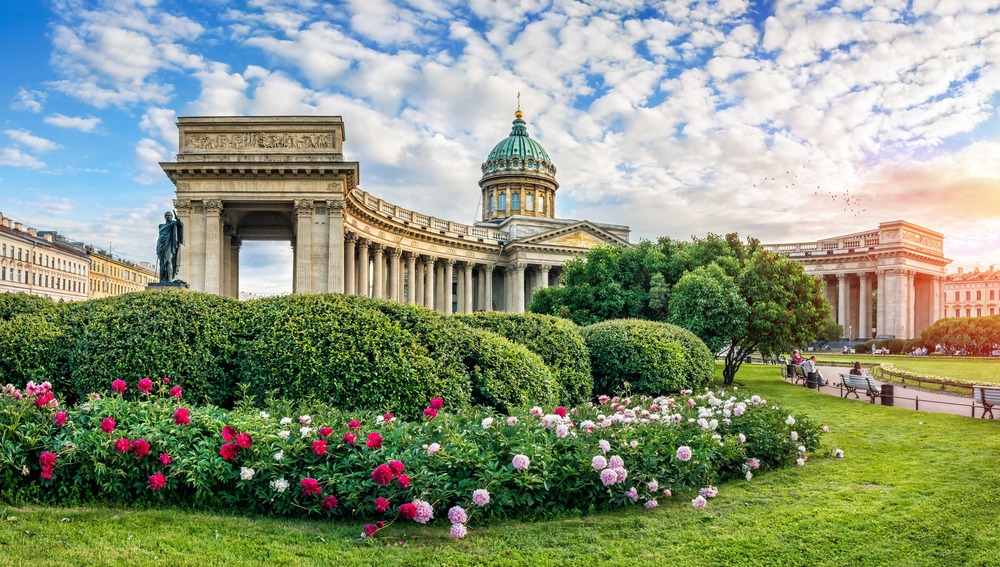
- The Cathedral of Our Lady of Kazan, at the corner of Red Square.
- The complete Moscow guide to organize the rest of your stay in the capital.
Frequently asked questions
Frequently asked questions
Allow 2 to 3 hours for a focused visit of the main monuments, and half a day to a full day if you wish to explore the entire park, see the wooden palace, and stroll along the Moskva.
Park entry is free. The museums and buildings to visit (wooden palace, indoor exhibitions) operate separate ticketing at moderate rates, with combined packages available on site.
The simplest option is the metro, line 2 (green line). Get off at Kolomenskaya for the northern entrance or at Kachirskaya to reach the reconstructed wooden palace directly. The journey takes 15 to 20 minutes from the center.
Yes, the park remains open year-round. Winter highlights the churches against a snowy backdrop, but some interiors may have reduced hours. Plan for clothing suited to Moscow's cold weather.
No. The 17th-century wooden palace was dismantled in the 18th century. The present building is a faithful reconstruction, erected a few hundred meters from the original site, which restores the architecture and interior decoration of the era.
Planning your trip
Kolomenskoye fits naturally into a cultural circuit of the Russian capital and beyond. To build a complete itinerary, consult our Russia travel guide and our suggestions for stops in Moscow.
Nearby
Interested in this visit?
We can include it in your personalised itinerary.