The rivers and canals of Saint Petersburg
The rivers and canals of Saint Petersburg
History, main waterways and practical tips for exploring Saint Petersburg's canals and rivers by boat, the Venice of the North.
Nicknamed the Venice of the North, Saint Petersburg is organized around a dense network of rivers, canals and bridges that have shaped its urban landscape since its foundation. A boat tour allows you to grasp the logic of the city envisioned by Peter the Great: a city built on water, by water, for water.
Why visit Saint Petersburg's canals
The canals are not mere scenery: they are the founding fabric of Saint Petersburg. Exploring them by boat offers a coherent reading of the classical, baroque and neo-classical facades aligned along the quays, part of which remains invisible from street level. The route passes under a succession of historic bridges, skirts palaces, mansions and imperial warehouses, and reveals the geography of a city built across dozens of islands connected by arches.
The experience is also practical: an hour-long tour allows you to embrace the historic center without walking, as a complement to a walking visit to the Hermitage district or the Saint Petersburg Admiralty.
History: why so many canals
Saint Petersburg was founded in 1703 at the mouth of the Neva River, where it meets the Gulf of Finland. The site, marshy and flood-prone, posed a major technical challenge. From the laying of the first foundations, Peter the Great ordered the digging of canals. The project extended over some twenty years.
These canals served three practical functions:
- to drain the soil and make land buildable;
- to serve as water reservoirs in case of fire, which were frequent in a city still largely built of wood;
- to transport cargo and construction materials needed for building the new capital.
The waterways were quickly connected to each other. In 1717, while the Admiralty Canal was under construction, the Fontanka was connected to the Moyka. From these successive connections emerged a web-like pattern that characterizes the center today.
The city spreads across around forty islands and boasts nearly a hundred canals and rivers. This network gave rise to more than 300 bridges, earning Saint Petersburg a second nickname: the museum of bridges.
What to see from the water
The main waterways
- The Neva: the grand river, wide and impressive, runs past the Hermitage, the Peter and Paul Fortress and the Admiralty. It is the premier panoramic axis.
- The Moyka: an inner river that crosses the historic heart, lined with palaces featuring colorful facades.
- The Fontanka: longer and more animated, it marks the eastern boundary of the old center.
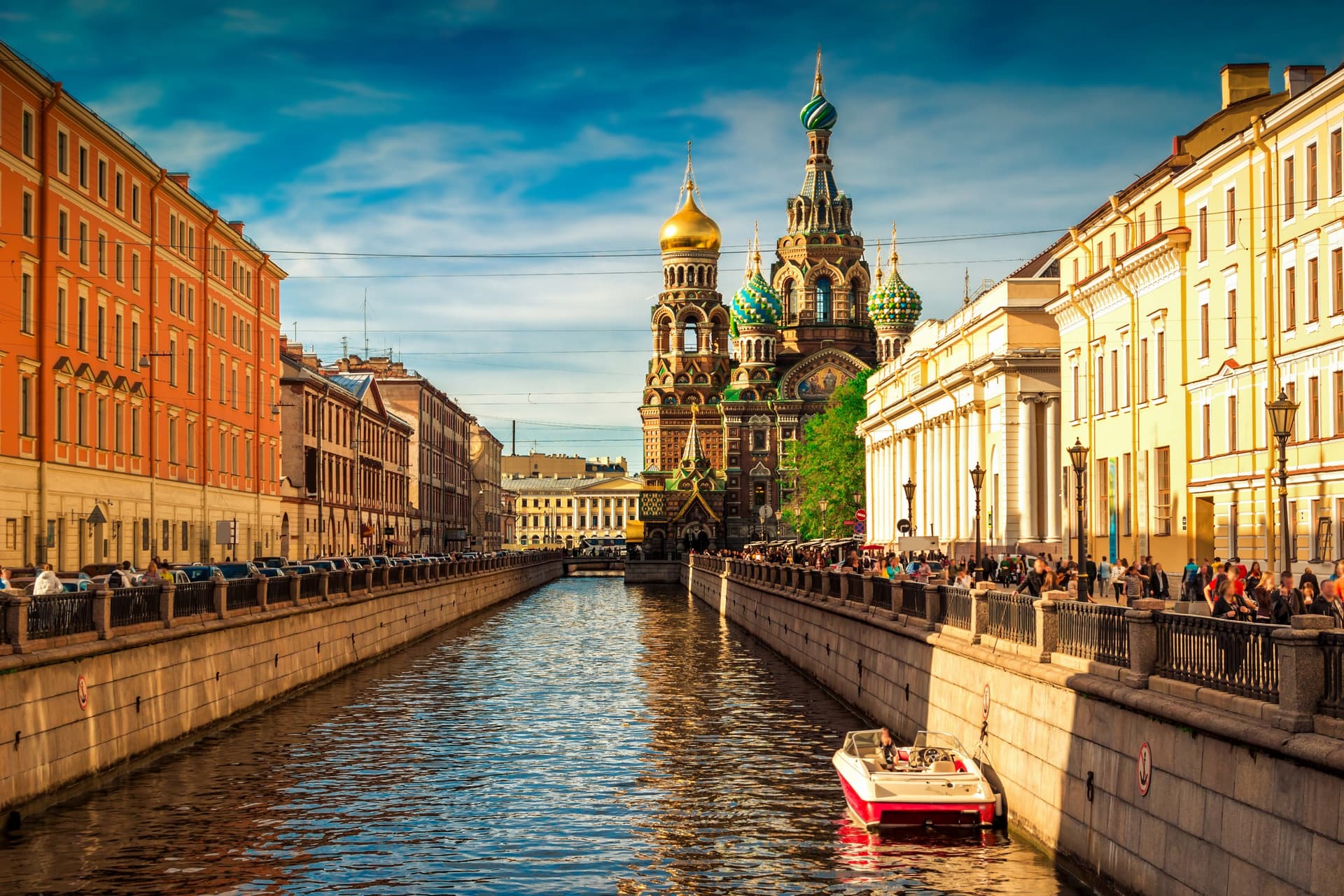
- Griboyedov Canal: it serves the Church of the Savior on Spilled Blood and the Cathedral of Our Lady of Kazan.
- Kryukov Canal and Winter Canal: more discreet sections but highly photogenic, with low bridges that require passengers to duck.
Bridges to watch for
Several bridges deserve attention during your journey: the Anitchkov Bridge over the Fontanka with its horse statues, the Blue Bridge (the city's widest), the Lions Bridge, the Banking Bridge with its golden griffins, and the great opening bridges of the Neva (Palace, Trinity, Liteiny) that open at night in summer to let cargo ships pass.
Practical information
Several companies offer guided tours, in Russian and often in English. Departures are made from about ten landing points, mainly along the Neva, Moyka, Fontanka and near the Winter Canal. Look for a landing point near your route rather than targeting a specific operator: the supply is abundant.
Plan on an hour for a standard tour, longer for packages combining inner canals and the Neva. Fares remain moderate and vary little between companies. Children under 12 enjoy a reduced rate, and free admission generally applies to those under 3 years old. Private boat rental is possible, at significantly higher cost, with appreciable comfort and quiet for groups.
When to visit
The navigation season is strictly tied to the climate. Boats generally operate from late April to early October, when waterways are ice-free. In the depths of winter, the Neva freezes and boat tours are suspended.
Two periods stand out:
- June and early July: the white nights, when the sun barely sets. The opening bridges of the Neva open in the middle of the night, a spectacle beloved by visitors.
- May, September, early October: lighter crowds, soft light, cool but pleasant temperatures.
Nearby attractions
The quays provide direct access to several major sites in the center:
- the Saint Petersburg Admiralty, on the south bank of the Neva;
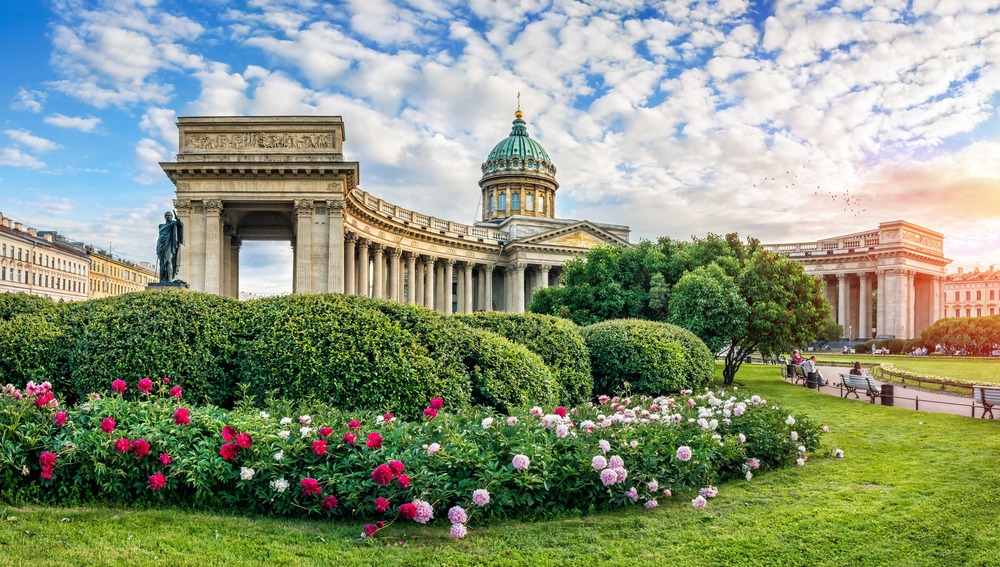
- the Cathedral of Our Lady of Kazan, minutes from Griboyedov Canal;
- the Hermitage, the Peter and Paul Fortress and Palace Square, all within walking distance of the main landing points.
Frequently asked questions
Frequently asked questions
Plan your trip
A boat tour of the canals naturally integrates into a stay in Saint Petersburg, complementing walking visits to the historic center. To build a custom itinerary in Russie including Saint Petersburg, Moscow and the Golden Ring, consult our voyages en Russie.
Interested in this visit?
We can include it in your personalised itinerary.