Catherine Palace of Tsarskoe Selo
Catherine Palace of Tsarskoe Selo
25 km south of St. Petersburg, Catherine Palace displays its baroque façade, its reconstructed Amber Room and a landscaped park spanning 300 hectares.
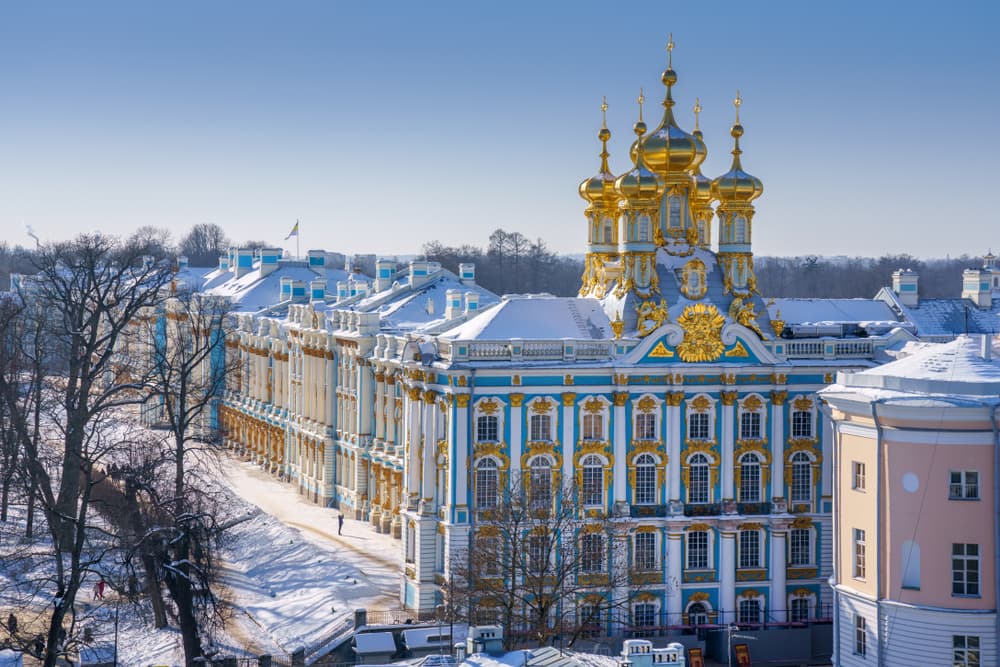
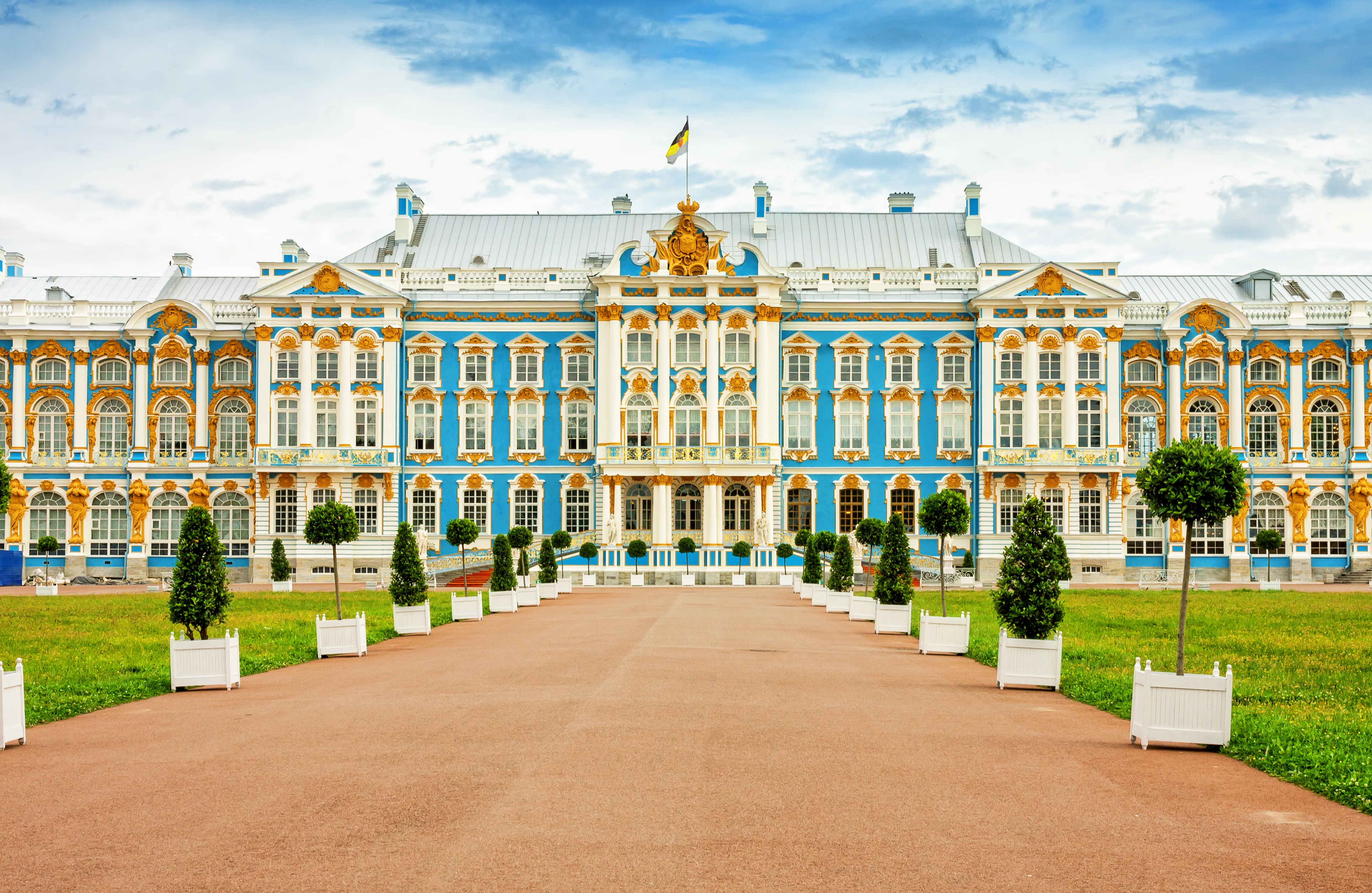
25 km south of St. Petersburg, in the city of Pushkin — formerly Tsarskoe Selo, "the village of the tsars" — Catherine Palace lines up its baroque façade, 350 meters long, in shades of turquoise blue, white and ochre yellow. A summer residence of the Romanovs, destroyed and rebuilt several times, it today houses the famous Amber Room and a landscaped park of 300 hectares.
Why visit Catherine Palace
Catherine Palace offers one of Russia's finest restored baroque ensembles. Three reasons make it worth the trip from St. Petersburg:
- Spectacular exterior architecture designed by Bartolomeo Rastrelli, the architect behind the Winter Palace.
- Interiors reconstructed identically after the 1944 destruction, including the Amber Room, recreated from 1979 and completed in 2003.
- A landscaped park of 300 hectares blending French gardens, English gardens and structures inspired by Greco-Roman antiquity.
The complex ranks among the principal imperial residences in the St. Petersburg region, alongside Peterhof and Pavlovsk.
History of the palace
The estate first appeared in 1711 as a modest summer palace commissioned by Catherine I, wife of Peter the Great, from German architect Johann-Friedrich Braunstein. This first building bears little resemblance to what visitors see today.
The turning point came in 1741, when Elizabeth I ascended the throne. Eager to rival Versailles, she entrusted the expansion to Italian architect Bartolomeo Rastrelli, who delivered in four years a baroque palace 350 meters long, structured around a court of honor reserved for military parades.
In 1762, Catherine II inherited the residence. Less drawn to Rastrelli's flamboyant baroque, she had the right wing fitted with classical-style apartments by Scottish architect Charles Cameron. She also commissioned the Greco-Roman gallery and the development of the 300-hectare landscaped park.
The 19th century brought two fires, in 1820 and 1863. Architects Vassili Stasov and Hippolyte Monighetti led identical restorations. The harshest blow came in 1944: occupied by the Wehrmacht, the palace was looted then set ablaze during the German withdrawal. Soviet authorities undertook a restoration lasting several decades, still ongoing on certain rooms. Alexander Pushkin, who spent his childhood in the neighboring town, described the ensemble as a "wonderful meadow."
What to see on-site
The Amber Room
The palace's iconic room, it is entirely covered with amber panels in ochre to red tones, complemented by mosaics of semi-precious stones. The original, given by Prussia to Peter the Great in 1716, disappeared during World War II; the current version is a reconstruction.
The grand state rooms
- The Throne Room (Rastrelli's Great Hall): nearly 800 m², painted ceilings, enfilade windows and gilding across two levels.
- The Picture Gallery: dense arrangement of works from the 17th and 18th centuries, in the manner of European painting cabinets.
- Catherine II's apartments in the Cameron wing, more restrained, illustrate the transition from baroque to classicism.
The park
The park is divided into a formal garden (near the palace) and an English-style landscape park, dotted with a large pond, pavilions, a Cameron gallery and structures inspired by antiquity. Plan 2 to 3 hours to walk through it.
When to visit
High season runs from May to September: pleasant temperatures, park in full bloom, but significant crowds and notable queues, particularly on summer weekends.
- June to early August: St. Petersburg's white nights allow evening visits to the park.
- September-October: autumn colors in the landscape park, fewer visitors.
- Winter (November to March): palace open, park snow-covered with often free access, more contemplative atmosphere — the image associated with Pushkin's verse.
Practical information
The palace and park require separate tickets. Plan a minimum of half a day to visit both.
- Opening hours: daytime opening year-round, with reduced hours in winter. Weekly closure (usually Tuesdays) and one monthly day for maintenance. Check current hours on the official website before traveling.
- Prices: paid entry to the palace, more modest fees for the park in summer and often free in winter. Prices are regularly updated.
- Tickets: online booking on the official website is strongly recommended in high season to avoid queues at the ticket office.
- Duration of visit: 1.5 to 2 hours for the palace, 2 to 3 hours for the park.
How to get there from St. Petersburg
By minibus (marshrutka)
Two metro stations serve Pushkin:
- From Moskovskaya: minibuses heading to Pushkin, frequent departures.
- From Kupchino: another marshrutka terminal to Pushkin.
Line numbers change; ask for "Pushkin / Tsarskoe Selo" on-site or look for the mention "Екатерининский дворец."
By train
The suburban train (elektrichka) departs from Vitebsky Station toward Tsarskoe Selo. Allow about thirty minutes of travel time, then approximately 15 minutes' walk from the station to the palace.
By taxi or ride-sharing
The most direct option, approximately 30 to 45 minutes depending on traffic. Local apps (Yandex Go) are widely used.
What to combine in the surrounding area
- Pavlovsk palace and park, just a few kilometers away, the former residence of Paul I, ideal for extending your day.
- The Imperial Lyceum of Tsarskoe Selo, where Pushkin studied, located immediately near Catherine Palace.
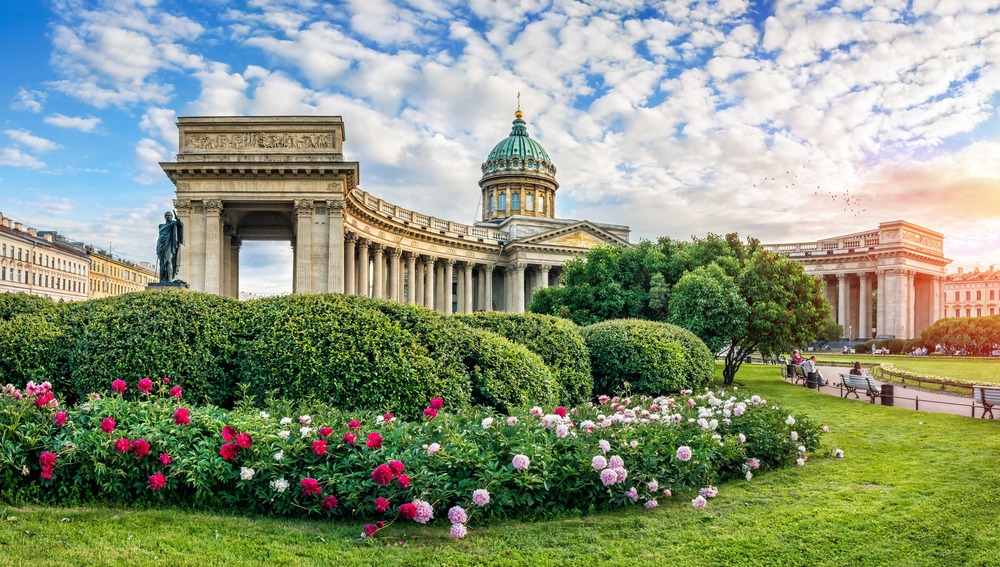
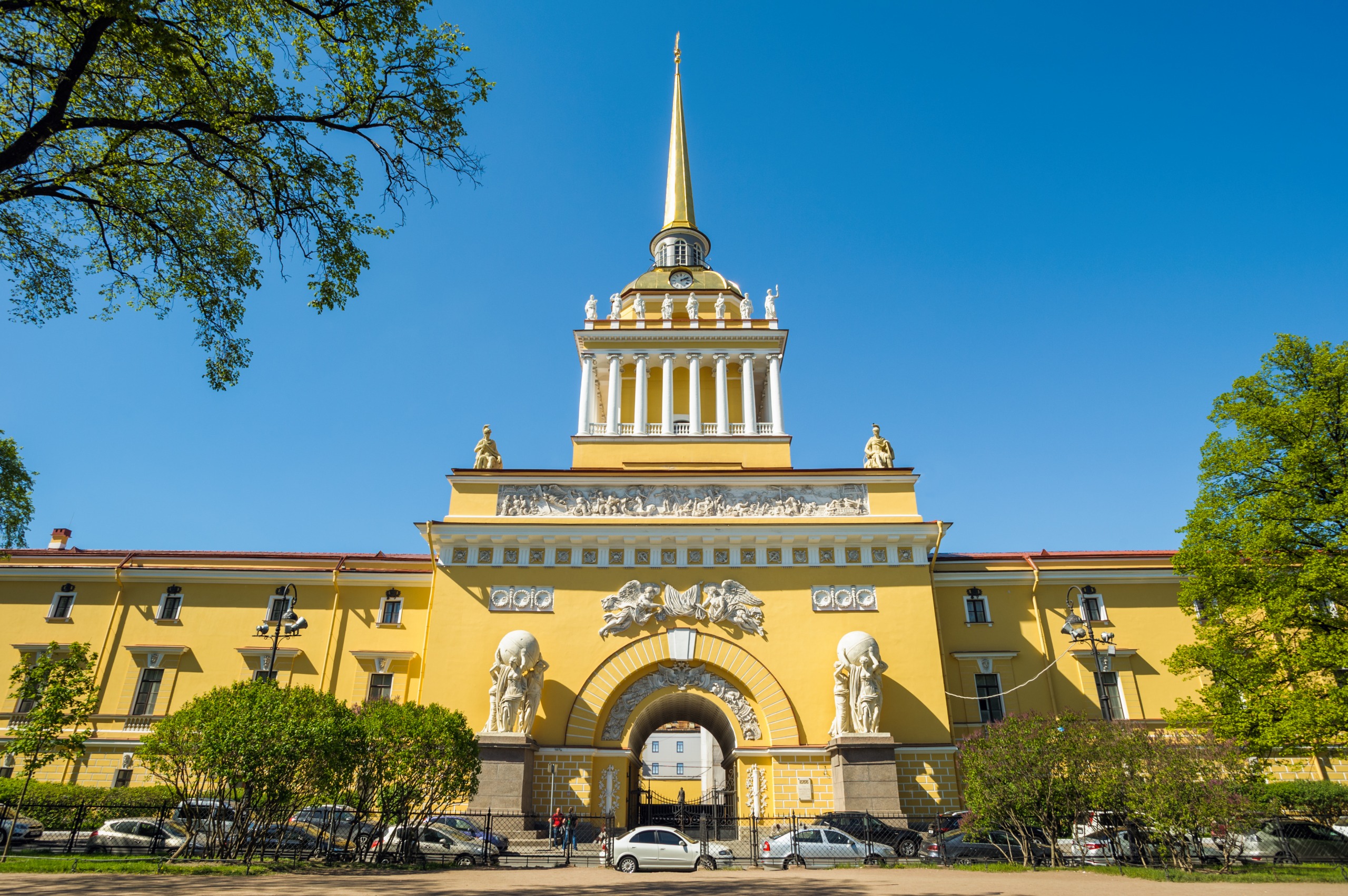
- Back in the city, several sites complement your discovery of imperial splendor: the Admiralty of St. Petersburg, Kazan Cathedral or a cruise on the Neva with Radisson Cruise.
Frequently asked questions
Frequently asked questions
Plan about half a day: 1.5 to 2 hours for the palace interiors and 2 to 3 hours to explore the 300-hectare landscaped park.
No. The original panels, given by Prussia in 1716, disappeared during World War II. The Amber Room visible today is a reconstruction, begun in 1979 and inaugurated in 2003.
Yes, during high season (May to September), online booking on the official website avoids sometimes very long queues at the ticket office.
Yes, the palace remains open year-round with reduced hours. The park is usually free to enter from mid-October through late April, and its snow-covered atmosphere is one of the site's iconic images.
Peterhof, located on the Gulf of Finland, is known for its fountains and seaside park. Catherine Palace, inland, is distinguished by its colorful baroque façade and interiors, including the Amber Room. The two residences complement each other.
Planning the rest of your trip
Catherine Palace naturally fits into an itinerary around St. Petersburg and its imperial residences. To build a complete stay including these visits, consult our travels to Russie.
Photos
Nearby
Interested in this visit?
We can include it in your personalised itinerary.