Moskva River
Moskva River
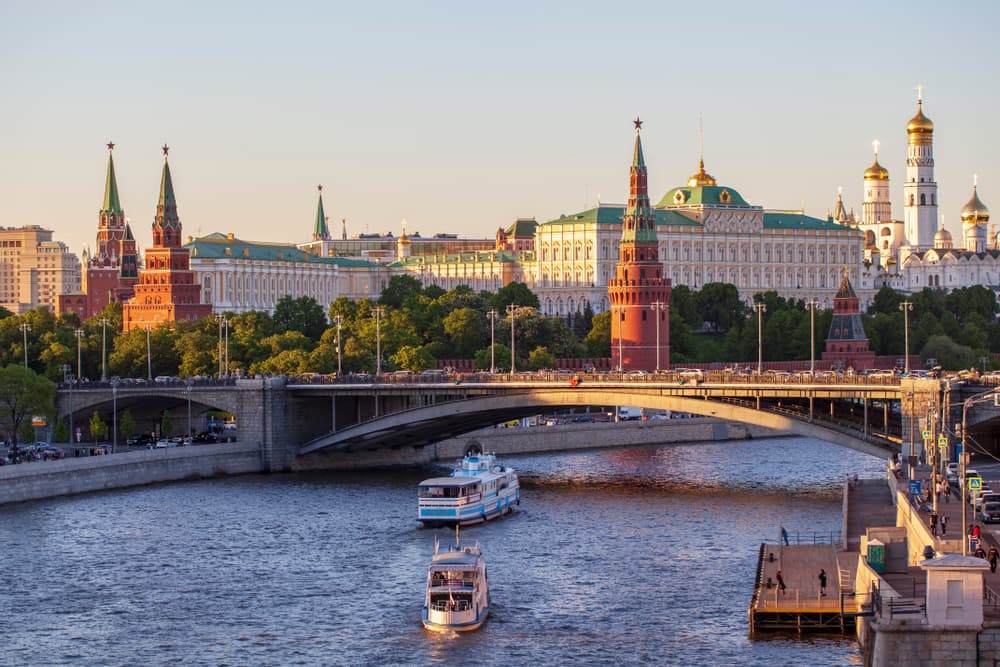
The Moskva River flows through the heart of Moscow, passing the Kremlin, Gorky Park and Zaryadye. Its landscaped embankments and seasonal cruises offer a unique vantage point on Russia's capital.
The Moskva winds through Moscow for roughly 50 miles, connecting the historic center to outlying neighborhoods. It runs past the Kremlin, Gorky Park and the gleaming towers of Moscow City. Whether you explore from the embankments or from a boat, the city reveals itself anew: Soviet skylines, contemporary towers and golden domes unfold along the waterway.
Quick reference
- Access: landscaped embankments are accessible on foot from numerous metro stations (Kievskaya, Oktyabrskaya, Biblioteka imeni Lenina, Vorobyovy Gory).
- Recommended duration: 1 to 3 hours depending on the section chosen; a cruise typically lasts 1.5 to 2 hours.
- Cruises: river boats depart from Gorky Park landing and Kievsky Quay; navigation is seasonal (spring–autumn).
- Wheelchair accessibility: the promenades in Gorky Park and Zaryadye Park are wheelchair accessible.
What you'll see
The central section offers the densest views. Facing the Kremlin, its walls and the Cathedral of Christ the Saviour reflect in the water. Further south, Gorky Park stretches along newly landscaped embankments with lawns, cycling paths and terraces. To the west, the towers of Moscow City create a striking contrast with the Stalinist architecture of the Stalinskaïa vysotki.
History and context
The Moskva gave its name to the city founded in the 12th century. The river long served as the region's primary trade route, connected to Russia's river network via the Moscow-Volga Canal opened in 1937. During World War II, it formed a natural defensive line during the Battle of Moscow in 1941. The embankments underwent major renovation in the 2010s as part of the municipal "My Street" programme.
Highlights of your visit
The Kremlin view from Bolshoy Moskvoretsky Bridge
This pedestrian and vehicular bridge offers one of the most direct views of the Kremlin towers and Saint Basil's Cathedral. The light in late afternoon is particularly favorable.
Zaryadye Park and the floating walkway
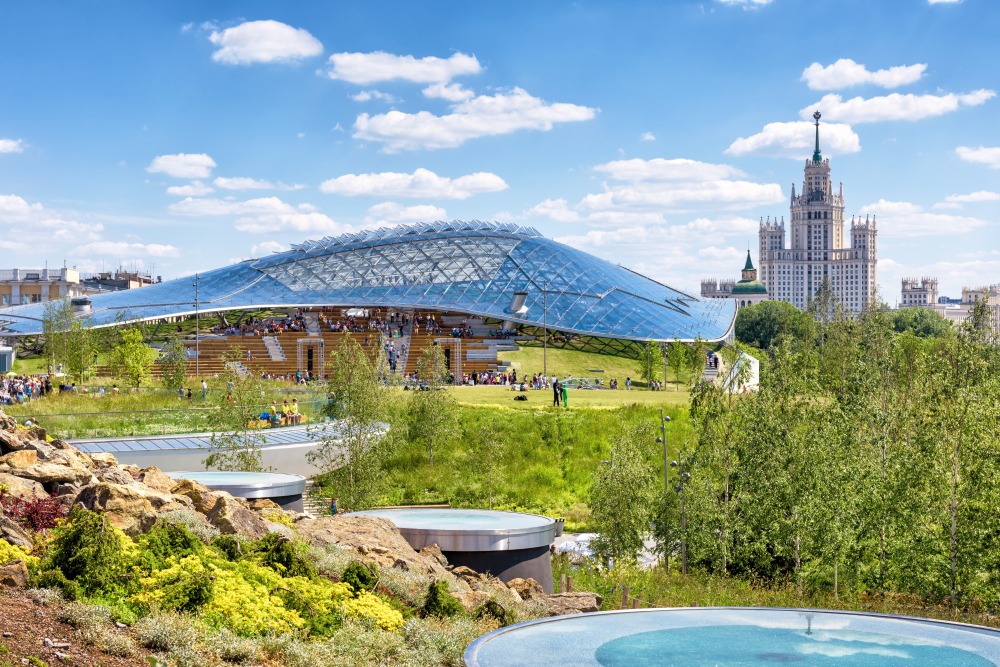
Opened in 2017, this contemporary park overlooks the Moskva with a cantilevered footbridge. The view simultaneously embraces the Kremlin, the bridge and the river.
The embankments of Gorky Park
Redesigned in 2011, they concentrate cafés, sun loungers, cycling paths and open-air stages. The atmosphere shifts dramatically between weekdays and weekends.
Sunset cruise
An evening cruise lets you admire the illuminated facades of the Kremlin, Cathedral of Christ the Saviour and historic bridges. The golden light on the domes is particularly photogenic.
Photography tips
Bolshoy Moskvoretsky Bridge and Zaryadye Park deliver the best leading lines toward the Kremlin. In winter, ice and snow transform the embankments into a monochromatic setting. From a boat, a 24-70 mm lens covers most scenarios. Avoid midday in summer: light is harsh and backlighting frequent.
Location and access
The Moskva flows through Moscow from west to east. The most visited sections lie between Andreyevsky Bridge (west of Gorky Park) and Zaryadye Park (opposite the Kremlin). The metro efficiently serves both banks:
- North bank (Kremlin): Biblioteka imeni Lenina, Borovitskaya, Okhotny Ryad stations.
- South bank (Gorky Park): Oktyabrskaya, Park Kultury stations.
The embankments are linked by numerous pedestrian bridges. Gorky Park and Zaryadye Park are wheelchair accessible.
In the surrounding area
- Moscow Kremlin — the medieval fortress dominates the north bank; its walls run directly along the river.
- Cathedral of Christ the Saviour — visible from the water, it rises a few minutes' walk from Patriarch's Bridge.
- Gorky Park — the park's landscaped embankments border the Moskva for several kilometres.
- Zaryadye Park — contemporary park with a cantilevered footbridge over the river, facing the Kremlin.
- Moscow City — the business district with futuristic towers reflects in the Moskva west of the center.
Frequently asked questions
Navigation is open from spring to autumn, typically April through October. Summer offers the longest evenings; September combines golden light with fewer crowds.
Yes. The embankments between Gorky Park and Zaryadye Park feature cycling paths and continuous pedestrian promenades. Bike-sharing stations are available at several locations.
The main piers are at Gorky Park and Kievsky Quay, both accessible by metro. Several operators offer tours with commentary in Russian and sometimes English.
Yes, the Moskva typically freezes December through January. Navigation stops, but the snow-covered embankments provide a distinctly different photographic setting, enjoyed by locals for strolling.
Easily. The Kremlin borders the north bank directly. A morning at the Kremlin followed by an embankment walk and an evening cruise makes for a coherent day's itinerary.
Gorky Park and Zaryadye Park have wheelchair-accessible pathways. Some older embankment sections are less adapted; check with your local operator for details.
Nearby
Interested in this visit?
We can include it in your personalised itinerary.