Moscow Metro
Moscow Metro
Moscow Metro, inaugurated in 1935, houses stations adorned with Soviet mosaics, sculptures and marble. A unique architectural circuit beneath Russia's capital.
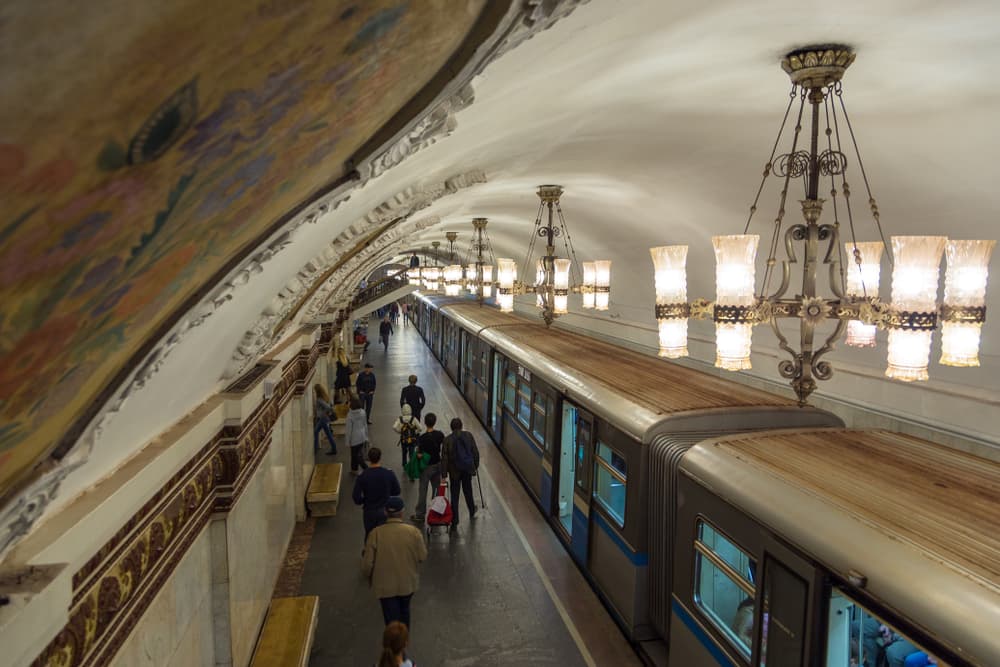
Moscow Metro is one of the most ornate underground transportation networks in the world. Inaugurated in 1935, it now extends over 400 kilometers and serves the Russian capital with remarkable punctuality. Its oldest stations rival museums: Soviet mosaics, bronze chandeliers, bas-reliefs and colored marble transform each platform into an architectural space in its own right. Visiting Moscow Metro means traveling through Soviet history via its décor.
Practical Info at a Glance
- Access: single tickets or rechargeable card (Troika) available at ticket windows and machines in all stations.
- Recommended duration: 2 to 3 hours for a circuit of iconic stations; a full day for architecture enthusiasts.
- Frequency: very frequent trains, especially during rush hours — avoid 8am–9:30am and 5:30pm–7:30pm for comfortable travel.
- Accessibility for people with reduced mobility: varies by station; newer lines have elevators, historic stations remain difficult to access.
- Photography: permitted without tripods or flash in virtually all stations.
What You'll See
Each station in the historic network has its own decorative theme. Soviet architects of the 1930s–1950s competed with ingenuity to glorify labor, homeland and revolution. Smalt mosaics, white marble sculptures, vaulted ceilings and indirect lighting create a unique atmosphere, far removed from the austerity one might expect in a transport network.
History and Context
The first section, inaugurated on May 15, 1935 under Stalin, connected Sokolniki to Park Kultury. The metro was meant to embody the power of socialism: noble materials (marble, granite, bronze) were brought from all Soviet republics. During World War II, stations served as air raid shelters. Stalin even set up a command post at Kirovskaya (now Chistye Prudy).
Highlights of the Visit
Komsomolskaya (Line 5 — Circle)
Considered the most spectacular in the network. Its barrel vault ceiling is covered with golden mosaics depicting Russian military scenes. The monumental chandeliers and yellow marble columns make it a space of rare visual richness.
Mayakovskaya
Inaugurated in 1938, it won the Grand Prize at the 1939 New York World's Fair. Its Art Deco architecture, stainless steel columns and 34 ceiling mosaics representing "24 hours of Soviet sky" make it a masterpiece by architect Alexei Dushkin.
Kievskaya (Line 5 — Circle)
Dedicated to Russian-Ukrainian friendship, it features mosaics illustrating the shared history of both peoples. Warm tones and scenes of Ukrainian daily life contrast with the solemnity of other stations.
Novoslobodskaya
Its 32 stained-glass windows framed in brass, designed by artist Pavel Korin, cast a unique filtered and colored light throughout the network. The grand central mosaic represents an allegory of peace.
Ploshchad Revolyutsii
Ninety-six life-size bronze statues populate its niches: soldiers, peasants, athletes, students. Local tradition holds that touching the nose of the border guard's dog brings good fortune — the bronze is polished smooth by millions of hands.
Photography Tips
Stations are artificially lit: a camera capable of high ISO with minimal noise is an advantage. Arrive early in the morning (before 8am) or mid-day to avoid crowds on the platforms. The vistas down the colonnades of Komsomolskaya or Ploshchad Revolyutsii offer strong architectural framing. Tripods are generally prohibited.
Location and Access
The network covers all of Moscow. For a circuit of historic stations, Line 5 (Circle) is the ideal starting point: it connects several iconic stations in a loop. Komsomolskaya is in immediate proximity to Moscow's three major railway stations (Leningradski, Yaroslavski, Kazanski). The Kremlin is accessible from Alexandrovsky Sad or Biblioteka imeni Lenina stations.
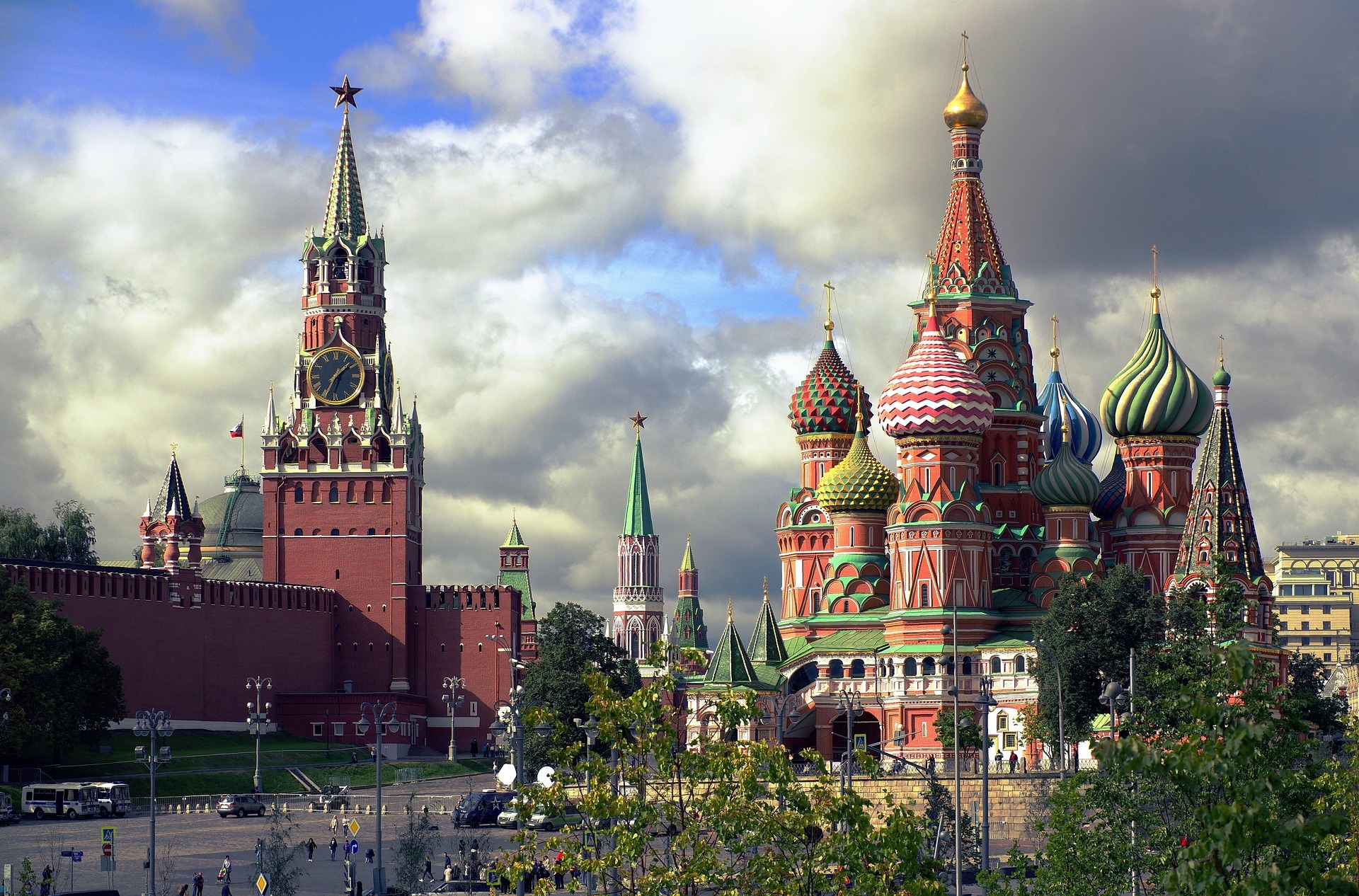
Red Square and the Kremlin of Moscow are a short walk from several central stations.
Nearby Attractions
- Red Square — historic heart of Moscow, accessible from several central stations.
- Kremlin of Moscow — medieval fortress and seat of Russian power, steps away from Alexandrovsky Sad station.
- Saint Basil's Cathedral — its colorful domes dominate Red Square, visible from the exit of Okhotny Ryad station.
- Tretyakov Gallery — the world's largest collection of Russian art, accessible from Tretyakovskaya station.
- Gorky Park — major leisure park on the Moskova riverbank, served by Park Kultury station.
Frequently asked questions
The metro operates year-round. On weekdays, favor the 10am–4pm window to avoid rush hours and move freely between stations.
In 2 to 3 hours, it's possible to visit 6 to 8 historic stations by staying on Line 5 (Circle) and adding a few detours on the central radial lines.
Yes, photography without tripods is generally permitted in stations. Avoid obstructing passengers and blocking access to platforms.
Several local agencies offer themed circuits in English-speaking guides, often combined with visits to the historic center. Inquire with your Nomadays agency.
Newer stations have elevators and adapted facilities. Historic stations from the 1930s–1950s, with their long escalators and lack of elevators, remain difficult for people with reduced mobility.
Yes, it's a natural combination. Several central stations (Alexandrovsky Sad, Okhotny Ryad) provide direct access to the Kremlin and Red Square within minutes on foot.
Interested in this visit?
We can include it in your personalised itinerary.