Lomonosov State University of Moscow
Lomonosov State University of Moscow
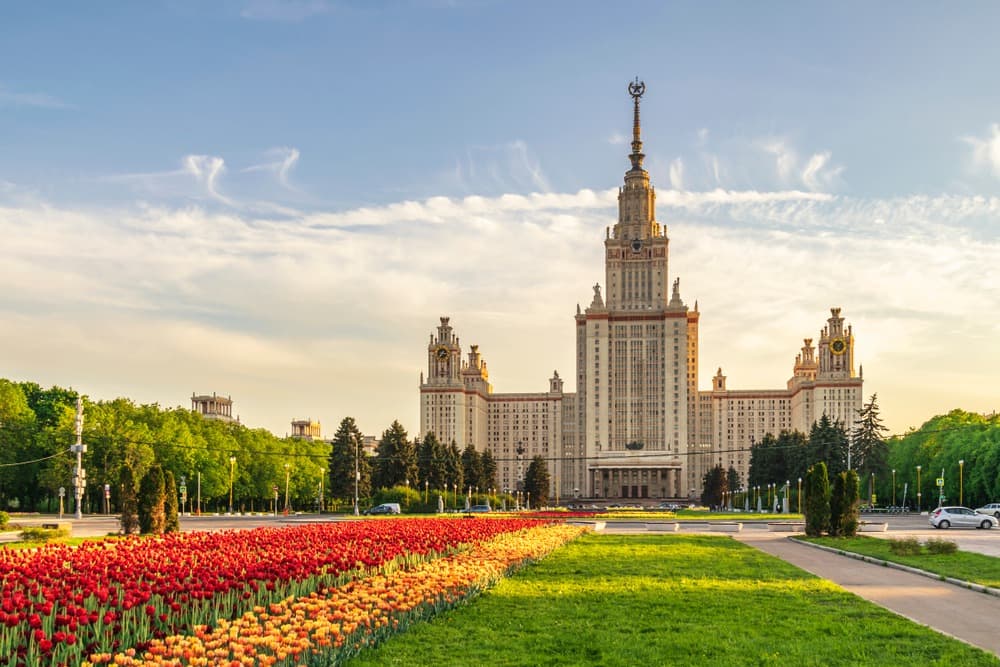
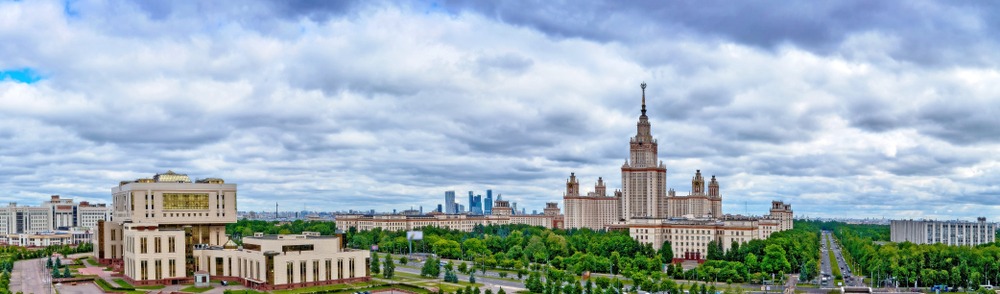
Founded in 1755, Lomonosov State University has occupied a 36-story Stalinist tower on Sparrow Hills since 1953, above the Moskva River.
Lomonosov State University, commonly known as MGU, is the oldest state university in Moscow. Its main building, erected on Sparrow Hills in the 1950s, is one of the "Seven Sisters of Stalin" and constitutes one of the most recognizable structures in the Russian capital. The site combines a major scientific institution with an architectural landmark of the Soviet era.
Why visit Lomonosov State University
The Sparrow Hills campus is less a museum attraction than an urban landmark. The central tower, with its 36 stories and four lateral wings of 18 stories each, dominates a campus spanning approximately 320 hectares. The building epitomizes Stalinist aesthetics: massive volumes, dense ornamentation, and a red star weighing over 12 tons atop the spire.
The appeal of a visit rests on three elements: the tower's silhouette, visible from near and far; the Sparrow Hills panoramic terrace, located just steps away, which offers sweeping views of the Moskva River and Luzhniki Stadium; and the university atmosphere of a campus hosting tens of thousands of students.
University history
The university was founded on January 25, 1755 at the initiative of scholar Mikhail Vasilyevich Lomonosov. The inauguration took place in the presence of Empress Elizabeth and Ivan Shuvalov, a sign of the importance accorded to the institution from its creation. Over the centuries, it occupied several buildings in central Moscow. The former building facing the Manege now houses the Faculty of Journalism and the Church of Saint Tatiana, patron saint of Russian students.
The relocation to the current site was part of the grand post-war architectural program. Plans were entrusted to architect Lev Rudnev, and construction on Sparrow Hills took place between 1949 and 1953. The university officially moved to the new site in 1953. At that time, the building was the tallest in the city and remains, among the Seven Sisters, the one with the most visible silhouette.
What to see on-site
The central tower
The main building contains 36 stories and reaches approximately 240 meters in height with its spire, making it one of the tallest Stalinist skyscrapers. The facades are punctuated with sculptures, clocks, coats of arms, and allegorical figures related to science and labor. The interior is not freely open to the public; observation is done from the exterior, by walking around the forecourt.
Sparrow Hills
A short walk from the tower, the Sparrow Hills panoramic terrace (Vorobiovy Gory) offers an unobstructed view of the Moskva River, Luzhniki Stadium, and beyond, central Moscow. It is one of the most visited viewpoints in the city, particularly in late afternoon.
The campus and its faculties
The university comprises a wide variety of faculties: mathematics, physics, chemistry, biology, geology, geography, medicine, philology, philosophy, history, law, economics, sociology, journalism, foreign languages, among others. Several research institutes are affiliated with the institution, including the Institute of Asia and Africa, the Skobeltsyn Institute of Nuclear Physics, and the Sternberg State Astronomical Institute. The university collaborates closely with the Russian Academy of Sciences.
In terms of scale, the campus hosts approximately 40,000 students and 8,500 teachers and researchers, including nearly 3,000 international students each year. The institution regularly ranks among the best Russian universities in major international rankings, notably Times Higher Education.
Practical information
- Building access: the interior is reserved for students and staff. Visits are limited to the exterior, forecourt, and campus surroundings.
- Duration: allow approximately 1 hour on-site, longer if combined with Sparrow Hills.
- Admission: free access to exterior areas.
- Best time: late afternoon enhances the facade and light on the Moskva River; in winter, the site is photogenic under snow but temperatures are harsh.
How to get there
The most straightforward method is the metro. From central Moscow, take the Line 1 (red line) and exit at Universitet station; the main building is a ten-minute walk away. Vorobiovy Gory station, also on Line 1, provides direct access to the Sparrow Hills panoramic terrace, along the Moskva River.
Nearby attractions
- Sparrow Hills, its panoramic terrace, and wooded paths overlooking the Moskva River.
- Luzhniki Stadium, the city's main sports complex, visible from the hills.
- The Cathedral of Christ the Saviour, accessible by metro from the campus.
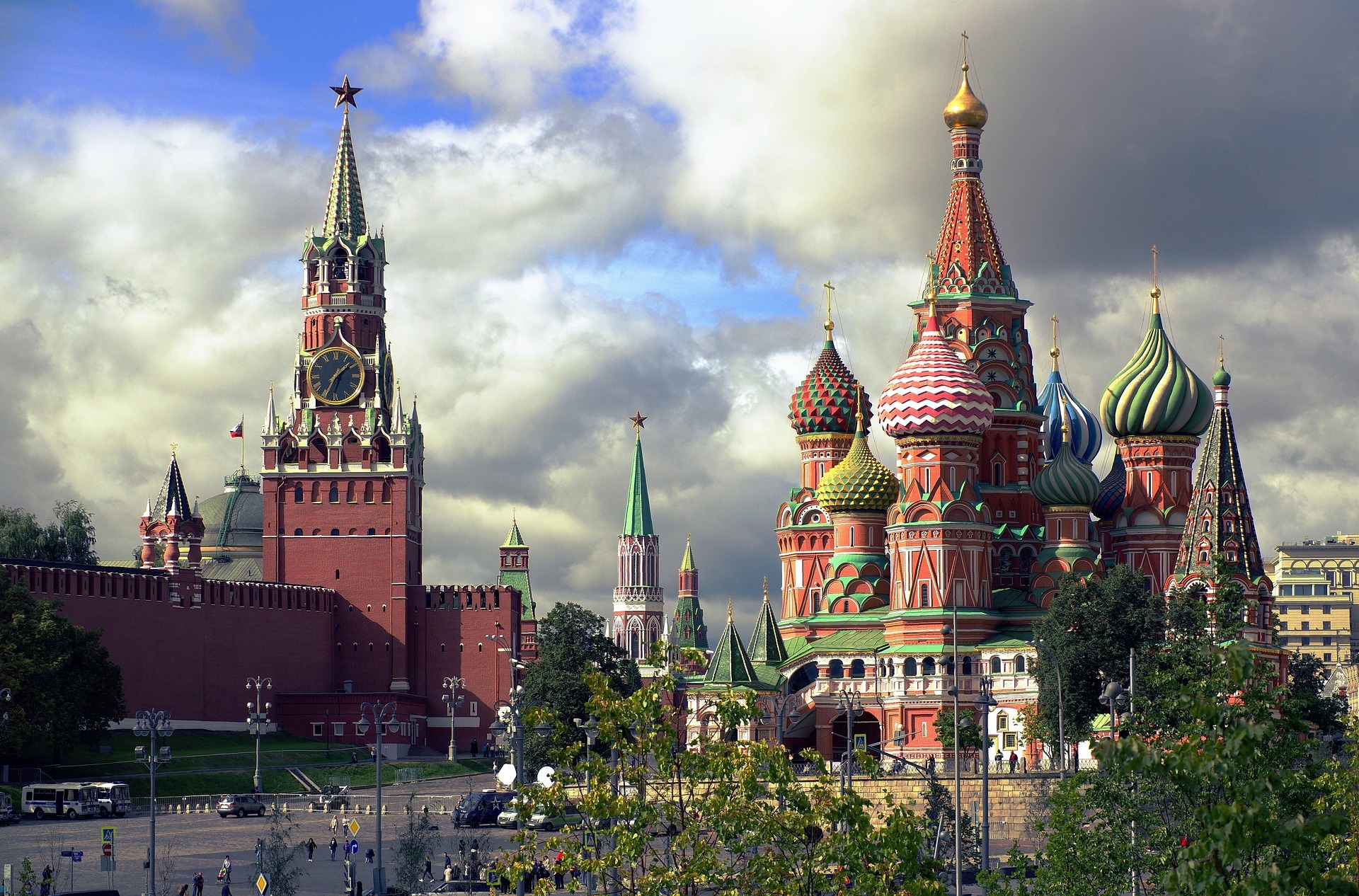
- The Saint Basil's Cathedral and Red Square, in the historic center.
- The Bolshoi Theatre, another major cultural institution in Moscow.
FAQ
Frequently asked questions
No, access to the main building is reserved for students and staff. Visits are limited to the exterior, forecourt, and campus surroundings.
The building contains 36 stories and reaches approximately 240 meters in height with its spire, making it one of the tallest Stalinist structures in Moscow.
Seven Stalinist skyscrapers built in Moscow in the late 1940s and early 1950s. The Lomonosov University tower is the tallest of them.
On January 25, 1755, at the initiative of scholar Mikhail Lomonosov, in the presence of Empress Elizabeth and Ivan Shuvalov. It is the oldest state university in Moscow.
Take Line 1 (red line) and exit at Universitet station. The main building is a ten-minute walk away.
Planning your trip
Lomonosov State University combines easily with a visit to Sparrow Hills and a half-day in central Moscow. To integrate this site into a broader itinerary, consult our tour suggestions in Russia.
Nearby

Interested in this visit?
We can include it in your personalised itinerary.