Saint Petersburg
Saint Petersburg
Once the imperial capital born from the dream of Peter the Great, Saint Petersburg unfolds baroque palaces, canals and gilded cathedrals along the Neva River. A comprehensive guide to planning your journey.
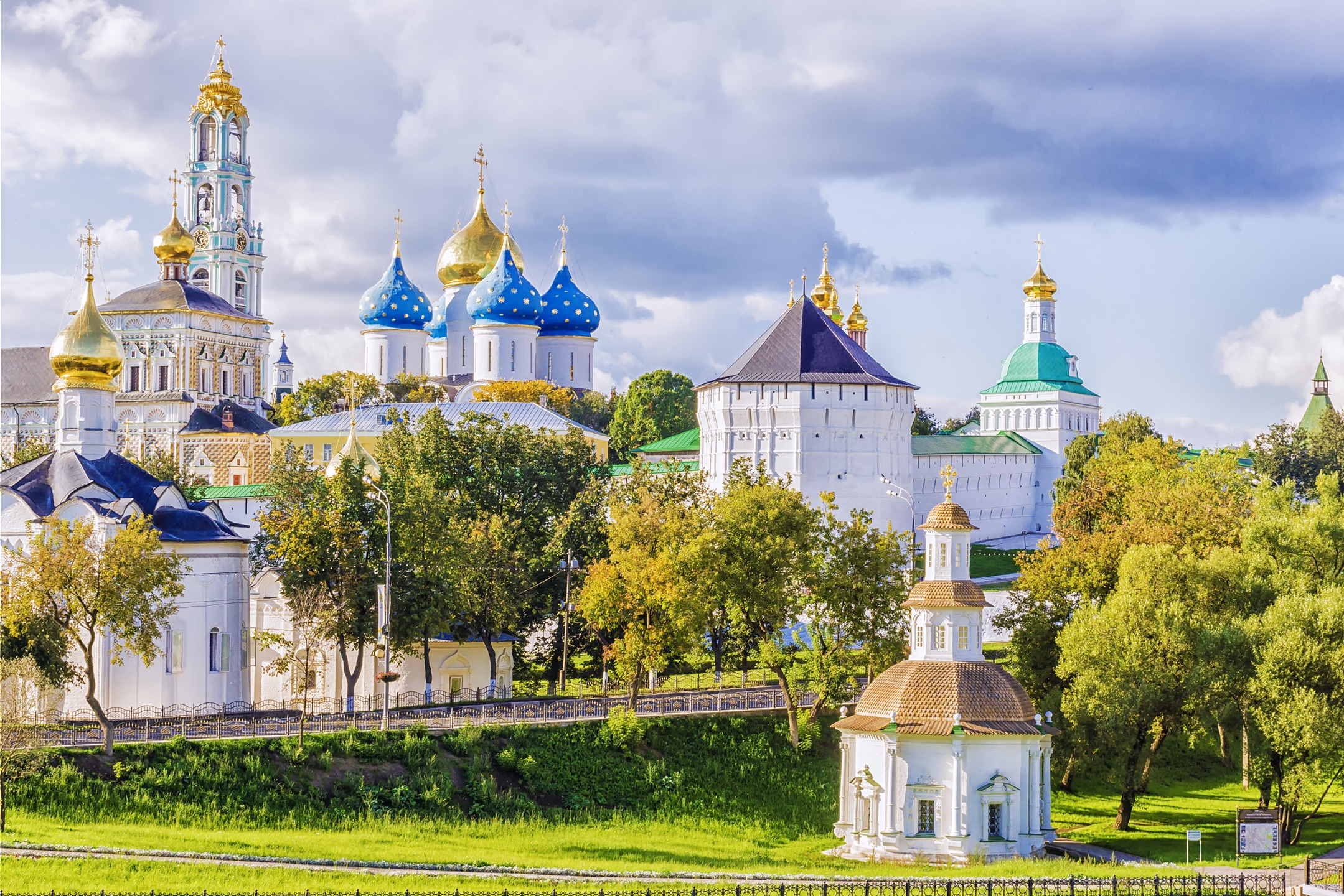
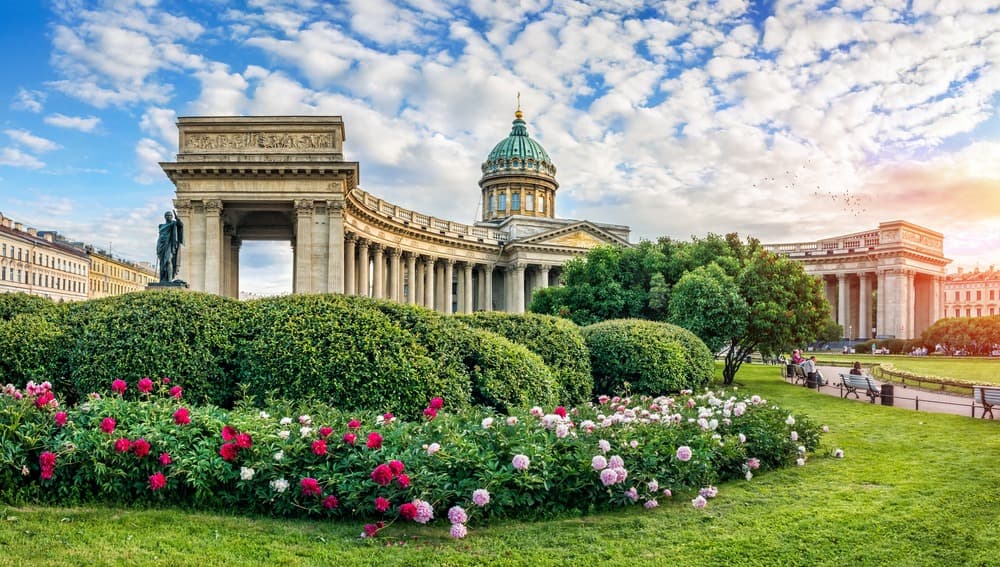
Former capital of Russia, Saint-Petersburg is a city that captures the imagination. In fact, the city itself was born from a dream of Tsar Peter the Great who wished to see his country blessed with the most beautiful capital the world had ever known. But in barely a decade, what was merely a vision became reality, and Russia found itself in possession of what Britannica Encyclopedia describes as: "one of Europe's most splendid and harmonious metropolises." Today, the cultural capital of Russia, Saint Petersburg transports its visitors into a world of beauty through its bridges, parks, fountains, cathedrals and sumptuous palaces.
A Touch of History
Saint-Petersburg, nicknamed "the Venice of the North" because of its numerous canals and romantic character, is one of Europe's most beautiful cities. It was born from the ambition of a Tsar, Peter the Great, who dreamed of giving his country a "window onto Europe."
Indeed, the history of Saint-Petersburg begins in the late 17th century, when Russia's expansion was hindered by its lack of access to the sea. However, the territory closest to the sea belonged to Sweden. So, to realize his dreams, the young Tsar declared war on Sweden in 1700. Although this first attempt failed, Peter the Great did not give up and succeeded in 1703 in driving the Swedes from the coveted territory. After their withdrawal, the sovereign quickly built a fortress to defend himself. Thus, on May 16, 1703, the construction of what we know today as the Peter and Paul Fortress was recognized as the founding date of the city of Saint-Petersburg.
Unlike other cities in the country, Saint-Petersburg was built at an incredible pace. In barely a decade, the city had nearly 35,000 buildings, something unprecedented for the era. By 1712, the government offices that had been based in Moscow were relocated to the new city, which that same year became the capital of great Russia, a status it held for two centuries. The 18th century was a period of glory for Saint-Petersburg with the emergence of the city's emblematic monuments such as palaces, churches, government buildings, and more.
In the early 20th century, the city became a military power and the birthplace of two great revolutions. Saint-Petersburg began to lose its status as the capital of Russia and was renamed Petrograd. Then, in honor of the father of the Russian Revolution and the first leader of the Soviet Union, Vladimir Lenin, who died in 1924, the city took the name Leningrad, before returning to its original name, Saint-Petersburg, in 1991.
The city of tsars and poets as it is also known, was not spared by the two great wars that cost the lives of more than a million of its inhabitants. However, at the end of the Second World War, reconstructions were carried out at the same pace as the creation of the city. Today, Saint-Petersburg has become once again the splendid city endowed with a unique charm thanks to its monuments, its bridges, and not forgetting its fascinating history.
Discovering the City of Saint-Petersburg
Travelers visiting Saint-Petersburg for the first time are often somewhat disoriented, so many are the places to visit in the city. A simple stroll through the city transforms itself into a true sightseeing tour where discoveries and wonder accompany each step. Added to this, Saint-Petersburg holds countless invaluable artistic and cultural treasures. Among the must-sees, for example, you have the Hermitage Museum. It is nothing less than the world's largest museum in terms of objects on display. To give you an idea of the scale of this place, it is estimated that if a person spent only one minute in front of each displayed object, it would take them several years to visit the museum in its entirety.
Saint-Petersburg is also renowned for its fountains, parks, palaces and cathedrals whose beauty is rarely matched, even nowadays. Like Moscow, which also has one of the world's most sumptuous metro systems. A simple metro ride is itself a true cultural treat. In fact, the famous American newspaper "The New York Times" described Saint-Petersburg's metro as a "succession of 20th-century underground palaces."
As for nightlife, the mythical "White Nights" are not to be missed. As the name suggests, this is a festival that takes place during the long summer days when night no longer falls. While festivities begin in early May, the festival is in full swing in mid-June when concert halls, bars and restaurants are packed.
The Best Time to Visit Saint-Petersburg
While most travelers choose summer to visit Saint-Petersburg, know that this is a destination worth visiting in every season.
Of course, in summer (between late May and late August), temperatures are pleasant, and thanks to its geographical position at the northern edge of the country, Saint-Petersburg enjoys exceptional luminosity offering breathtaking scenery during this time of year. However, the other seasons are not to be overlooked either, especially if you want to enjoy this magnificent city away from the crowds.
Approximately 800 km separate the city of Saint-Petersburg from the capital, Moscow. Four options are available for you to get there.
By Air
Flying is the simplest and fastest way to reach Saint-Petersburg from Moscow. Moreover, every day, several airlines operate this route, such as Aeroflot, S7 Airlines, Rossiya Airlines, Utair, and Orenburg Airlines.
By Train
The train is also an excellent way to reach Saint-Petersburg from Moscow. Moreover, you have a choice between the high-speed train (Sapsan) during the day, and overnight trains, the most famous of which are the Red Arrow and the Grand Express. While the former takes approximately 4 hours to reach its destination, overnight trains complete the journey in 8 to 9 hours.
By Bus
Saint-Petersburg is served by numerous bus companies from Moscow. However, given the great distance (approximately 800 km) separating these two cities, this option is recommended for those who are not pressed for time and who wish to discover the magnificent landscapes of Eastern Europe.
By Boat
Many also choose to reach Saint-Petersburg by boat during a cruise departing from Moscow.
Attractions in Saint Petersburg
See all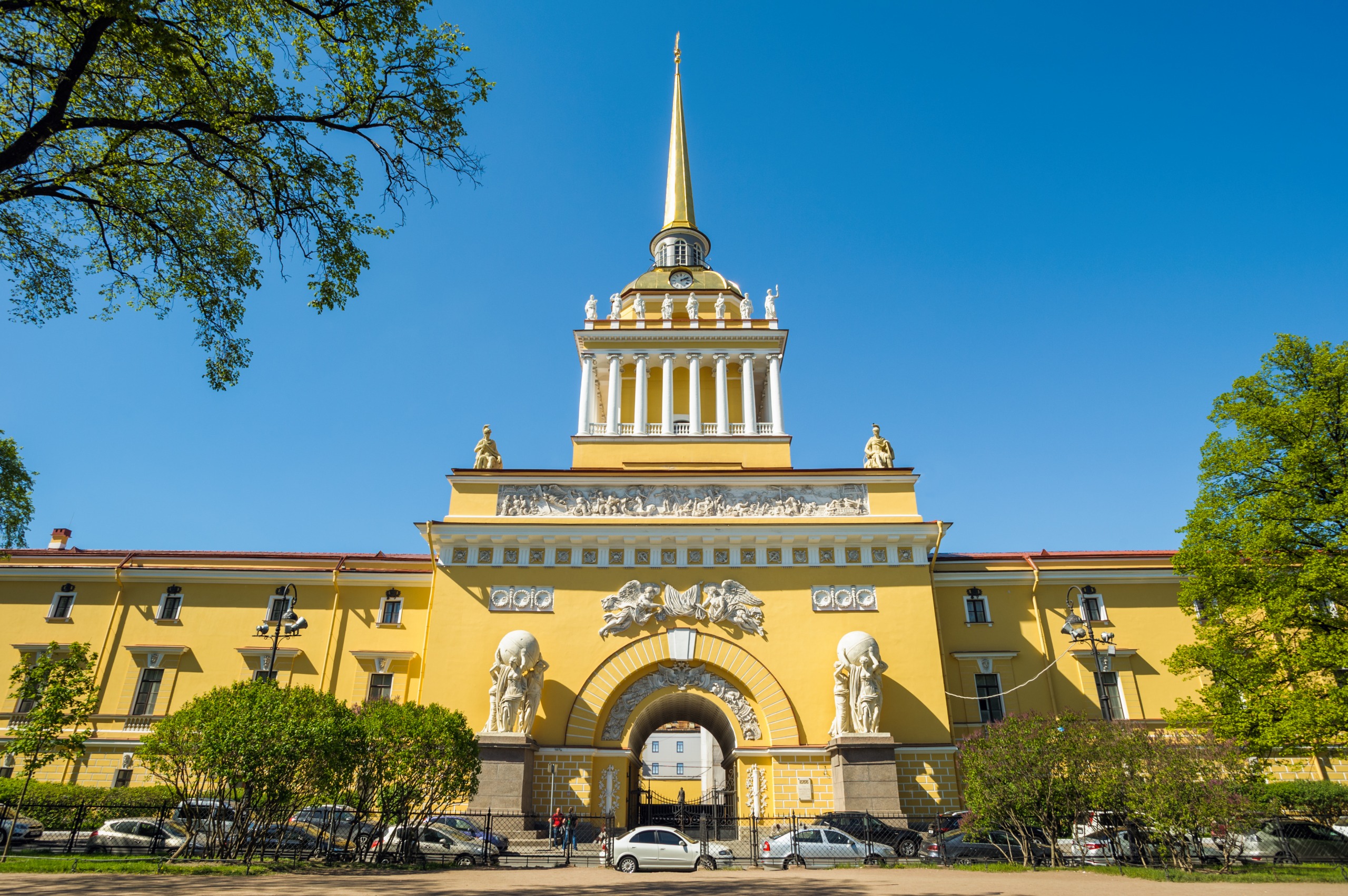
Amirauté de Saint-Pétersbourg
L'Amirauté de Saint-Pétersbourg dresse sa flèche dorée à 72 mètres au-dessus du centre historique, face au palais d'Hiver et au bord de la Néva.
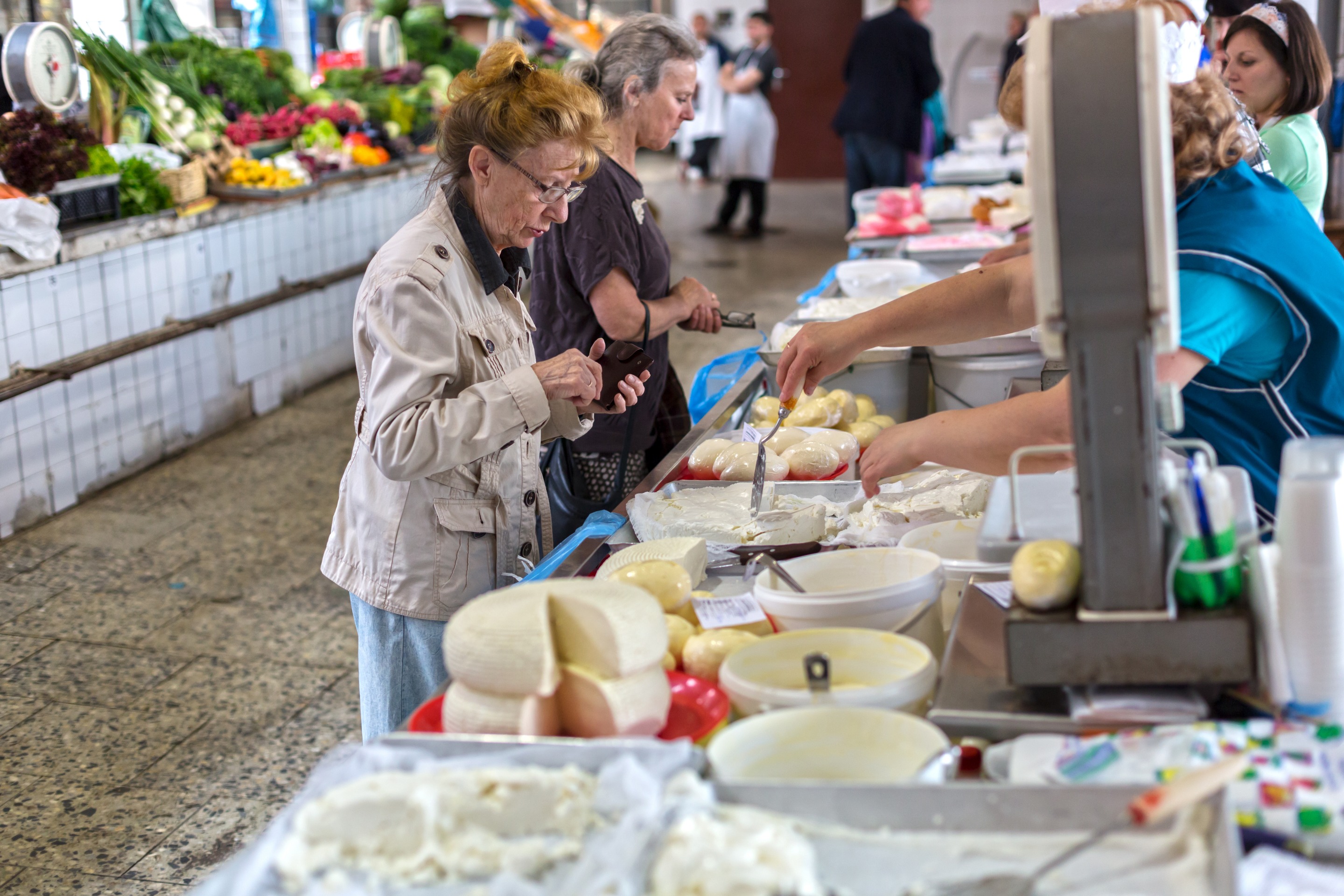
Marché de Kuznechny
Le marché de Kuznechny est l'un des plus anciens marchés alimentaires de Saint-Pétersbourg.
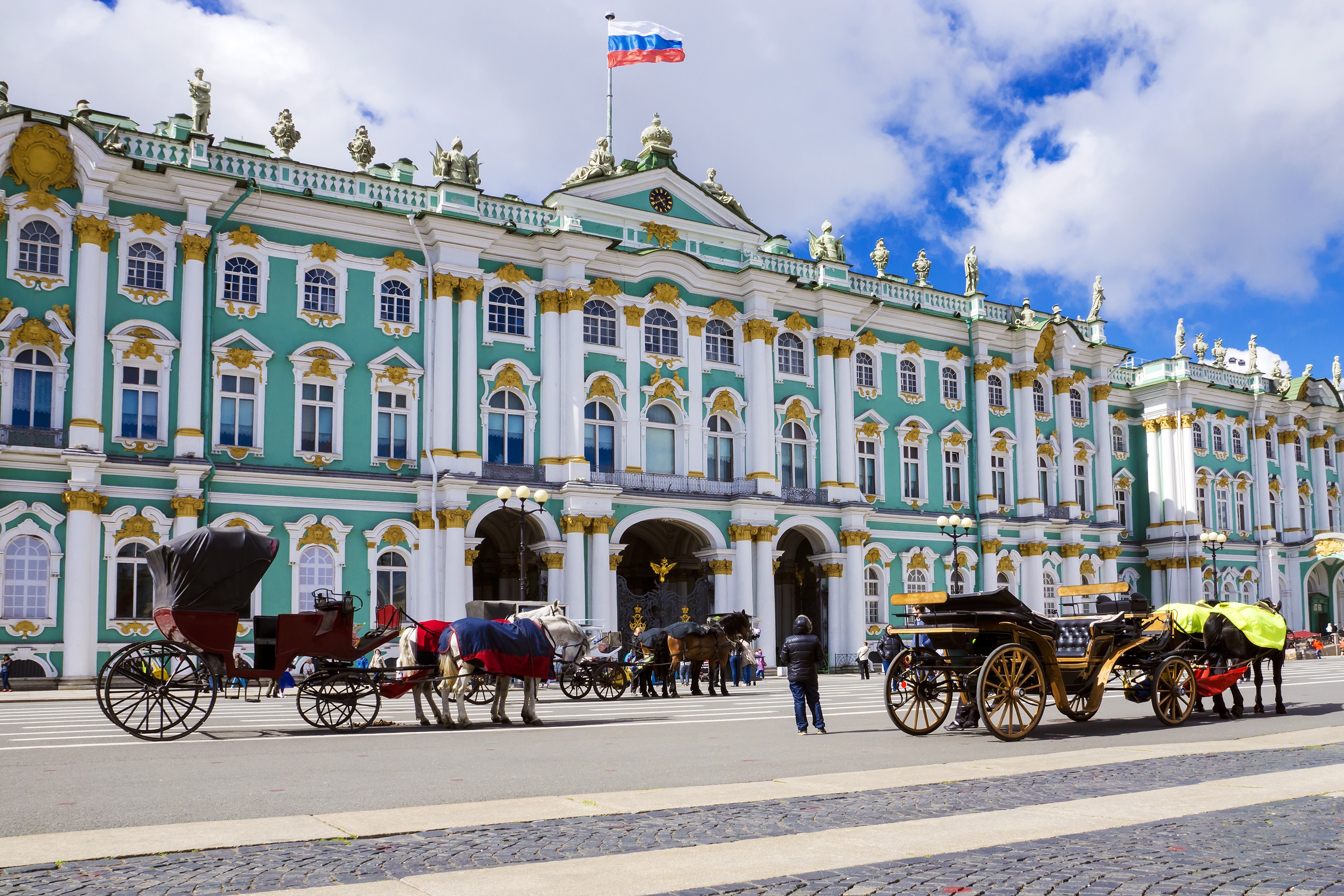
Musée de l'Ermitage
Installé sur les rives de la Neva, le musée de l'Ermitage occupe cinq bâtiments emblématiques de Saint-Pétersbourg.
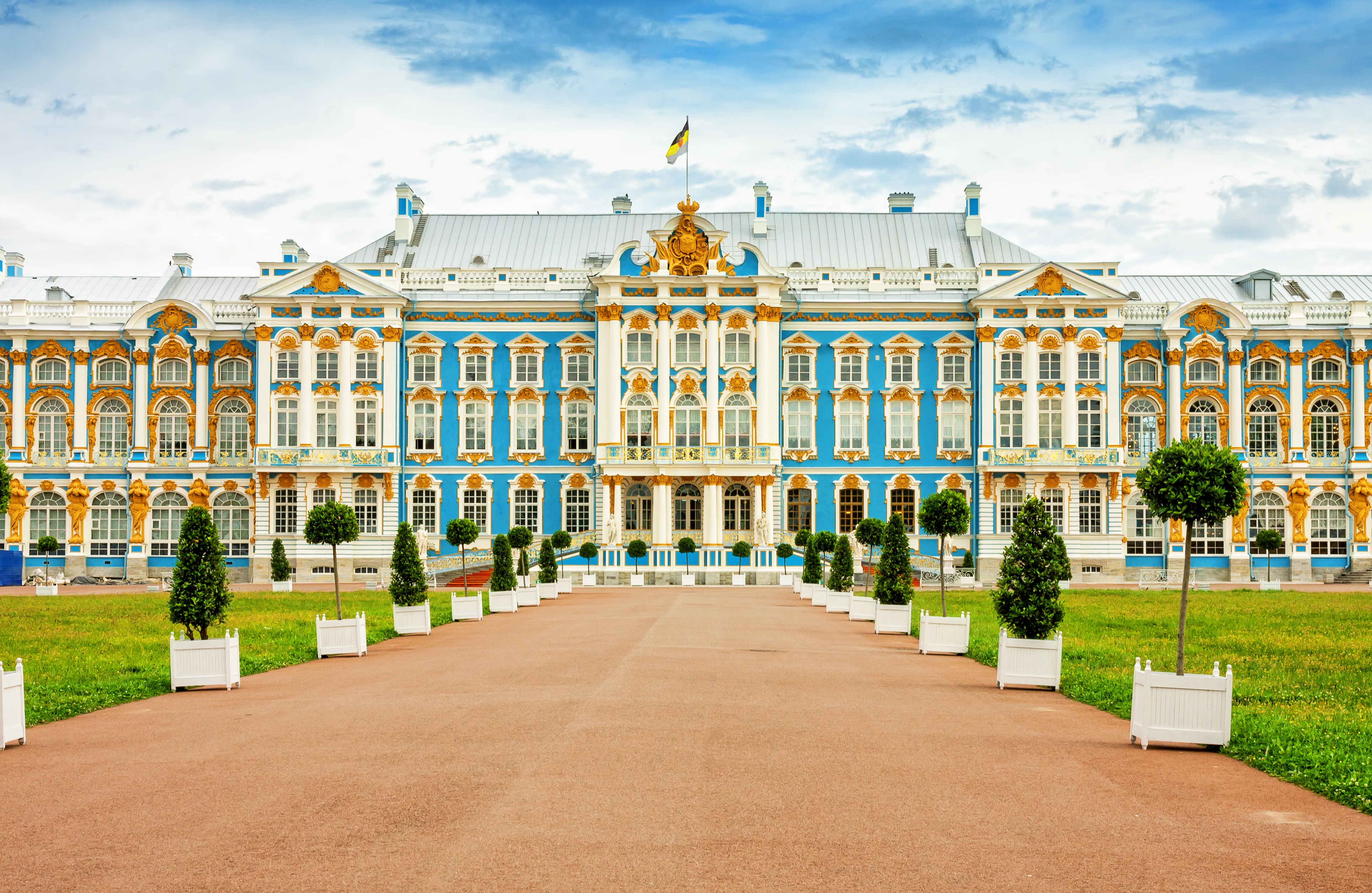
Pouchkine
À 25 kilomètres au sud de Saint-Pétersbourg, la ville de Pouchkine conserve l'ensemble de palais, parcs et pavillons construit sous le nom de Tsarskoïe Selo, le « village des Tsars ».
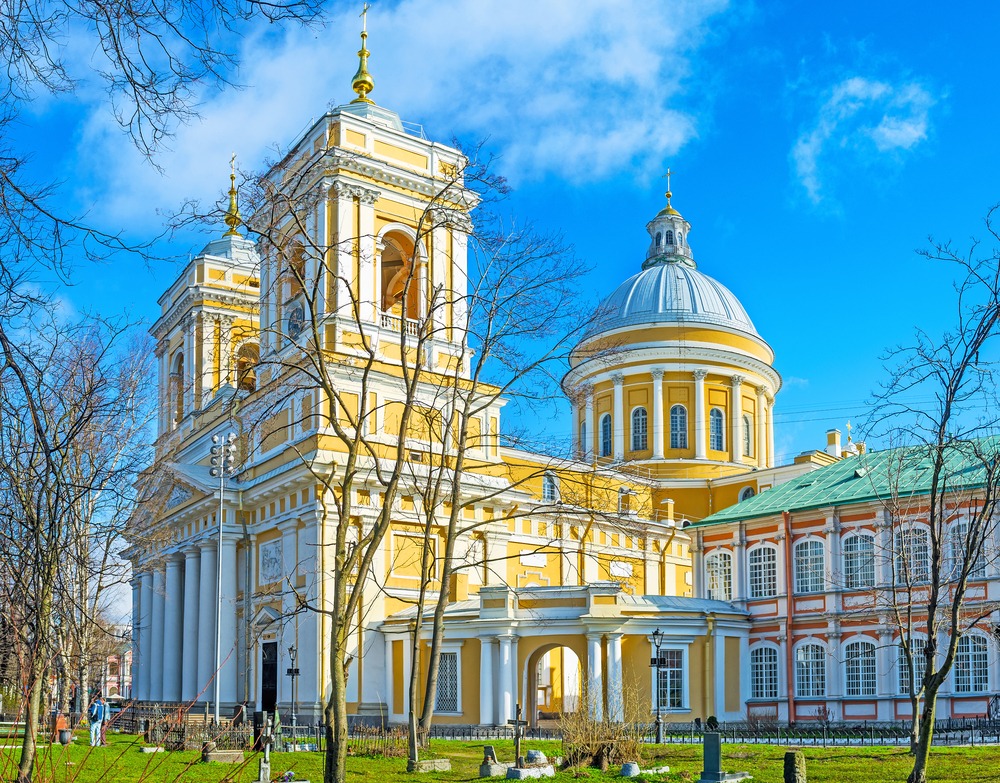
Laure Alexandre-Nevski
La Laure Alexandre-Nevski est le premier monastère de Saint-Pétersbourg, fondé par Pierre le Grand en 1710 sur le site présumé de la bataille de la Néva.
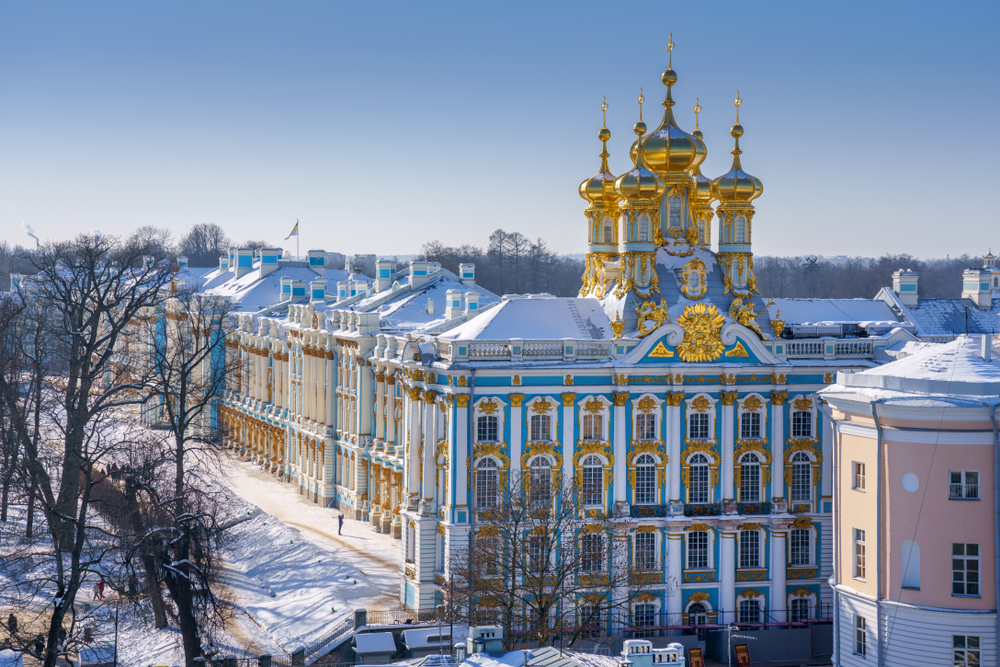
Palais Catherine de Tsarskoïe Selo
À 25 km au sud de Saint-Pétersbourg, dans la ville de Pouchkine — anciennement Tsarskoïe Selo, « le village des tsars » —, le palais Catherine aligne sa façade baroque longue de 350 mètres
Accommodation in Saint Petersburg
See all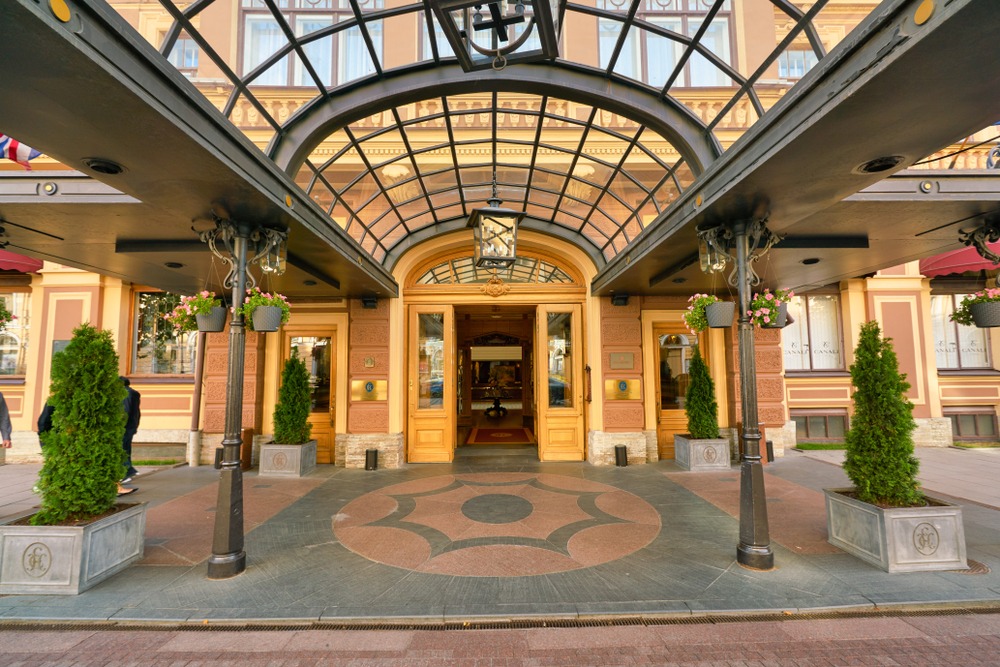
Belmond Grand Hotel Europe
Palace inauguré en 1875 sur la Perspective Nevsky, le Belmond Grand Hotel Europe réunit 266 chambres, suites d'auteur et cinq restaurants à Saint-Pétersbourg.
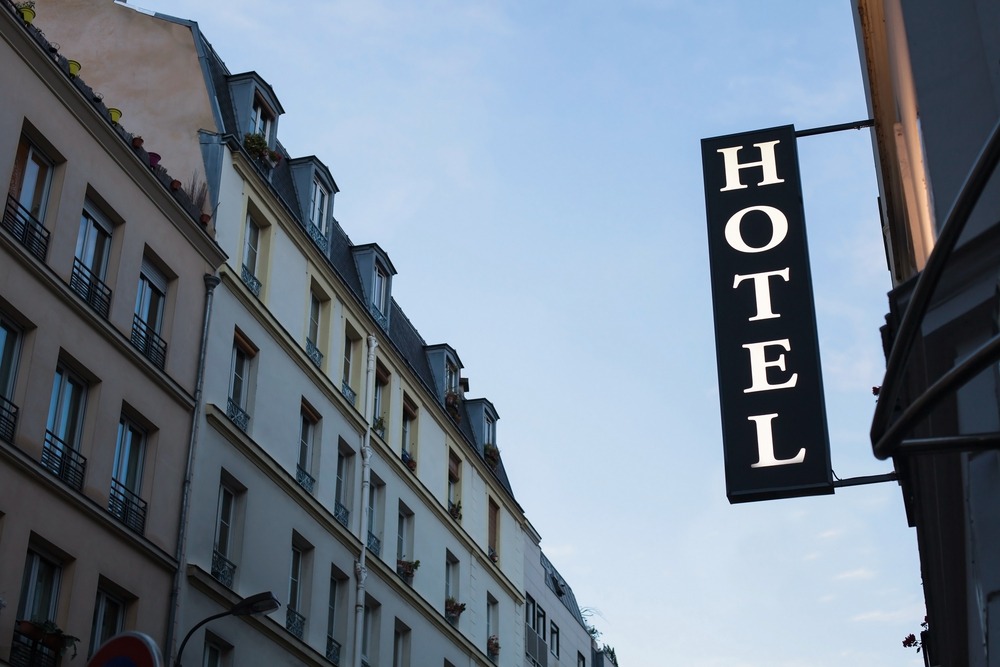
Le Comfort hotel de Saint
Hôtel 3 étoiles de 18 chambres dans le centre des affaires de Saint-Pétersbourg, à 650 m du métro Sadovaïa. Confort urbain, piscine, restaurant et services 24h/24.
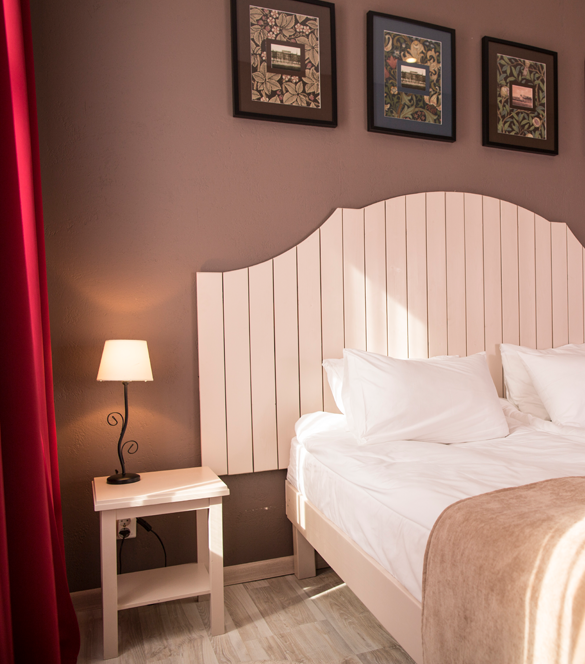
Dashkova Residence Hotel
Hôtel 3 étoiles de 75 chambres dans un immeuble XVIIIe réhabilité, au cœur de Saint-Pétersbourg, à quelques pas de l'Ermitage et de la Neva.
Want to discover this destination?
Our local advisors design your tailor-made trip.