Alexander Nevsky Lavra
Alexander Nevsky Lavra
Saint Petersburg's first monastery, founded in 1710 by Peter the Great, the Alexander Nevsky Lavra houses the relics of the city's patron saint and prestigious cemeteries.
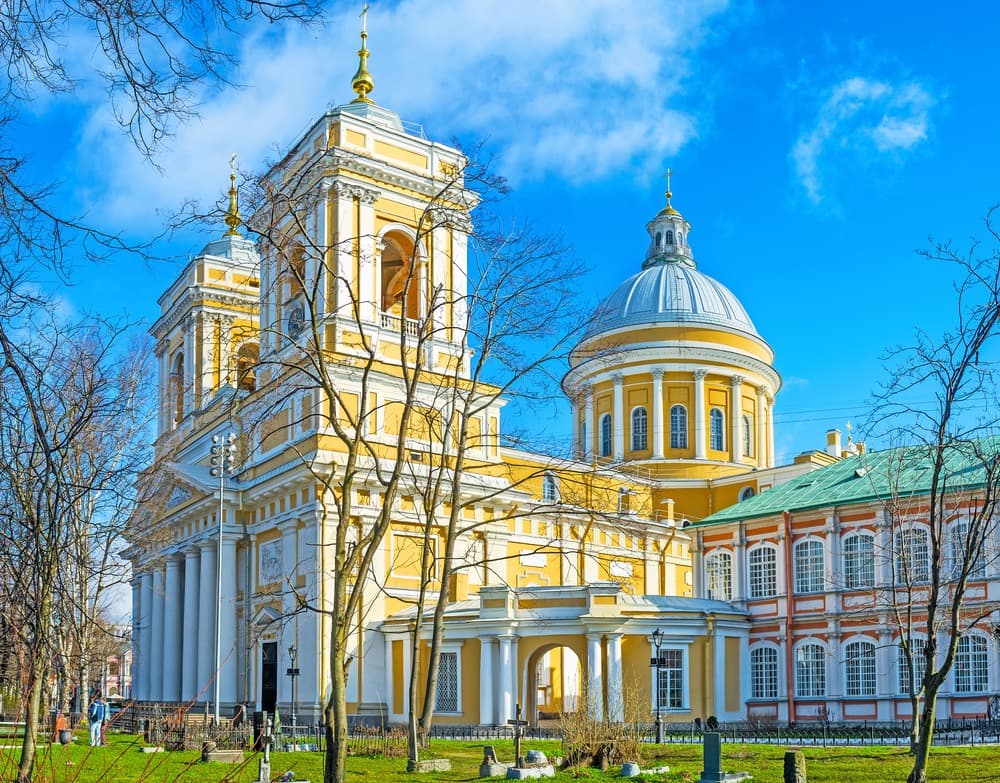
The Alexander Nevsky Lavra is Saint Petersburg's first monastery, founded by Peter the Great in 1710 on the presumed site of the Battle of the Neva. Located at the eastern end of Nevsky Prospect, it houses the relics of Alexander Nevsky, the city's patron saint, as well as several historic cemeteries where some of imperial Russia's greatest figures rest.
Why Visit the Alexander Nevsky Lavra
- Saint Petersburg's oldest monastery, elevated to the prestigious rank of Lavra in 1797 (one of four monasteries of this rank in Russia).
- Burial place of the relics of Saint Alexander Nevsky, protector of the city.
- Two major historic cemeteries where Tchaikovsky, Lomonosov, Euler, Voronikhin, and Dostoevsky (Tikhvin cemetery) rest.
- Architectural ensemble blending baroque and Russian neoclassicism, including the Holy Trinity Cathedral.
- An active religious site that allows visitors to observe contemporary Orthodox monastic life.
History of the Lavra
In 1710, Tsar Peter I decided to erect a monastery at the presumed site of the Battle of the Neva in 1240, where Prince Alexander Nevsky had won a decisive victory against the Swedes. This first monastery in Saint Petersburg was built just seven years after the city's founding and took the name of the prince, canonized by the Orthodox Church and venerated as one of the city's patron saints.
Once construction was well underway, Peter I ordered the transfer of Alexander Nevsky's relics to the new cathedral. A persistent legend recounts that the emperor himself participated in this transfer, lending it a powerful symbolic dimension: anchoring the new capital in the continuity of medieval Russia.
For nearly two centuries, the monastery became the most important burial site of imperial Russia, welcoming members of the royal family, statesmen, military figures, and major cultural personalities. In recognition of its status, it was promoted to Lavra in 1797, a distinction reserved for first-rank monasteries. To connect it to the city's administrative heart, a long axis was laid out to the Admiralty: Nevsky Prospect, which became Saint Petersburg's main thoroughfare.
What to See on Site
The Holy Trinity Cathedral
The centerpiece of the complex, the Trinity Cathedral is a refined example of Russian neoclassicism. This is where the relics of Saint Alexander Nevsky rest, before which pilgrims come to pray. The interior is richly adorned with icons and murals.
The Metropolitan's Residence
Built in a baroque style, it illustrates the monastery's first architectural phase and contrasts with the cathedral's soberness.
The Saint Lazarus Cemetery
Saint Petersburg's oldest cemetery, opened in 1716 with the burial of Natalia Alexeevna, Peter the Great's sister. You'll find the graves of architect Andrei Nikiforovich Voronikhin, polymath Mikhail Vasilievich Lomonosov, and mathematician Leonhard Euler.
The Tikhvin Cemetery
Located across the way, this cemetery concentrates the tombs of major figures in Russian culture: composer Pyotr Ilyich Tchaikovsky, painter Ivanov, and sculptor Klodt, among others.
The Museum of Urban Sculpture
Located within the monastery grounds, it houses a collection of sculptures and funerary monuments related to the city's history.
Practical Information
The monastery is an active religious site: respectful dress is required (shoulders covered, headscarf for women inside the cathedral). Allow 1.5 to 2.5 hours to leisurely explore the cemeteries, cathedral, and museum.
Entry to the cathedral is free for worshippers. Access to the historic necropolises (Saint Lazarus and Tikhvin) as well as the urban sculpture museum is paid at moderate rates, with discounts for students and children. Hours vary by section of the complex (cathedral open early morning and evening, cemeteries closed late afternoon): check current hours before your visit.
How to Get There
The main entrance is located on Alexander Nevsky Square, opposite the Moscow Hotel.
- Metro: Ploschad Alexandra Nevskogo station, served by lines 3 and 4.
- Bus: line 1 runs the entire length of Nevsky Prospect and stops immediately nearby.
- On foot: from the center, allow approximately 45 minutes following Nevsky Prospect from west to east.
Nearby Attractions
The Lavra marks the eastern end of Nevsky Prospect, making it an ideal starting or ending point for exploring Saint Petersburg's main axis:
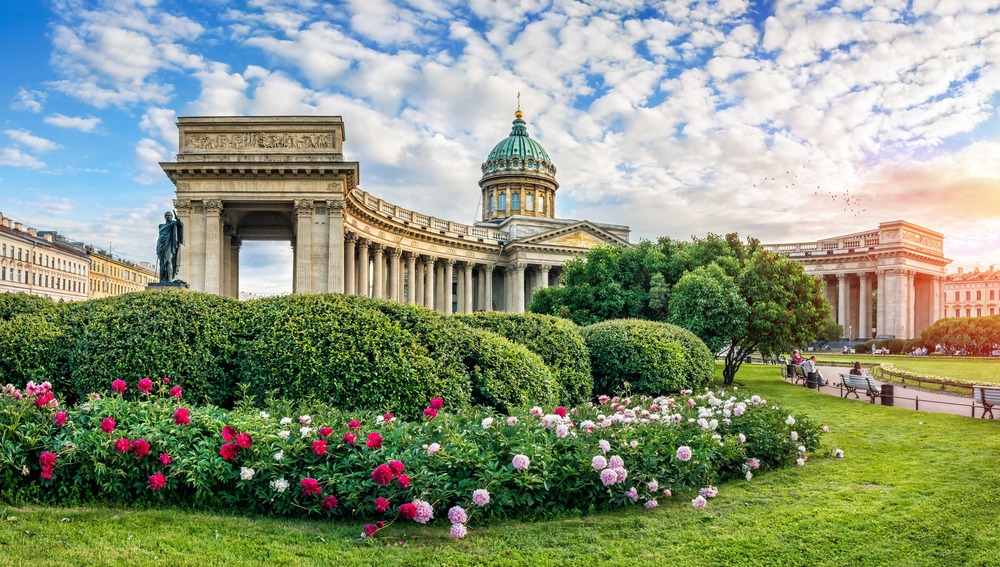
- The Kazan Cathedral, halfway along Nevsky Prospect.
- The Admiralty of Saint Petersburg, which anchors the avenue's other end.
- The Pushkin Museum of Fine Arts to extend your cultural visit.
Frequently Asked Questions
Frequently asked questions
The title of Lavra is an honorary distinction awarded to first-rank Orthodox monasteries. The Alexander Nevsky Monastery received it in 1797, placing it among Russia's most prestigious religious sites.
Access to the Holy Trinity Cathedral is free for the faithful. However, visiting the historic cemeteries (Saint Lazarus and Tikhvin) and the urban sculpture museum is paid at a moderate rate, with student discounts available.
The graves include composer Tchaikovsky, scholar Lomonosov, mathematician Euler, architect Voronikhin, and sculptor Klodt.
Plan 1.5 to 2.5 hours to visit the cathedral, both cemeteries, and the museum. Religious history enthusiasts may spend a full afternoon here.
As an active monastery, respectful dress is expected: shoulders and knees covered, and a headscarf for women when entering the cathedral.
Plan Your Trip
The Alexander Nevsky Lavra fits naturally into a cultural stay in Saint Petersburg, alongside major Orthodox cathedrals and imperial museums. To build a tailor-made itinerary, explore our Russia travel ideas.
Interested in this visit?
We can include it in your personalised itinerary.