Volga
Volga
The Volga spans 3,530 km through European Russia, from medieval kremlins in the north to the lotus-dotted Caspian delta. River cruises, cultural stops, and pristine nature along the "Mother Volga."
The Volga is Europe's longest river: 3,530 kilometers from the Valdai Hills to the Caspian Sea. A historic artery of Russia, it flows through major cities—Tver, Yaroslavl, Nizhny Novgorod, Kazan, Samara, Volgograd, Astrakhan—and has shaped Russian economy, culture, and identity for centuries. Navigating the Volga means traveling through deepest Russia in all its diversity.
Quick Reference
- Access: The river is reachable from numerous cities served by train, plane, or car; major river cruise companies embark from Moscow, Saint Petersburg, Nizhny Novgorod, or Kazan.
- Recommended duration: A classic Moscow–Astrakhan cruise lasts 10 to 20 days; a visit to a riverside city can take 1 to 3 days.
- Best time: May to September for navigation; river cruise season closes in winter (partial river freeze).
- Dress code: No particular requirements for river travel; appropriate attire required in places of worship in riverside towns.
What You'll See
The landscape changes dramatically by latitude. In the north, forested banks and medieval kremlin cities (Yaroslavl, Kostroma) dominate. In the center, the right bank's cliffs—the Zhiguli Mountains—offer striking panoramas near Samara. In the south, the Volga delta near Astrakhan unfolds a labyrinth of channels, blooming lotus flowers, and migratory birds.
History and Context
Russians call the Volga Mother Volga (Матушка-Волга). An ancient trade route, it connected the Baltic to the Caspian via the Varangian path. The Tatars of the Golden Horde established their capital, Sarai, here. In the 17th century, Cossack leader Stenka Razin led his rebellion on its waters. The Battle of Stalingrad (1942–1943), on its banks, marked the turning point of World War II. The river remains a major transport and energy corridor today, lined with major hydroelectric dams.
Highlights of Your Visit
Yaroslavl and the Kremlin of Upper Volga
Yaroslavl, a UNESCO World Heritage site, concentrates 17th-century monasteries and churches directly along the riverbank. The confluence of the Kotorosl and Volga offers a classic view of golden domes.
Kazan and the Encounter of Cultures
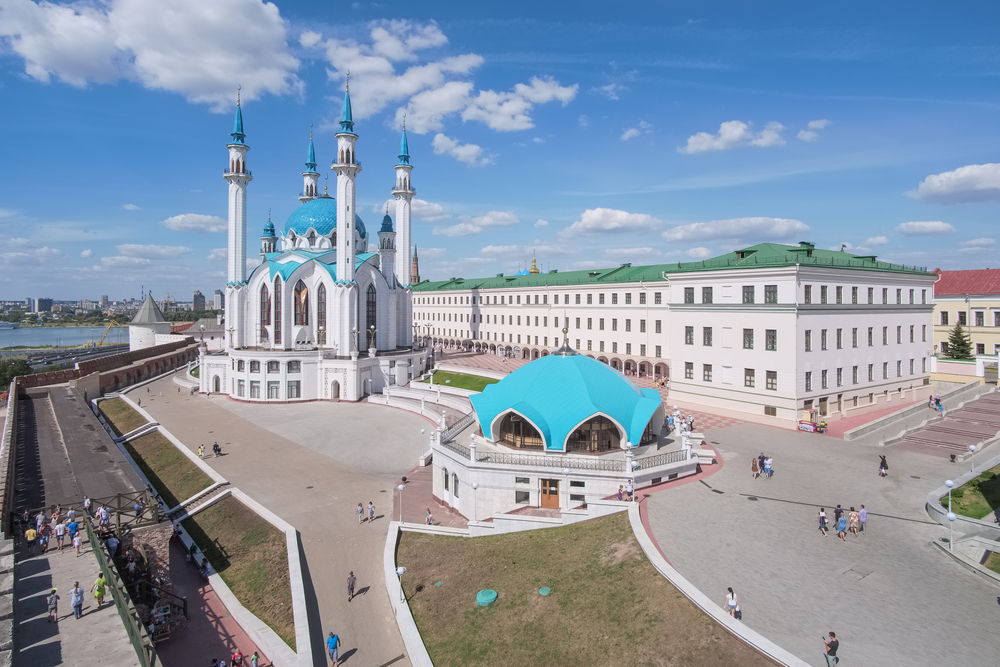
Midway along the river, Kazan illustrates the coexistence of Orthodox Russia and the Muslim Tatar world. The Kremlin of Kazan, also UNESCO-listed, dominates the river from its hilltop.
The Zhiguli Mountains and Samara's Bend
Between Togliatti and Samara, the Volga traces a great meander framed by the Zhiguli Hills. This nature reserve is one of the few pronounced reliefs along the entire river course.
The Delta and Astrakhan's Lotus Blooms
In August, the Volga delta is carpeted with Caspian lotus flowers—a rare spectacle at this latitude. The Astrakhan Nature Reserve protects exceptional biodiversity: sturgeon, pelicans, flamingos.
Photography Tips
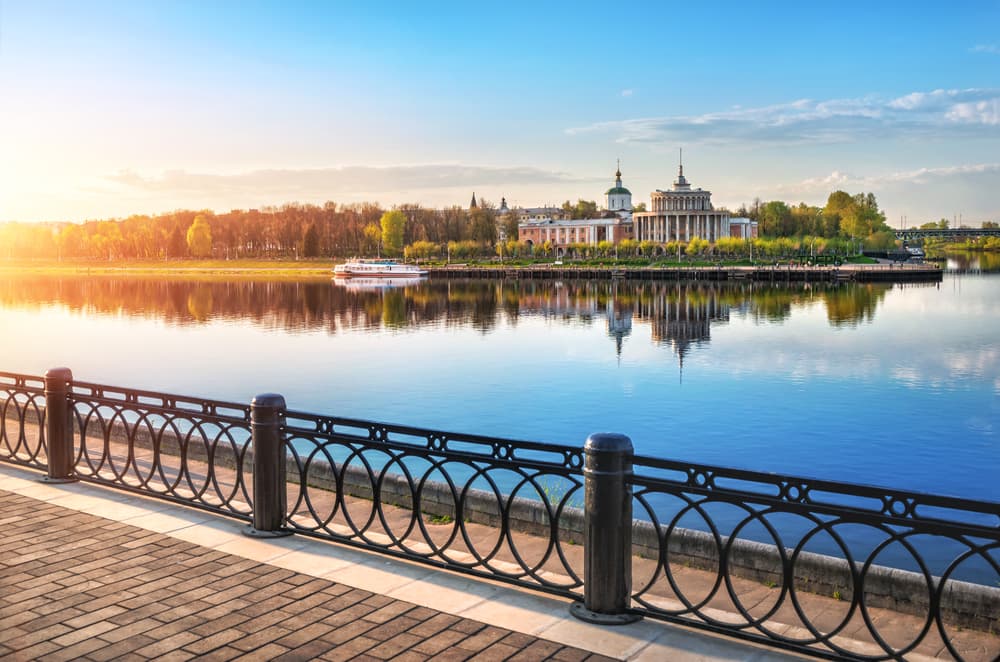
Golden light at dawn and dusk works best on the river, especially from the ship's deck or bridge. Reflections of kremlins and domes in the water are sharpest in calm conditions, early in the morning. In the delta, opt for a small-boat excursion at dawn to photograph lotus flowers and birds without backlighting.
Location and Access
The Volga crosses European Russia from northwest to southeast for roughly 3,530 km. Major riverside cities are served by international airports or high-speed rail stations (Sapsan). River cruises depart mainly from Moscow (Moscow-Volga Canal) or Nizhny Novgorod. Accessibility for visitors with reduced mobility varies by boat and dock; inquire with your local agency.
Nearby Attractions
- Kremlin of Yaroslavl — UNESCO-listed medieval ensemble directly on the Volga's bank.
- Kremlin of Kazan — Tatar-Russian fortress overlooking the river, with the Kul Sharif Mosque.
- Kremlin of Nizhny Novgorod — 16th-century citadel at the confluence of the Volga and Oka.
- Mamaev Kurgan, Volgograd — memorial to the Battle of Stalingrad, overlooking the Volga.
- Volga Delta, Astrakhan — nature reserve, Caspian lotus flowers, and migratory wildlife.
Frequently asked questions
May through September, when the river is navigable and temperatures pleasant. August is ideal for seeing lotus flowers in bloom in the Astrakhan delta.
Between 10 and 20 days depending on stops and cruise line. Shorter cruises (3 to 7 days) exist between two riverside cities.
Yes. Each riverside city can be visited independently by train or plane. Local ferries and water taxis allow you to cross or follow the river on day trips.
No general restrictions on the river itself. Certain military or industrial sites along the banks are off-limits for photography; respect local signage.
Accessibility depends on your chosen vessel and docks. Some modern ships are equipped; others are not. Verify with your agency before booking.
Nizhny Novgorod and Kazan form a coherent pairing (2 to 4 days each), connected by fast boat or train. Yaroslavl is easily added from Moscow.
Interested in this visit?
We can include it in your personalised itinerary.