Sviyazhsk
Sviyazhsk
Founded in 1551 by Ivan the Terrible, Sviyazhsk is a UNESCO-listed island-fortress concentrating Orthodox monasteries, medieval frescoes, and Soviet heritage 40 km from Kazan.
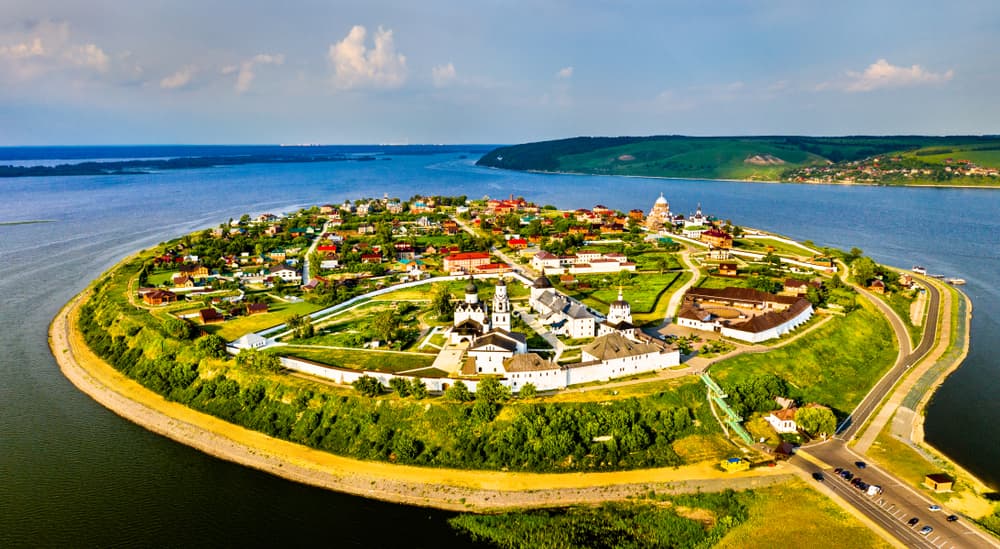
Sviyazhsk is a historic island town located at the mouth of the Sviïaga River, roughly forty kilometers west of Kazan. Founded in 1551 by Ivan the Terrible as a military stronghold for the conquest of Kazan, it concentrates within a few hectares Orthodox monasteries, medieval churches, and wooden houses from the 19th century. Inscribed as a UNESCO World Heritage site in 2017, it offers a journey into Tsarist Russie far removed from urban bustle.
Practical Information at a Glance
- Access from Kazan: river boat from Kazan's landing dock (seasonal service in summer) or by road via Zelenodolsk.
- Recommended duration: half a day to a full day.
- Dress code: covered attire required to enter churches and the monastery (shoulders and knees covered, headscarf for women).
- Entry: the island is freely accessible; certain museums and the Assumption Monastery are paid attractions.
What to See
The island is home to several remarkable monuments. The Assumption Monastery (Uspenskii), founded in 1555, preserves 16th-century frescoes among the best preserved in Russie. The Trinity Church, built in wood in 1551, is among the oldest wooden structures in Russie still standing. The Sviyazhsk Museum-Reserve traces the island's history from its founding through the Soviet era, when it served as a labor camp.
History and Context
In 1551, Ivan the Terrible had a wooden fortress secretly built in the forests of Uglich, then dismantled and transported by river to this strategic promontory. Within weeks, an entire city emerged facing Kazan. After the conquest of Kazan in 1552, Sviyazhsk became a religious and administrative center. In the 20th century, the island served as a Soviet penal camp, leaving painful memories now integrated into the museum's narrative.
Highlights of Your Visit
The Frescoes of the Assumption Monastery
The 16th-century murals cover the interior of the Assumption Cathedral. They depict biblical scenes and portraits of saints in remarkably vivid colors. This is one of the most complete ensembles of medieval frescoes in Russie.
The Wooden Trinity Church
Built in 1551, this small log church is one of the rare witnesses to 16th-century Russian wooden architecture. Its sparse interior contrasts with the ornamental richness of the neighboring stone structures.
A Walk Along the Ramparts and Riverbanks
Circling the island on foot lets you embrace the meanders of the Volga and Sviïaga. The views of the floodplains and the reflections of gilded domes in the water are particularly striking at sunset.
The Museum-Reserve and Soviet Memory
A section of the museum documents the labor camp period (1919–1953). Archival photographs, objects, and testimonies restore this dark chapter, rarely addressed in standard tourist circuits.
Etiquette and Visiting Rules
- Shoulders and knees covered to enter all churches and the monastery.
- Women must wear a headscarf inside Orthodox places of worship.
- Maintain silence and discretion during religious services.
- Photography is generally permitted in outdoor spaces; check restrictions inside each building.
Photography Tips
Morning light is ideal for photographing the Assumption Monastery's domes without backlighting. In late afternoon, the western banks offer a reflection of the churches on the water. From the boat approaching the island, the panoramic view—gilded domes set against wooded hills—is the most iconic vista.
Location and Access
Sviyazhsk lies approximately 40 km west of Kazan in the Republic of Tatarstan. In summer, river boats connect Kazan's landing dock to the island; the crossing itself is a pleasant experience on the Volga. Outside the season, access is by road via Zelenodolsk, followed by a short ferry crossing or crossing via the constructed causeway. The island is modest in size and can be fully explored on foot.
Nearby Attractions
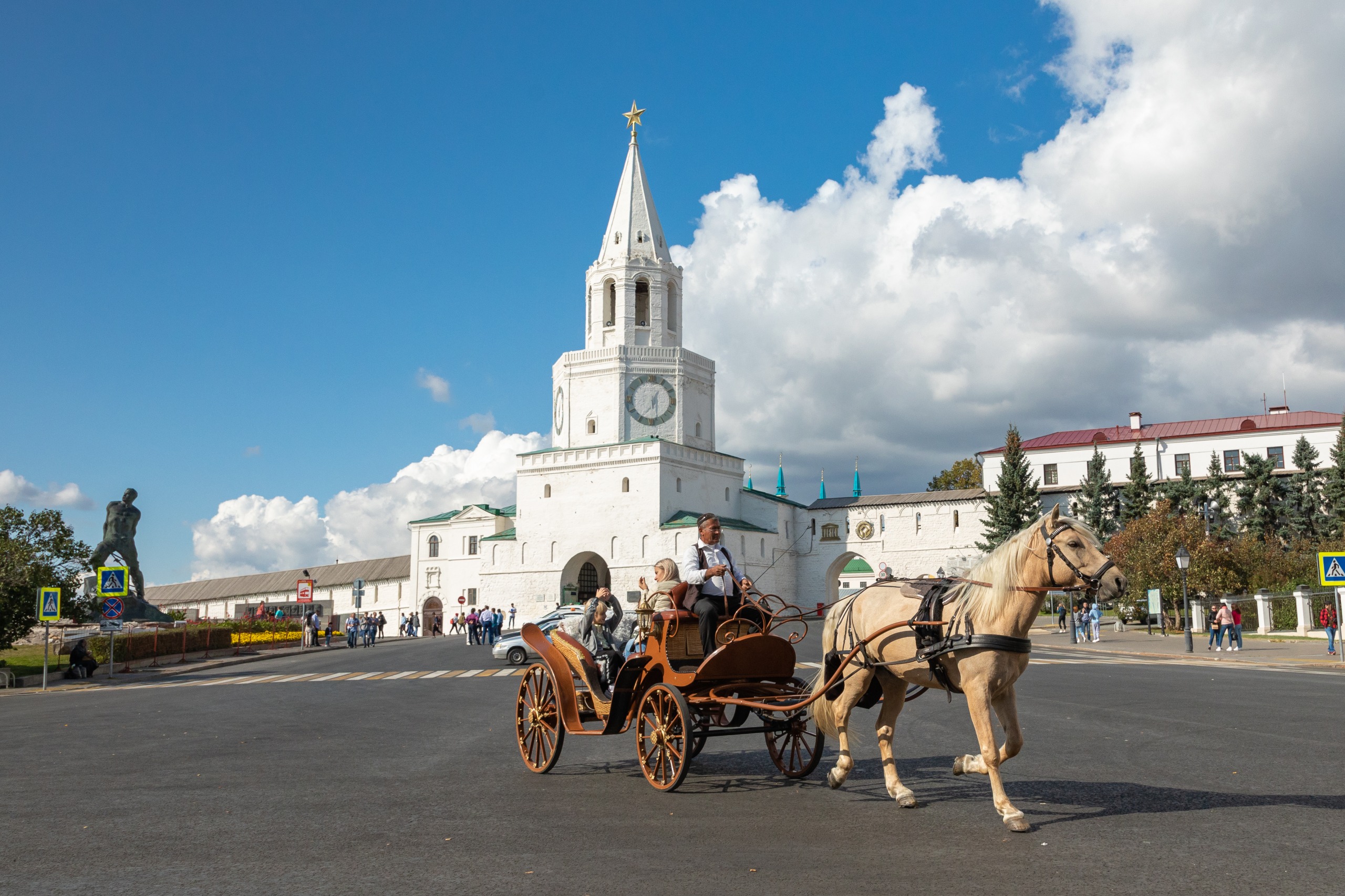
- Kazan Kremlin — UNESCO-listed fortress, historic heart of Kazan, about 40 km to the east.
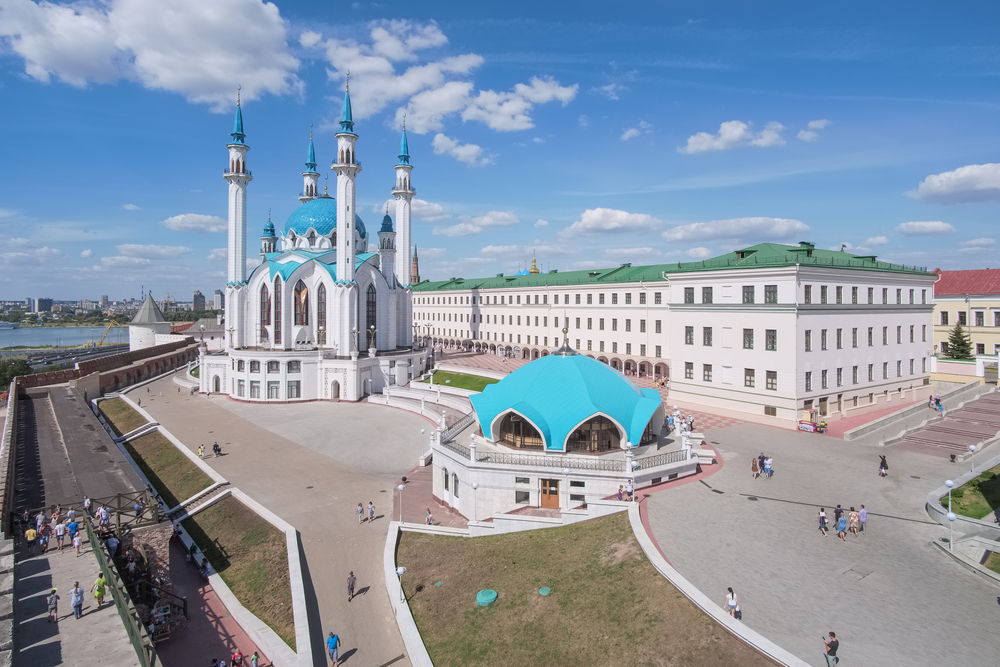
- Koul-Charif Mosque — large modern mosque within Kazan Kremlin, symbol of Tatarstan.
- Bolghar — former capital of Volga Bulgaria, also UNESCO-listed, accessible by boat from Kazan.
Frequently asked questions
Summer (June–August) is ideal: the river boat operates, vegetation is lush, and days are long. Spring and autumn offer fewer tourists and interesting photographic light, but verify boat availability.
Yes, departing early from Kazan. Plan for half a day on the island, then return early afternoon to visit Kazan Kremlin. The pace is brisk but doable.
Yes. Shoulders and knees covered are mandatory in all churches. Women must wear a headscarf. Shawls are sometimes provided at the entrance, but it's best to bring your own.
Rules vary by building. Outdoors, no restrictions. Indoors, some churches prohibit photography or request a donation. Check the signage at each location's entrance.
In winter, the river boat does not operate. Access is by road and causeway. Some museums may have reduced hours; inquire beforehand.
Half a day suffices for the main highlights. A full day allows you to visit all museums, wander the streets, and enjoy the Volga views at leisure.
Interested in this visit?
We can include it in your personalised itinerary.