Cape Khoboï
Cape Khoboï
A sacred promontory at the northern tip of Olkhon, Cape Khoboï features cliffs plunging into Lake Baikal, legendary rock formations and opportunities to observe nerpa seals, set within a preserved shamanic landscape.
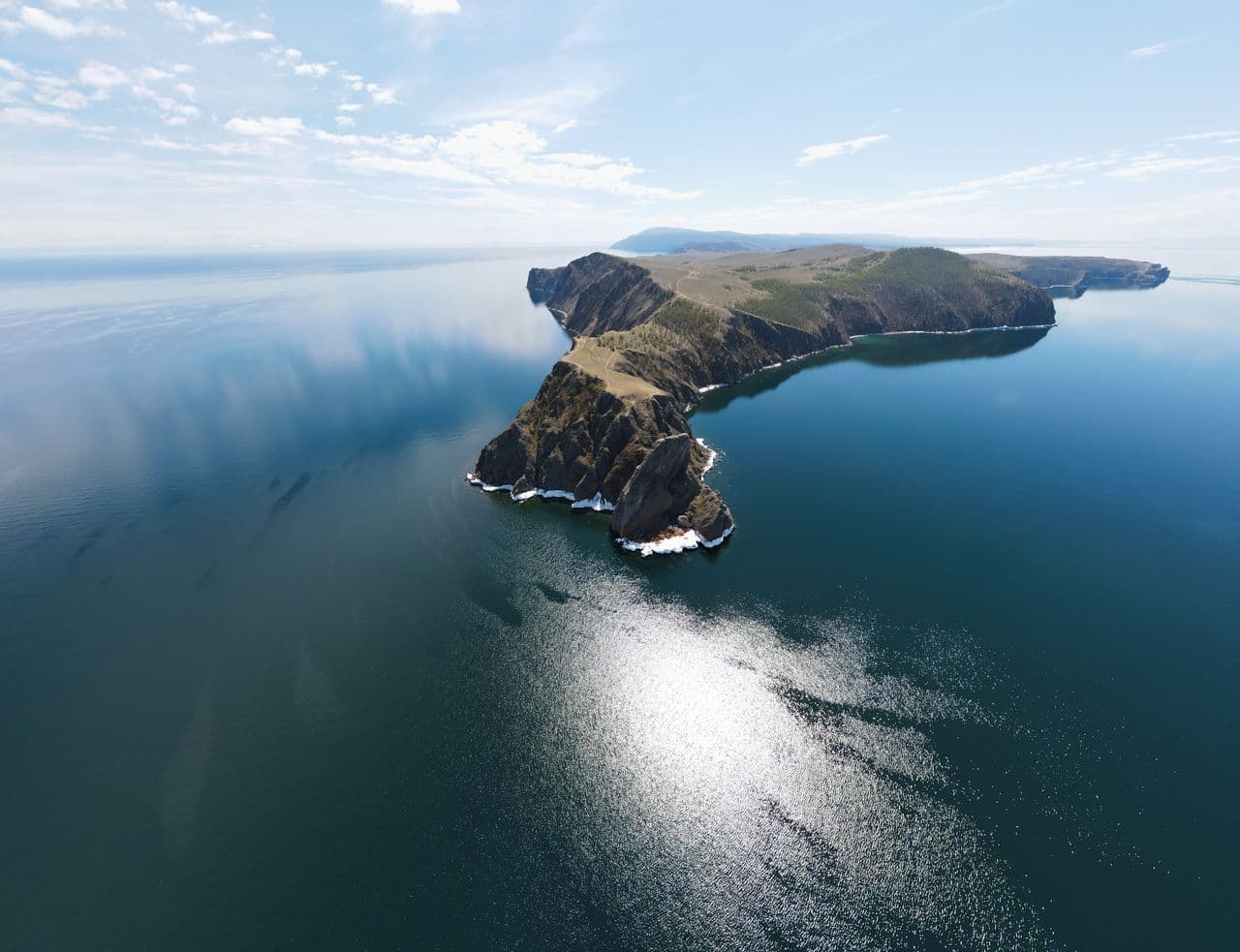
Cape Khoboï occupies the northern tip of Olkhon Island on Lake Baikal. It is the most northerly promontory on the island: a marble and gneiss cliff that plunges directly into the waters of Lake Baikal. The site is sacred to Buryat peoples and renowned for its rock formations, violent winds and 360° panoramas over the lake. Local wildlife — Baikal seals, birds of prey — is regularly observed here.
Quick reference
- Access: unpaved track from Khuzhir (Olkhon's only main village); all-terrain vehicle or organized excursion mandatory.
- Recommended duration: half-day, often combined with other capes in the island's north.
- What to wear: strong wind year-round — warm and waterproof clothing essential even in summer.
- Rules: partially protected site (Pribaikalski National Park); do not leave waste, do not light fires.
- Accessibility: rocky and unimproved terrain, very difficult access for wheelchair users.
What you'll see
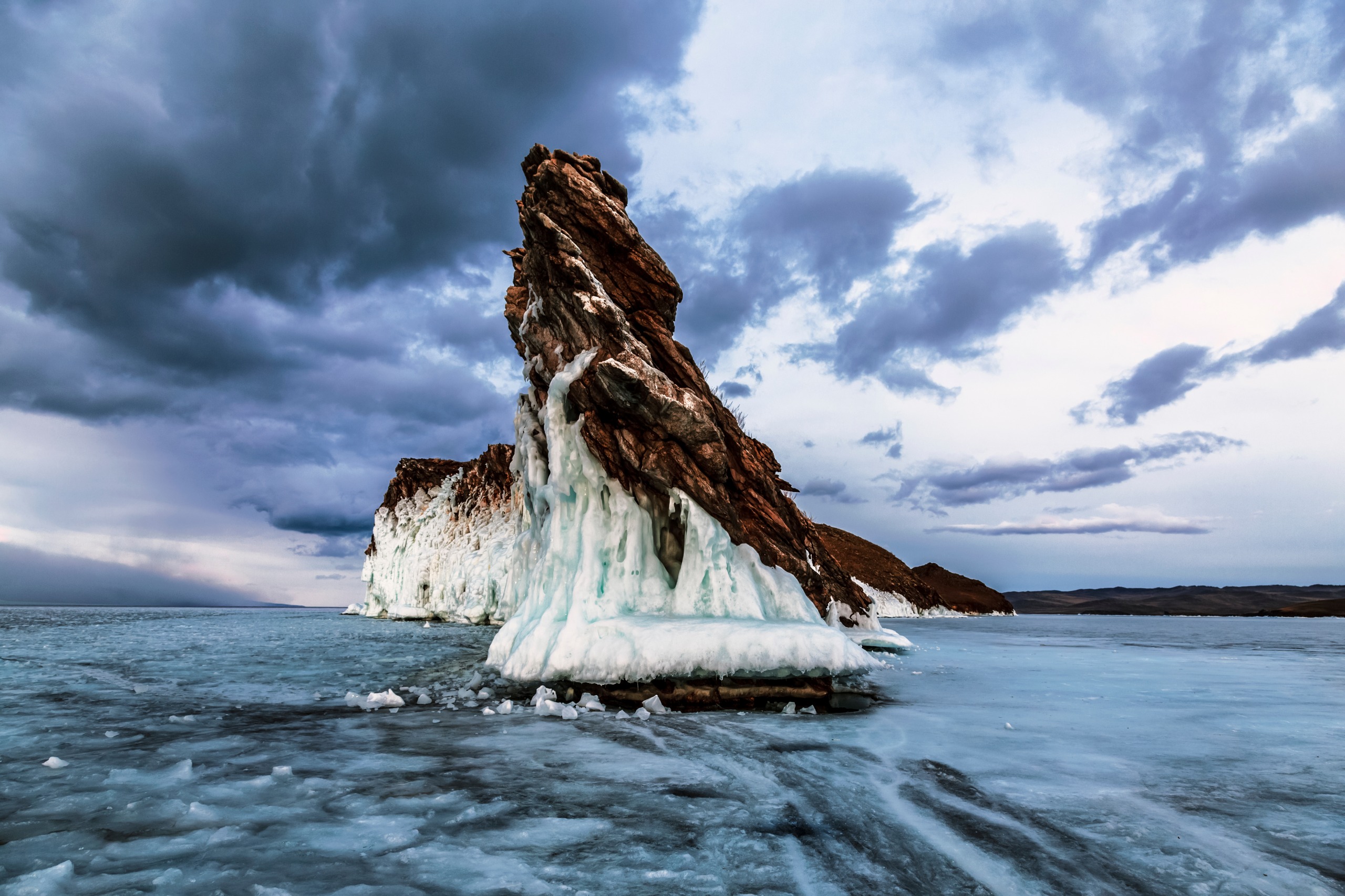
The main cliff forms a natural prow above the lake. On clear days, the water's transparency allows you to see the bottom several metres deep. In winter (January–March), Lake Baikal's ice fractures into turquoise plates around the cape, creating striking landscapes. Nerpa seals sometimes rest on the rocks below, especially in spring.
History and context
Khoboï means "fang" or "tusk" in Buryat, referring to the shape of the main rock. The cape is regarded as a place of power (ongon) in Buryat shamanic cosmology. Prayer ribbons (serge) are tied to ritual poles installed on the site. Olkhon's shamans once performed ceremonies here linked to the spirits of the lake.
Highlights of your visit
The northern cliff and view over Lake Baikal
From the cape's edge, your gaze extends across the Maloe More strait to the south and open Baikal waters to the north. On calm days, the lake's surface reflects the sky with remarkable clarity. Approach cautiously: the edges are unsecured.
The "Virgin" rock formation (Deva)
An isolated rock formation, locally nicknamed "the Virgin," stands immediately near the cape. Buryat legend tells of a jealous woman transformed into stone by the lake's spirits. It is one of Olkhon's most photographed rocks.
Observing nerpa seals
The Baikal seal (Pusa sibirica), the world's only freshwater seal species, frequents the waters around the cape. The best chances of observation come in spring, when animals rest on emergent rocks.
Photography tips
Morning light (from the east) illuminates the cliff face-on and lends depth to the water. Late afternoon sun tints the rocks ochre from the west. In winter, arrive early to photograph ice before wind kicks up snow. No known photography restrictions on site.
Location and access
Cape Khoboï lies approximately 30 km north of Khuzhir via track. The road is passable only by 4×4 or UAZ (the typical Soviet minibus used for local excursions). The vast majority of visitors reach it via a full-day excursion organized from Khuzhir, which typically includes several intermediate stops (Cape Khouga, Uzouri Bay). In winter, ice-drive excursions by vehicle are offered.
Nearby attractions
- Shaman Rock (Burkhan) — Olkhon's most celebrated sacred site, at Khuzhir, featuring two caves and ritual poles.
- Cape Khouga — intermediate stop on the northern route, with views over the west coast's bays.
- Uzouri Bay — fine sandy beach on the east coast, quiet and rarely crowded, accessible via the northern excursion.
- Village of Khuzhir — the island's main logistical hub, with accommodation, restaurants and bicycle rental.
Frequently asked questions
Summer (June–August) offers easy access conditions and pleasant temperatures. Winter (January–March) is spectacular for Lake Baikal's ice, but temperatures drop well below −20 °C and winds bite hard. Spring (April–May) is ideal for observing nerpa seals.
Technically yes, if you have a 4×4 vehicle. In practice, the track is difficult to navigate without local knowledge and breakdowns are frequent. The vast majority of visitors opt for a UAZ excursion from Khuzhir, which is safer and often less expensive than renting a vehicle.
The cape itself takes 30 to 45 minutes to visit. Northern Olkhon excursions typically last a full day (6 to 8 hours), with several stops between Khuzhir and Khoboï.
The cliff edges are not secured. Wind can be very strong and destabilizing. Stay at a reasonable distance from the edge, wear shoes with non-slip soles, and supervise children at all times.
The site is considered sacred. Avoid touching or damaging ritual poles (serge) and prayer ribbons. Leave no waste. Some visitors make a symbolic offering (coins, food) according to local tradition, but this is not obligatory.
Yes. Standard northern excursions from Khuzhir typically include Cape Khouga, Uzouri Bay and Cape Khoboï in a single day. This is the most efficient way to explore the island's northern section.
Interested in this visit?
We can include it in your personalised itinerary.