Journey aboard the Trans-Siberian Railway
It was at the end of the 19th century that Alexander III ordered the construction of this gigantic railway. The line was completely finished in 1904,
It was at the end of the 19th century that Alexander III ordered the construction of this gigantic railway. The line was completely finished in 1904, connecting Moscow to Vladivostok via Chinese Manchuria. However, the Russo-Japanese War of 1904-1905 prompted the Soviets to build an exclusively Russie line. By 1914, the current route was completed, with tracks bypassing northern China.
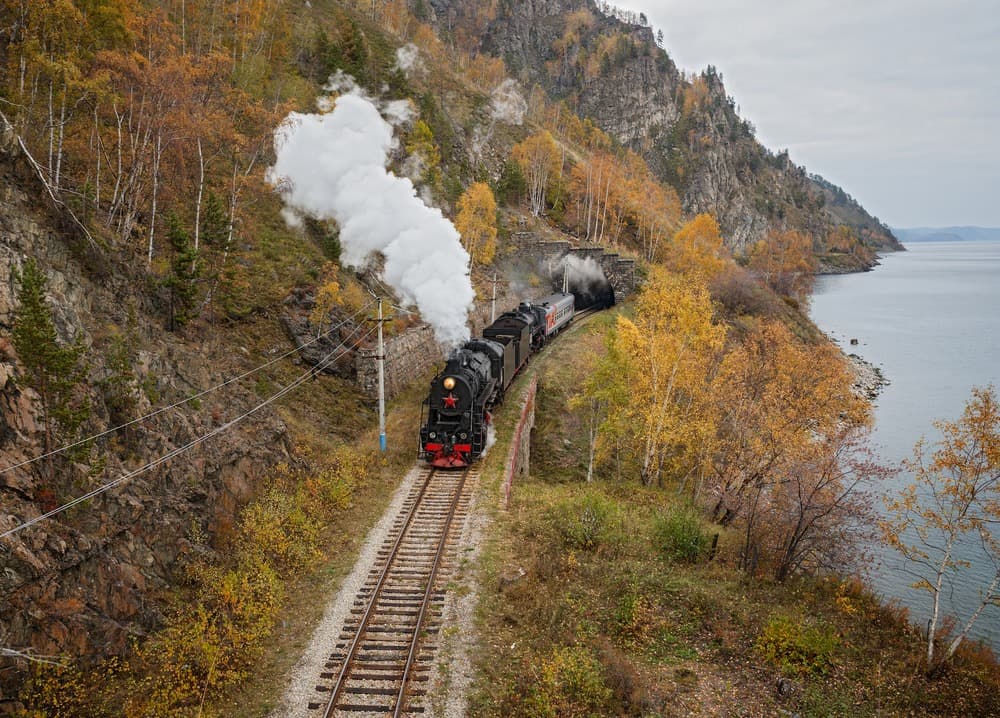
So it is more than 9,000 kilometers that the Trans-Siberian travels year-round, crossing alternately snow-covered plains and semi-desert landscapes worthy of the vastness of Central Asia. But one should not believe that the journey is marked only by small villages. Since railways have always contributed to the development of cities on their route, it is logical to find major urban centers in the middle of nowhere, in the heart of deep Russie. Nizhny Novgorod, Novosibirsk, Yekaterinburg and Omsk are cities of nearly 2 million inhabitants!
What is interesting to do with the Trans-Siberian is to buy tickets segment by segment so you can stop and visit interesting places before catching another train a few days later. The Trans-Siberian has the lowest cost per kilometer in the world. Nevertheless, you can choose to travel more comfortably than most Chinese and Russians, thanks to the 3 available classes.
For those seeking more variety, there are two other lines, or more precisely two branches. Indeed, you have the possibility of traveling three-quarters of the original line, from Moscow to Ulan Bator and then cross Mongolia and part of China to reach Beijing; or go from Moscow to Chita, then enter China to also reach Beijing. The first line is called the Trans-Mongolian and the second the Trans-Manchurian. These two options allow you to travel from Moscow to Beijing in 6 days.
But whatever route you choose, the journey will reserve fabulous discoveries for you. You can venture on an expedition to Lake Baikal – by sleigh on the ice if it's winter, by boat if it's summer – visit vast nature reserves, trek in the Altai or the Urals, and more. You can even – if you have the time and money – sail up the Yenisei River by boat to the Arctic Circle.
The Trans-Siberian is the only way to discover the entire world's largest country in a reasonable amount of time. You will make unexpected encounters, share meals with Chinese travelers in the dining car, buy sausage and eggs from Babushkas on station platforms, and drink vodka with quirky Russians!
Frequently asked questions
The complete journey from Moscow to Vladivostok aboard the Trans-Siberian covers more than 9,000 km and takes approximately 6 to 7 days without interruption. However, it is recommended to travel segment by segment to stop in unmissable cities and natural sites.
The Trans-Siberian connects Moscow to Vladivostok while skirting Russian territory. The Trans-Mongolian leaves the main line at Ulan Bator to cross Mongolia and reach Beijing. The Trans-Manchurian branches off at Chita to enter China through Manchuria and also reach Beijing. These last two options allow you to travel from Moscow to Beijing in 6 days.
The Trans-Siberian offers 3 classes of travel. Platzkart class (3rd class) is the most economical with open berths. Koupé class (2nd class) offers closed compartments with 4 berths. Lux or spalny vagon class (1st class) provides compartments with 2 berths with greater comfort and privacy.
Tickets can be purchased directly from the official Russian Railways website (RZD), through travel agencies specializing in Russie travel, or via platforms like TrainLine or Infotravel. It is advisable to book in advance, especially in summer, and to plan tickets segment by segment if you wish to make stops.
The Trans-Siberian operates year-round. Summer (June-August) offers lush landscapes and allows you to navigate Lake Baikal by boat. Winter (December-February) is magical with snow-covered plains and the opportunity to go sledding on the frozen Lake Baikal. Spring and autumn offer fewer tourists and more attractive prices.
Depending on your itinerary, several visas may be necessary. A Russie visa is essential to cross Russie. If you take the Trans-Mongolian, a Mongolian visa will be required. To reach Beijing, you will also need a Chinese visa. It is advisable to complete the procedures several weeks in advance with the relevant embassies.