Visiting Lake Baikal: summer vs winter?
The world's largest freshwater reserve, the immense Baikal captivates all travelers and locals alike. Harboring mysteries, legends, and endemic animals,
The world's largest freshwater reserve, the immense Baikal captivates all travelers and locals alike. Harboring mysteries, legends, and endemic animals, this Siberian lake is a must-see destination in Russia. You can visit it in winter or summer, but the landscapes and activities are quite different. Here's our guide to help you decide when to visit Baikal :
Baikal : a must-see
The Lake Baikal is one of those places you absolutely must see at least once in your lifetime. This immense lake, which one could easily mistake for a sea, has captivated travelers' imaginations for centuries. Inscribed on the UNESCO World Heritage list, it is home to rich and exceptional wildlife, including nearly a thousand endemic species, such as the Siberian seal or omul. You can easily spot them at the Lake Baikal Museum, but also by planning a stay in the wild Baikal, off the beaten path. In fact, other museums worth visiting during an excursion near Irkutsk include the Talsty Museum of traditional wooden architecture. It's the perfect opportunity to begin your immersion in Siberian culture !
Baikal is not only the world's largest and oldest lake, it's also an entire culture and way of life apart. Make the most of your stay to appreciate the majesty of nature and to meet the locals. You'll discover a fascinating shamanic culture, traditions unique in the world, amazing fishing techniques... Summer and winter alike, the inhabitants will be delighted to show you how they live in harmony with this giant of nature.
Finally, Baikal is a true adventure destination, where you can chain together activities : trekking, fishing, swimming, ice driving, snowshoeing, ice skating...

Summer : a trekker's paradise
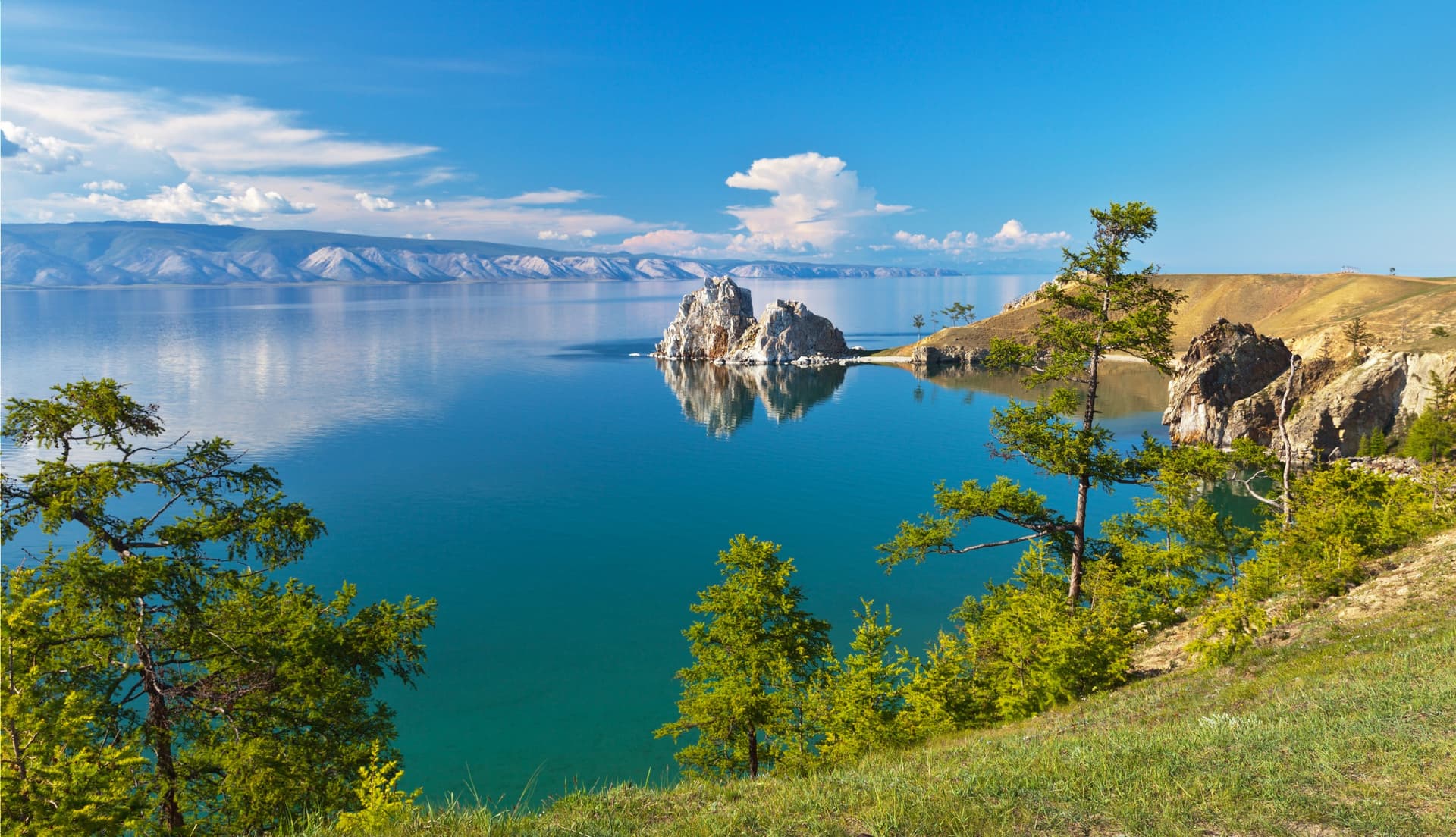
Between June and September, Baikal displays a rainbow of colors and its warmest temperatures. The lake then reflects its most beautiful blues, after the ice melts in May. The days are quite long and you can take advantage of this to discover all the hidden islands of the lake, navigating by boat from shore to shore. The landscapes surrounding the lake are then a sublime green and invite hiking : it's the perfect place for trekking, discovering exceptional nature. All parts of Baikal are then accessible and the climate allows you to make the most of it without concern. You can even enjoy the beaches during a summer stay at Baikal, to sunbathe or swim in this legendary lake ! An event not to miss in summer, the national festival of the Buryats is celebrated the first Sunday of July. This major celebration is the ideal opportunity to understand the amazing culture of this Baikal people. Dance performances, music, equestrian games, wrestling competitions and delicious dishes await you there. By late summer, temperatures already drop below zero and the lake's surroundings take on spectacular shades of red and yellow : it's the ideal time to photograph Baikal.

Winter : a fairy tale
Surprisingly, Baikal is also perfectly visitable in winter. Better to go there between February and March, when the lake is entirely frozen and thus accessible without too much danger. Then you'll discover a completely different landscape, entirely white and magical. At this time of year, Lake Baikal is covered with a thick layer of ice and becomes an ideal playground for photographers : it's known worldwide for its immense blocks of transparent ice ! The mist that covers the lake only adds to its mysterious atmosphere and we guarantee, you won't soon forget your winter stay at Baikal ! The only way to get around is then by car on the ice, an experience full of thrills... If you have an adventurous heart, try to conquer the ices of Baikal by bicycle, on snowshoes or on skates. Be careful, however, you must be well equipped before this trip as temperatures are freezing !
Frequently asked questions
Lake Baikal is ideally visited in summer (June-September) for trekking, swimming and boating, or in winter (February-March) to admire the transparent ice and enjoy ice sports. The choice ultimately depends on your favorite activities and your tolerance for cold.
Yes, between February and March, Lake Baikal is covered with a thick layer of ice that allows you to get around on foot, by car, by bicycle or on snowshoes. It is however advised to check the ice conditions before each outing and not to venture alone.
In summer, Lake Baikal offers many activities: hiking and trekking through lush landscapes, boat navigation between the islands, swimming, fishing and cultural excursions. Don't miss the national festival of the Buryats, celebrated the first Sunday of July.
In winter, temperatures around Lake Baikal can drop well below zero, often between -15°C and -30°C. Appropriate equipment (thermal clothing, multiple layers, hand and foot protection) is absolutely essential before planning a winter stay.
To reach Lake Baikal, you generally need to take a flight to Irkutsk, the nearest city, from Moscow or via a connection in Europe. From Irkutsk, the lake is accessible in about 1 hour's drive. The famous Trans-Siberian railway is also an option for adventurous travelers.
Lake Baikal is home to nearly a thousand endemic species. The most emblematic are the nerpa (Siberian seal), the world's only freshwater seal, and the omul, a fish typical of the region. You can observe them at the Lake Baikal Museum or during excursions to wild areas.