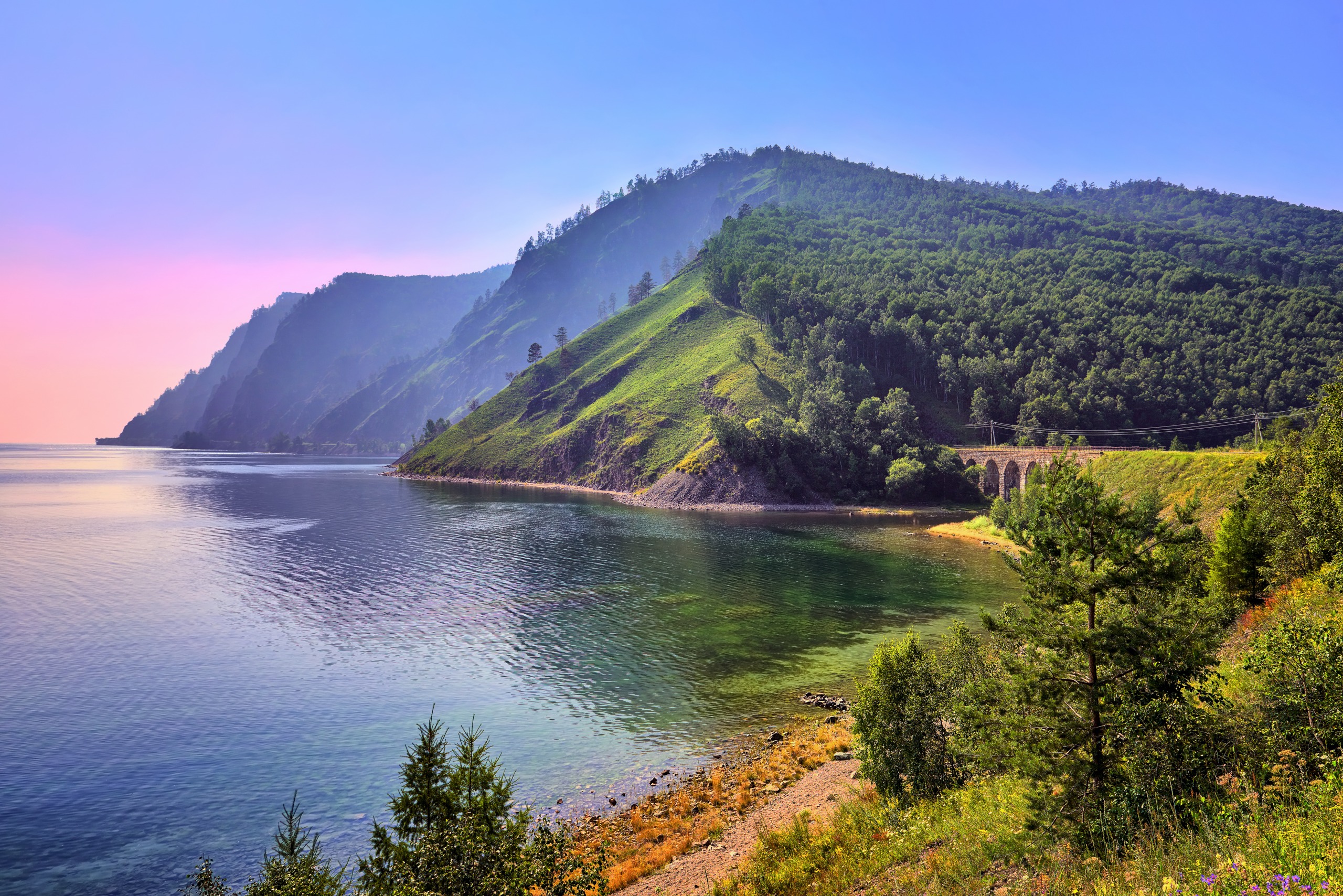
Icebreaker Angara (Ship-Museum)
Built in 1900 in Scotland, the icebreaker Angara is moored in Irkutsk and open as a museum. Its original steam engines and exhibits trace the history of navigation on Lake Baikal.
Moored on the banks of the Angara River in Irkutsk, this steam-powered icebreaker is one of the oldest ships of its kind still preserved in the world. Built in 1900 in Scotland, it navigated Lake Baikal for decades before becoming a floating museum. Its black and red metal silhouette, resting on the river, tells the industrial and human story of eastern Siberia.
Practical Information at a Glance
- Admission: Paid (museum rates, discounts for children and students)
- Recommended duration: 1 to 1.5 hours
- Access: Right bank of the Angara River, Solnechniy district, accessible by bus or taxi from Irkutsk city centre
- Dress code: No specific requirements; closed-toe shoes recommended for metal walkways
What to See
The ship's interior is arranged as a permanent exhibition. The engine rooms showcase the original steam mechanisms, largely preserved. Reconstructed cabins illustrate life aboard for officers and crew in the early 20th century. Panels document the icebreaker's role in crossing Baikal, notably during the Russo-Japanese War.
History and Context
The Angara was built in Glasgow by the shipyard Sir W. G. Armstrong Whitworth & Co., then transported in pieces to Lake Baikal. Commissioned in 1900, it provided the rail connection between the two shores of the lake before the completion of the Trans-Siberian Railway. During the Russian Civil War, it served both sides successively. Retired from active service in the 1960s, it narrowly escaped demolition before being restored and opened to the public.
Highlights of the Visit
The Engine Room
The ship's mechanical heart is intact. The boilers and steam pistons give a tangible sense of the power required to break through Baikal's ice, which can be several metres thick in winter.
The Command Bridge
From the wheelhouse, the view of the Angara River and Irkutsk's banks is clear. Period navigation instruments—compass, engine telegraph—are displayed in their original positions.
The Historical Exhibition
Archive photographs and crew members' personal belongings document the winter crossings of Baikal and the ship's military episodes. Some panels are translated into English.
Photography Tips
Morning light illuminates the hull from the opposite bank: ideal for a wide shot with the river in the foreground. Aboard, the engine room offers interesting industrial framings thanks to the interplay of metal and natural light filtering through the portholes. Avoid using flash in confined spaces.
Location and Access
The museum is located in the Solnechniy district, a few kilometres from Irkutsk's historic centre. Several bus lines connect the city centre to the area. By taxi, the journey from Kirov Square takes about fifteen minutes depending on traffic. Access aboard involves steep stairs and narrow passages: accessibility for visitors with reduced mobility is limited.
Nearby Attractions
- Irkutsk Regional Museum — ethnographic and historical collections on eastern Siberia, housed in a 19th-century building.
- 130 Quartier (130-y kvartal) — a collection of restored Siberian wooden houses, with restaurants and craft shops.
- Church of the Epiphany — a Siberian Baroque building from the 18th century, one of the city's most ornate structures.
- Lake Baikal — approximately one hour's drive away, the starting point for numerous excursions from Irkutsk.
Frequently asked questions
The museum is open year-round. In summer, a visit can be combined with a stroll along the Angara's banks. In winter, the frozen context gives meaning to the ship's history, but dress warmly if you plan to spend time on the outer deck.
Allow between one and one and a half hours to explore all spaces open to the public, including the engine room and historical exhibition.
Access aboard requires climbing steep stairs and navigating narrow walkways. Accessibility for visitors with reduced mobility is very limited; it is advisable to contact the museum in advance to learn about available options.
Yes. Irkutsk is the usual base for reaching Baikal. A visit to the icebreaker fits naturally into a stay centred on the lake, providing historical context for navigation on these waters.
Some panels are translated into English. For a visit in French, it is best to arrange for a local guide or bring a translation app.
Interested in this visit?
We can include it in your personalised itinerary.