Spotlight on Lake Baikal
Listed as a UNESCO World Heritage Site since 1996, Lake Baikal is one of Russie's most cherished natural wonders, celebrated for its unique beauty.
Listed as a UNESCO World Heritage Site since 1996, Lake Baikal is one of Russie's most cherished natural wonders, celebrated for its unique beauty. This vast lake, situated in the southern part of the Russie territory, is also nicknamed "the pearl of Siberia." It holds numerous myths and is considered sacred by the local inhabitants. It is the world's largest freshwater reserve, spanning 31,500 km² with a length of nearly 631 km and a width of approximately 80 km. This size is roughly comparable to that of Belgium. As a result, the lake alone accounts for nearly 20% of the world's freshwater volume. Its depth reaches 1,637 m. According to estimates, this lake dates back over 25 million years. Unfortunately, today, like nearly all natural wonders, it is also severely threatened by climate change.
The Lake and Its People
The Lake Baikal region was populated by the Buryats and Mongols around the 17th century, and even today, populations live around the lake. These inhabitants face difficult living conditions, as the natural resources that constitute their daily food supply tend to diminish due to soil depletion. It should be noted that the region's indigenous people live mainly from subsistence farming, including potato cultivation, as well as fishing. Fishing is practiced year-round, even during winter. Fishermen then cut holes in the ice to try to catch some fish. The waters of Baikal are home to the famous omul, an endemic fish species known for its delicious flesh. There is also sturgeon, whose eggs are used for the famous Russie caviar.
Lake Baikal: An Exceptional Natural Site
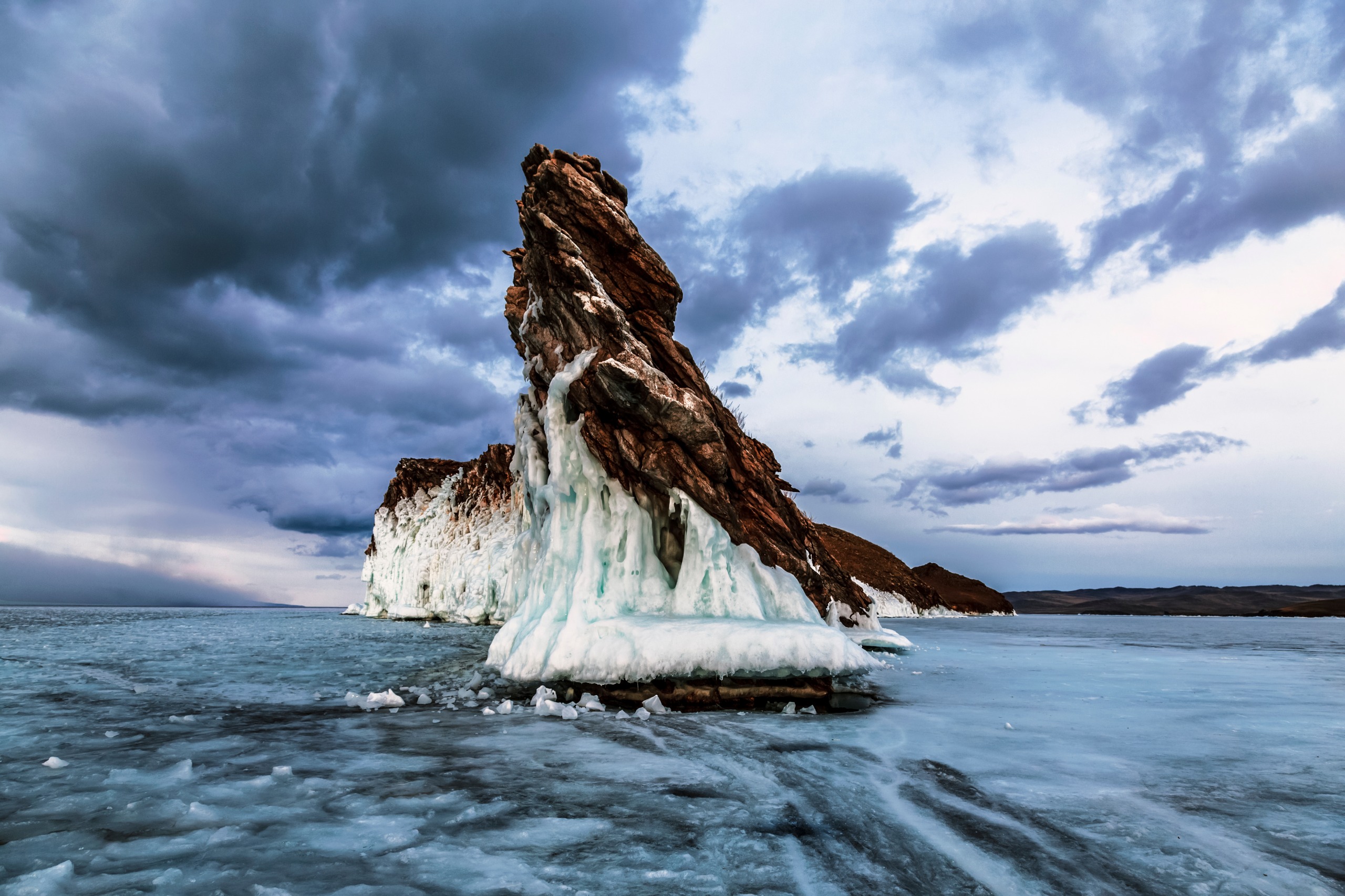
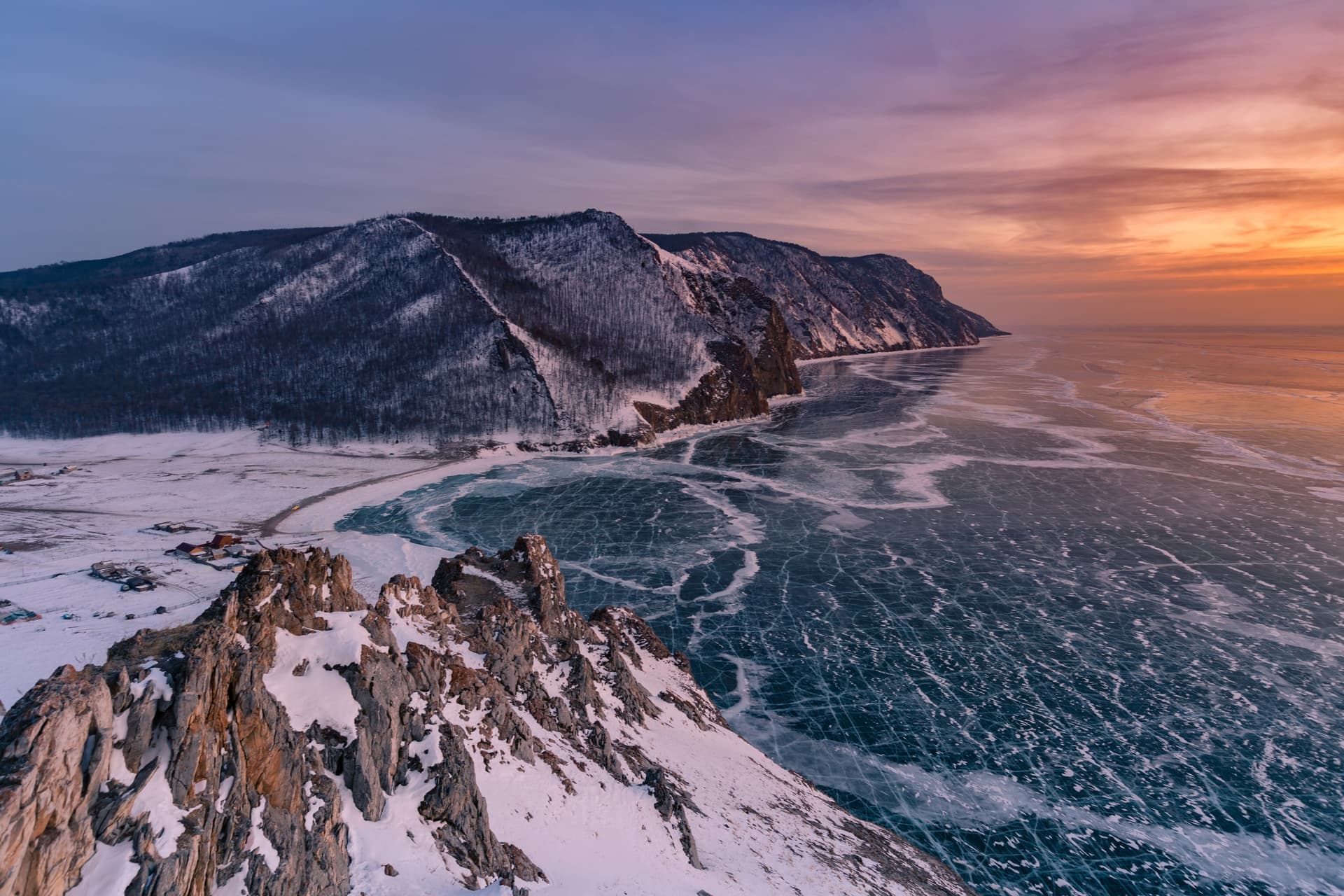
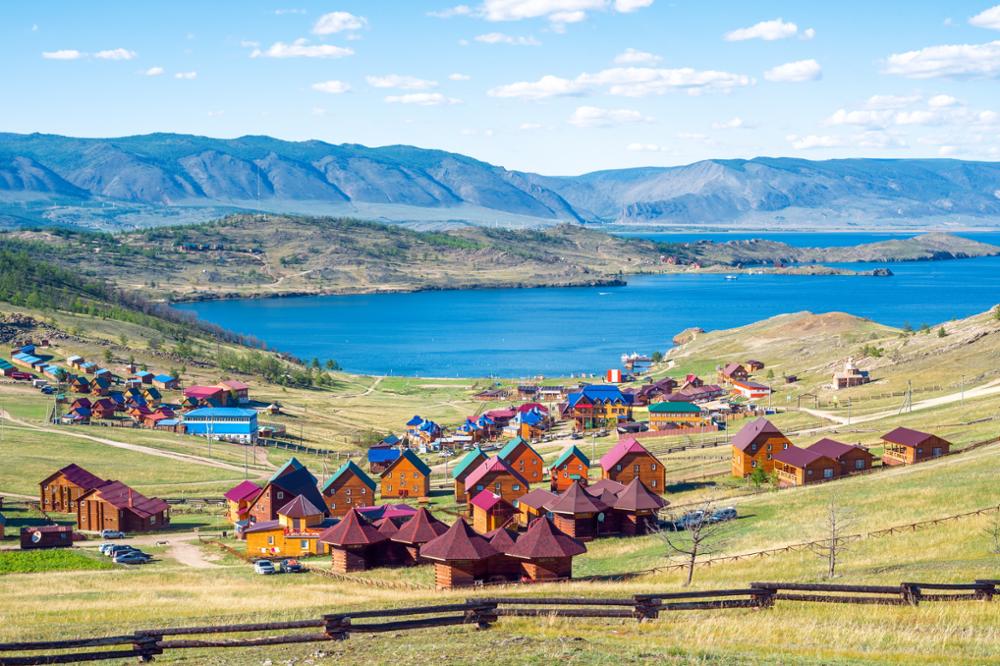
The discovery of Lake Baikal is one of the most moving moments when visiting southern Siberia. This part of the territory is known for its natural landscapes that stretch as far as the eye can see. Most of the time, the lake is frozen, and it is in this state that it attracts photography enthusiasts, as the visual spectacle offered is simply breathtaking and awe-inspiring. On average, during January, the temperature of the lake and its surroundings hovers around -20°C. However, during summer, Baikal reveals a completely different and equally beautiful face. During this period, the local temperature generally approaches 18°C. It should be noted that it is entirely possible to sail on this body of water, but only between June and September. Those who enjoy swimming can also take advantage of this activity in summer.
Inscription in UNESCO World Heritage
Lake Baikal was inscribed on the UNESCO World Heritage List in 1996 thanks to its ecological richness. Indeed, the local fauna and flora are particularly abundant and diverse. For animals, for example, nearly 1,500 species have been recorded, including the Baikal seal, a specimen that lives only in freshwater and is considered the apex predator of the entire lake ecosystem. It was also in Baikal that more than 250 species of freshwater shrimp were discovered.
Threats to the Lake and Its Ecosystem
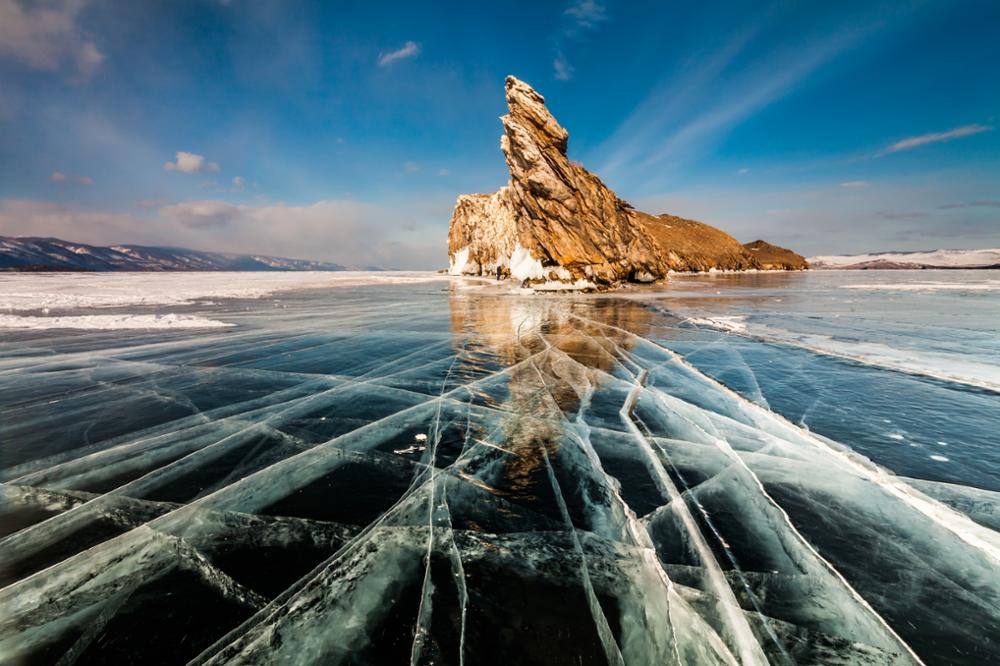
The future of the lake and its biodiversity remains worrying due to climate change and, above all, industrial pollution. Indeed, its water level continues to decrease year after year. Add to this the various pollutants produced by algae and bacteria that promote methane production.
Protected Areas Around the Lake
Numerous protected areas have been created around Lake Baikal to preserve the region's ecosystem. Among them, we note in particular the Zabaïkal national parks, Tounka, and Pribaïkal. There are also the Baikal natural reserves, Baikal-Léna, and Bargouzine.
Frequently asked questions
Lake Baikal spans an area of 31,500 km², with a length of approximately 631 km and a width of approximately 80 km. Its maximum depth reaches 1,637 m, making it the deepest lake in the world. It alone represents nearly 20% of the world's available freshwater volume.
Lake Baikal displays two different faces depending on the season. In winter, from December to March, the lake is completely frozen and offers spectacular landscapes highly prized by photographers, with temperatures dropping to -20°C in January. In summer, from June to September, it is possible to sail on the lake and even swim. Each season has its own charms.
Lake Baikal was inscribed on the UNESCO World Heritage List in 1996 due to its exceptional ecological richness. It is home to nearly 1,500 animal species, including many endemic species such as the Baikal seal (the only freshwater seal) and the omul, a fish unique to the lake. More than 250 species of freshwater shrimp are also found here.
Lake Baikal is today threatened by several factors: climate change, which causes its water level to drop year after year, industrial pollution, and the proliferation of algae and bacteria that promote methane production. These phenomena endanger the lake's unique biodiversity and the local communities that depend on it for their livelihoods.
Several protected areas have been created to preserve the Lake Baikal ecosystem. There are three national parks: Zabaïkal, Tounka, and Pribaïkal, as well as three natural reserves: the Baikal, Baikal-Léna, and Bargouzine reserves. These protected zones help preserve the region's exceptional flora and fauna.
Lake Baikal is home to the omul, an endemic fish species renowned for its delicious flesh. This fish is an essential food resource for local populations, who fish it year-round, including in winter by cutting holes in the ice. The lake is also home to sturgeon, whose eggs are used to produce the famous Russie caviar.