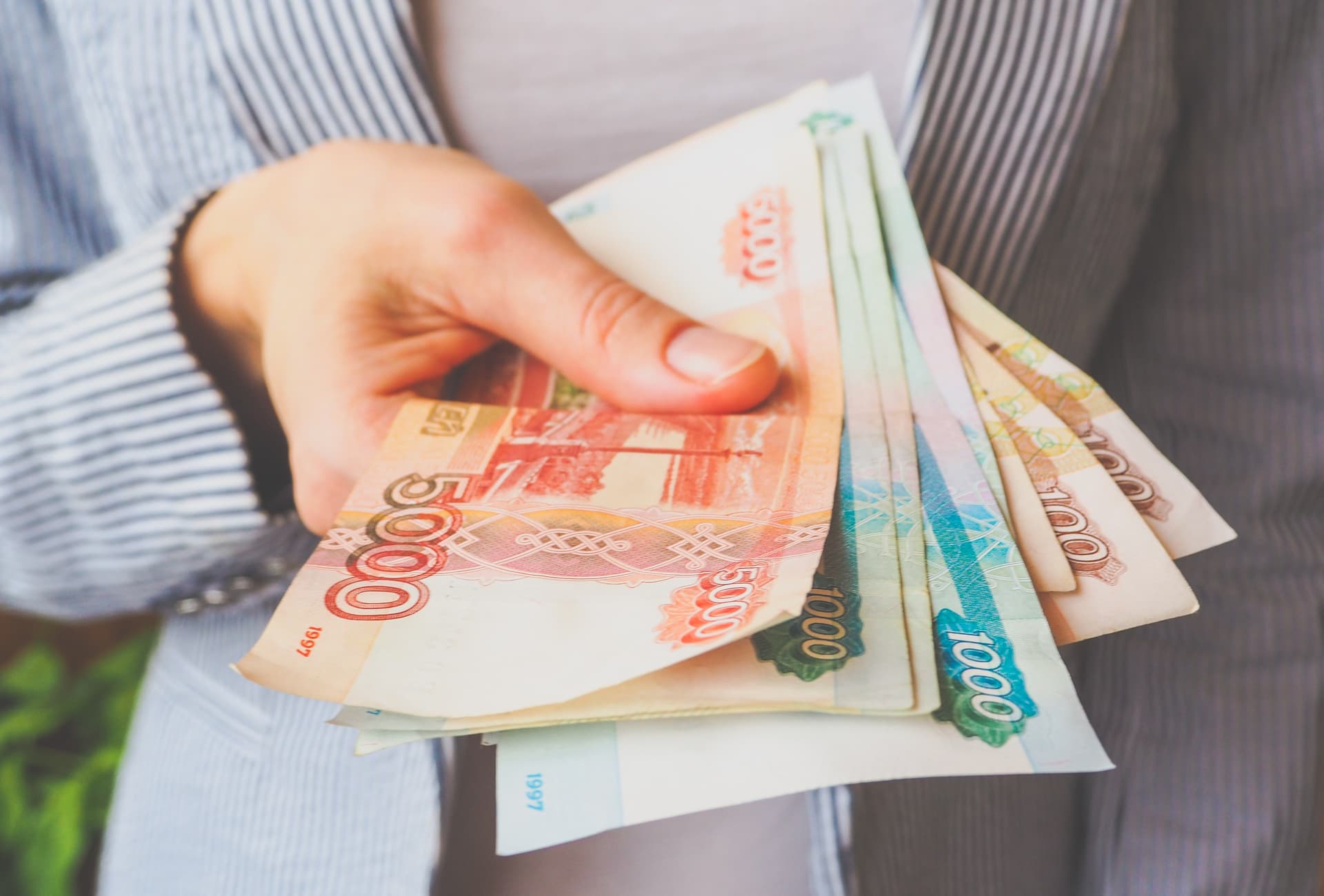
Russian Currency, the Ruble
The ruble has been the sole legal currency in Russia since January 1st, 1993. This currency is also subdivided into 100 kopecks.
The ruble has been the sole legal currency in Russia since January 1st, 1993. This currency is also subdivided into 100 kopecks.
Banknotes in circulation in Russia:
Ruble banknotes: 50, 100, 200, 500, 1,000, 2,000, 5,000
Ruble coins: 1, 2, 5, 10
Kopeck coins: 50
A Brief History of the Ruble
The Origin of the Name "Ruble"
Russian currency takes its name from the verb "roubit" which means to "split" or "chop". This was likely chosen to designate the tool used to cut silver ingots intended for exchange during the Russian Empire period.
The use of the ruble dates back over 700 years to the Russian Empire. This currency first appeared in the 13th century in the Novgorod Republic. At that time, it was known as the "imperial Russian ruble" and people did not yet speak of coins, but rather of pieces of silver. These, in the form of ingots, were called "grivna" and weighed approximately 200 to 500 grams.
When power in Russia passed into the hands of the Bolsheviks following the Russian Revolution of 1917, communism began to take hold progressively across the territory. This ideology advocated for the elimination of money while promoting the concept of a classless society.
In 1919, the RSFSR (Russian Soviet Federative Socialist Republic) introduced sovznaks, which replaced the currency of the time: the imperial Russian ruble. This new system disappeared when the RSFSR ceased operations in March 1924. However, it should be noted that the first series of Soviet roubles already appeared in 1922, but these were used by Russians. At that time, the "new" ruble was equivalent to 10,000 sovznaks. This first series remained in circulation until the end of December 1922.
In early 1923, the first series of Soviet roubles was replaced by a second series at an exchange rate of 100 to 1. The first banknotes of the USSR also appeared at this time. The denominations that existed then were 10,000 roubles, 15,000 roubles, and 25,000 roubles.
On March 7, 1924, following the implementation of a new reform and the application of the New Economic Policy (NEP), a third series of Soviet roubles emerged, including the "gold ruble" with a value corresponding to 50,000 roubles.
The New Ruble
The Soviet ruble gave way to the Russian ruble following the dissolution of the Soviet Union (USSR) in 1991. However, it is important to note that the old currency remained in circulation alongside the Russian ruble until January 1993. In certain former Soviet countries such as Tajikistan, it was even used until May 1995.
Currency Exchange Offices in Russia
Always bring your passport with you when you wish to exchange currency at a currency exchange office in Russia. Most of the time, these offices are open 7 days a week and close around 8 p.m. Some of them operate 24/7.
The exchange rates applied in banks and currency exchange offices are more or less the same.
In April 2019, 1 euro was exchanged for approximately 72 roubles.
Payment Methods
You will be able to use your Visa, MasterCard, or American Express card in major Russian cities and withdraw roubles, though your bank may charge a commission for the withdrawal.
If you are in Moscow, you will always find ATMs. In fact, several international banks are present there such as HSBC, Raiffeisen, Rosbank (Société Générale), and others.
Most shops or restaurants in the city accept card payments. Prices are always displayed in roubles, but you will be charged the euro equivalent of the total amount.