Russian Cuisine
Traveling to a new country means discovering its beauty through natural landscapes, tourist sites, and its cuisine. If you're planning to travel to Russia, you'll undoubtedly have the opportunity to taste local culinary specialties.
Traveling to a new country means discovering its beauty through natural landscapes, tourist sites, and its cuisine. If you're planning to travel to Russia, you'll undoubtedly have the opportunity to taste local culinary specialties.
Russian Cuisine at a Glance
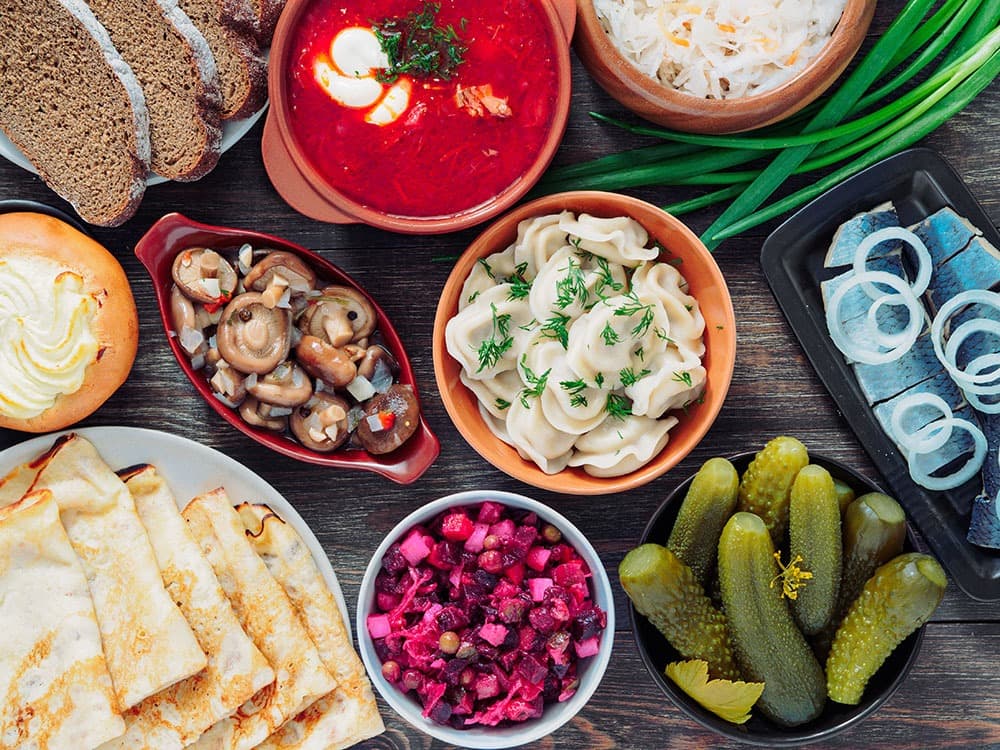
Generally speaking, Russian cuisine is rather generous in portions. This doesn't mean, however, that Russian dishes lack flavor. Quite the contrary—some truly deserve to be savored. During your stay in Russia, you may enjoy pelmeni, kholodets, authentic beef Stroganoff, chak-chak...
In the land of the tsars, meals are enjoyed three times a day. As in France, there's breakfast (завтрак), lunch (обе́д), and dinner (у́жин).
What Do People Eat for Breakfast in Russia?
Unlike in Western countries, breakfast doesn't typically feature buttered toast, croissants, or chocolate pastries. In Russia, mornings call for kasha, a hearty porridge made from oatflakes, buckwheat, wheat, or millet. This is sometimes accompanied by a sandwich and eggs (omelet, soft-boiled, or scrambled). For beverages, there's coffee, tea, and kefir, a fermented drink made from kefir grains steeped in milk.
Pancakes
In Russia, pancakes are enjoyed at nearly every meal. These delightful creations arrived on Russian soil in the 9th century. They come in both sweet and savory versions and are served warm.
The caviar pancake is arguably one of the most prized versions among travelers with refined tastes.
On weekends, pancakes may grace the breakfast table. You'll also find blini (Блины), syrniki (Сырники), and oladyi (Оладьи). The distinction between these pancakes lies in the grain used to prepare each one.
Lunch, Russian Style
This is the main meal of the day in Russia, so it must be substantial. The first course is typically a soup made from vegetables or meat. This is followed by a hearty main course featuring meat or fish, accompanied by a beverage (usually non-alcoholic). Next come salads, and finally, dessert.
Dinner
Dinner dishes generally resemble those served at lunch.
Appetizers or Starters
These are more commonly known as "zakouski", and Russian appetizers typically consist of cured meats, caviar (black or red), mushrooms, fish, and various salads.
Pirozhki are small pastries filled with ground meat, cheese, vegetables, or a combination of all three, served as a starter.
Zakouski accompany every meal and help aid the digestion of vodka.
Caviar
This luxury ingredient is a source of pride for Russians. Whether black or red, don't forget to bring some home before returning.
Olivier Salad
Created in the 1860s, this salad is the creation of Lucien Olivier, a Belgian chef who worked at the Hermitage, the renowned Moscow restaurant located on Trubnaya Square. It consists mainly of vegetables cut into cubes—carrots, potatoes, pickles, peas—along with hard-boiled eggs, dill, and more. Chicken is the meat of choice for this mixture. Everything is seasoned and bound together with mayonnaise.
Later, Russian salad would develop several variations depending on the country where it's prepared. In Spain, for instance, carrots dominate the recipe, with roasted red bell pepper strips incorporated into the base ingredients. For the fish component, canned tuna is often used.
Soups or Pervoye
Soups are nearly always present at the Russian dinner table. Common base ingredients include cabbage for preparing shchi and beets for the famous broth called borscht. Vegetable or meat broths and grains are often added to give the dish substance. Additionally, kvass (a fermented, slightly fizzy beverage made from black rye bread, yeast, and sugar) is another ingredient, especially for cold soups like bolvinia, turi, and okroshka.
Between the 18th and 20th centuries, other soup varieties from Eastern Europe, Asia, and various regions around the globe made their way onto Russian tables. Notable examples include smooth veloutés and chicken soups with vermicelli...
Meat-Based Soups
Rassolnik
This hot soup comprises numerous ingredients such as veal meat and kidneys, poultry offal, beef and pork, potatoes, pickles, and pearl barley. Its broth, prepared from marinated cucumber juice (rassol), is what makes this dish so popular.
Ukha
This is a fish soup to which potatoes, fresh parsley, bay leaf, dill, and tarragon are added. Often, it's enhanced with black pepper, nutmeg, fennel seeds, and saffron.
Vtoroye or Main Course
Golubtsy, which is nothing more than cabbage rolls stuffed with meat, frequently appears as a main course. There are also meat skewers called "shashlik". The specialty of these lies in the meat being marinated overnight in a special sauce. This sauce is made with onions, lemon, honey, olive oil, mayonnaise, and so on—basic ingredients for a marinade, though it can be modified to suit your preferences.
Russian Desserts You Must Try
Vatrushka
This traditional cake made with tvorog, a local fresh cheese, is often flavored with vanilla or lemon.
Sushki
These ring-shaped small breads remain among the must-tries of Russian pastry. They're enjoyed with coffee or tea. In the past, street vendors roamed the streets of Moscow with boublikis suspended around their necks on a string.
Other delights such as Napoleon, Medovik, Ptitchie Moloko, and Praga are worth sampling during your stay in Russia.
Beverages
When we think of drinks in Russia, our minds naturally turn to vodka, yet Russia boasts many other beverages to discover. Kompot comes to mind—a traditional beverage made from fresh fruits or berries, enjoyed in several Eastern European countries as well.
Mors is an ancient Russian drink, its name derived from "Mursa," which means "water with honey." It's made from wild berry juice. Beyond being incredibly refreshing, this beverage also has healing properties. Indeed, it contains various organic acids, minerals, vitamins, and pectin.
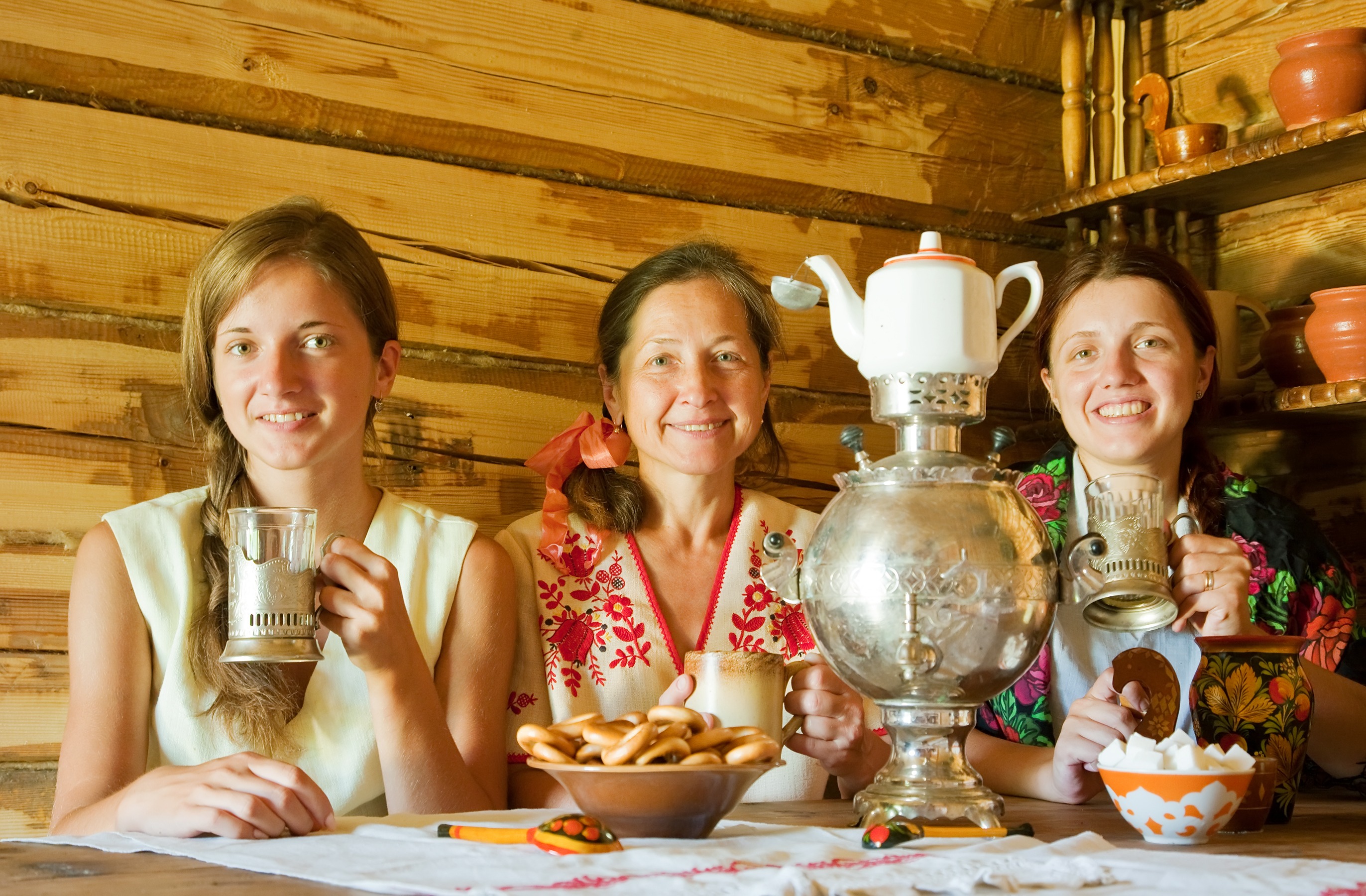
Black tea is a beverage Russians drink regularly. The preference for this type of tea likely stems from Russia's proximity to China. Of course, tea is served from the samovar, as tradition dictates.