Moscow and surroundings
Capital of eight centuries of history where the Kremlin, the stations of the circular metro line and the Trinity Lavra of Sergiev Posad are explored in four to six days.
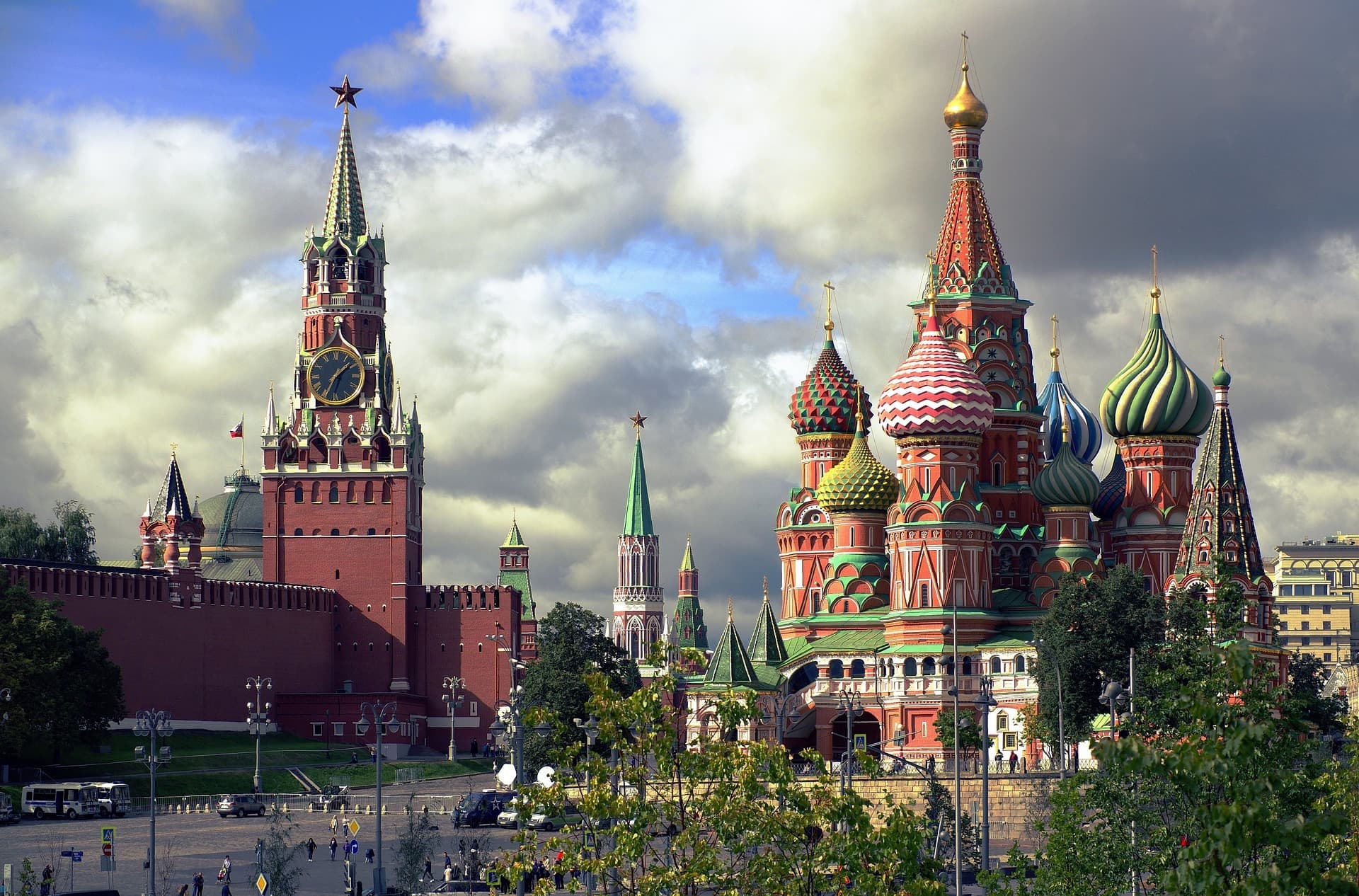
Moscow is our daily base of operations and we welcome visitors each year who discover just how much the city exceeds the image of Red Square. Over an area comparable to Greater London, the capital layers eight centuries of history in successive strata: the Kremlin and its 15th-century cathedrals built by Italian architects, the neoclassical townhouses of Arbat, the Stalinist skyscrapers known as the Seven Sisters, and the glass towers of Moskva-City rising above 370 metres. The Moskva River winds through the city for 80 kilometres, carving out the grand meanders around which neighbourhoods organise themselves, from the Novodevichy Monastery in the southwest to the former Winzavod warehouses in the east, now converted into contemporary art galleries.
Red Square concentrates the expected sights, but our team quickly guides visitors toward Kitai-Gorod, the medieval merchant quarter we favour for accommodation. From there, you can walk to the Tretiakov Gallery, which holds the icons of Andrei Rublev and the canvases of Ilya Repin, and the Bolshoi Theatre, whose season runs from September to June. A few metro stops away, the Pushkin Museum presents a collection of French Impressionists from the private collections of Shchukin and Morozov, nationalised in 1918. The metro itself rewards exploration: the stations Komsomolskaya, Mayakovskaya and Novoslobodskaya, opened between 1935 and 1952, feature mosaics, stained glass and chandeliers in halls that sometimes descend more than 80 metres underground.
Beyond the historic centre, Moscow has transformed since 2011 under a municipal programme to revitalise public spaces. Gorky Park, once a shabby funfair, has become a major urban garden of 120 hectares along the riverbank, extended by the Garage museum of contemporary art housed in a pavilion designed by Rem Koolhaas. Zaryadye Park, opened in 2017 on the site of the former Hotel Rossiya, descends in terraces toward the Moskva and offers a cantilever footbridge over the river. These spaces reshape how the city is experienced in summer, when evenings stretch until 11 p.m. under still-bright light.
Moscow's food scene deserves attention beyond borscht and pelmeni. We often take visitors to Danilovsky Market or Usachevsky Market, two renovated halls where you can taste the specialities of former Soviet republics: Georgian khachapuri, Uzbek plov, Central Asian manty. Vladimir Mukhin's restaurants, centred on the concepts Bjorn and White Rabbit, have revived the products of northern Russia—Siberian caviar and fermented mushrooms. For everyday meals, the Teremok and Vkusno & Tochka chains serve blini and simple dishes at accessible prices.
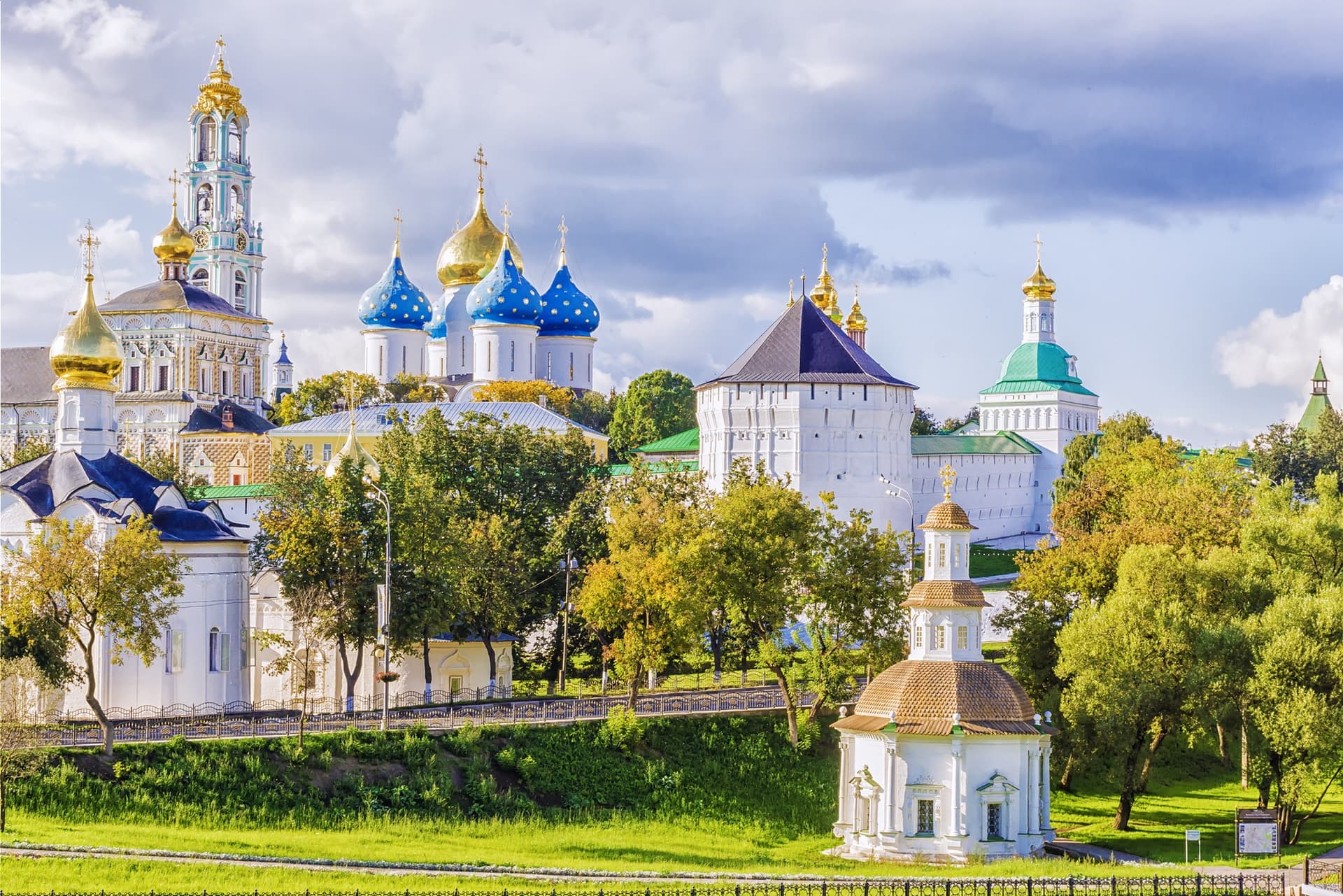
An hour's train journey from Yaroslavsky Station, Sergiev Posad opens the route to the Golden Ring. Its Trinity Lavra of Saint Sergius, founded in the 14th century, remains the spiritual centre of the Russian Orthodox Church and welcomes pilgrims year-round. Closer, 40 kilometres south, Tolstoy's Yasnaya Polyana estate, where he wrote War and Peace, can be visited in a day trip from Moscow, as can Chekhov's property at Melikhovo. These excursions usefully complement an urban stay and offer a glimpse of the Russian dacha—that particular relationship between city and nearby countryside.
Moscow's climate varies sharply between seasons. Winter lasts from November to March, with average temperatures around minus 15 degrees in January and snowfall maintaining a continuous white cover for five months. Summer, though brief, is pronounced: the thermometer climbs to 25 or 28 degrees in July, sometimes exceeding 30. The shoulder seasons, May and September, remain our preferred periods: long days, temperatures around 15 to 20 degrees, reduced crowds in museums.
Must-see
Kremlin and Cathedral Square cathedrals. The fortified enclosure houses three 15th-century cathedrals with gilded domes, the Palace of Armouries with its treasure of imperial carriages, and the 40-tonne Tsar Cannon, never fired.
Circular metro line stations. We devote half a day to exploring Komsomolskaya, Novoslobodskaya and Kievskaya, where mosaics by Korin and stained glass by Briullov transform platforms into underground salons built under Stalin.
Tretiakov Gallery, Russian painting from the 12th to 20th centuries. The collection includes Rublev's Trinity, Levitan's landscapes and Repin's Barge Haulers on the Volga. Allow three hours for the historic Lavrushinskiy building.
Sergiev Posad and the Trinity Lavra. An hour's suburban train journey leads to this monastery founded in 1337, still active, whose star-studded blue domes overlook a UNESCO-inscribed ensemble.
Zaryadye Park and Bolshoi rooftop. The park descends through four landscaped zones toward the Moskva, and its V-shaped footbridge offers a clear view of the Kremlin, particularly sharp at dusk in June and July.
When to go
Our best windows for Moscow extend from mid-May to mid-September, with preference for June (long days, 18 to 22 degrees, parks in bloom) and September (golden light on the domes, 12 to 18 degrees, reduced museum crowds). July and August average 25 to 28 degrees, sometimes more, and afternoon thunderstorms are frequent. Nights remain clear until 11 p.m. at the end of June, which dramatically changes the rhythm of sightseeing.
Winter has its devotees and we organise stays from December to February for those wanting to see the city under snow, ice-skate at VDNKh on Europe's largest urban rink, and enjoy the Bolshoi season. You must accept temperatures of minus 10 to minus 20 degrees, short days (sunrise at 9 a.m., sunset at 4 p.m. in December) and appropriate gear: fur boots, down jacket, fur hat. We avoid November and March, however—humid transition months when snow melts and the city turns grey—and early May during the holidays of the 1st and 9th, which overwhelm the sites.
Practical advice
We recommend a minimum of four full days in Moscow to cover the Kremlin, the Tretiakov, two or three neighbourhoods (Kitai-Gorod, Arbat, Zamoskvorechye), an evening at the Bolshoi or Tchaikovsky Conservatory, and an excursion to Sergiev Posad or Yasnaya Polyana. Five to six days allow you to add the Novodevichy Convent, the Pushkin Museum and a day in Suzdal. Arrival is via one of three international airports (Sheremetyevo, Domodedovo, Vnukovo), all connected to the centre by Aeroexpress in 35 to 50 minutes.
Moscow logically combines with Saint Petersburg, four hours away by the fast Sapsan train, for a classic 10 to 12-day stay across both capitals. To venture further, the Golden Ring branches directly east, Kazan and the Volga are reached by overnight train or a 1.5-hour flight, and Lake Baikal is a six-hour flight to Irkutsk. The city suits all profiles but particularly rewards visitors curious about history, architecture and vibrant cultural life. Our partner accommodation around Kitai-Gorod and Tverskaya allows you to do everything on foot or by metro, without relying on taxis.