Kazan Cathedral
Kazan Cathedral
On Nevski Prospect, Kazan Cathedral combines a neoclassical colonnade, a miraculous icon, and the memory of the 1812 victory.
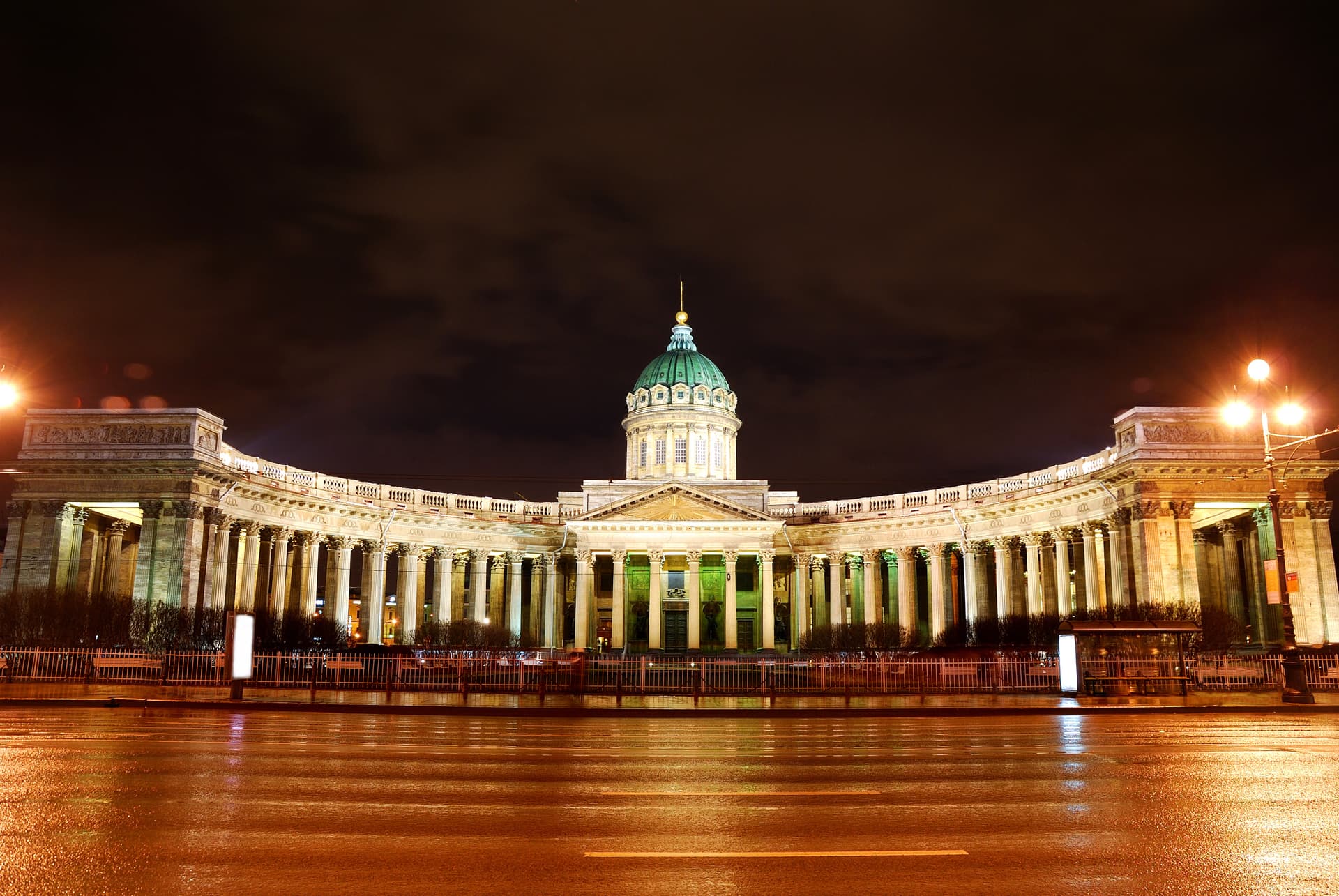
On Nevski Prospect, facing the Church of the Savior on Spilled Blood, Kazan Cathedral unfolds its colonnade in a semicircle inspired by the Basilica of Saint Peter in Rome. Built in the early 19th century to house the icon of the Virgin of Kazan, it became after 1812 a memorial to the Russian victory against Napoleonic forces. Today returned to Orthodox worship, it remains one of the major landmarks in central Saint Petersburg.
Why visit Kazan Cathedral
The building holds interest on several counts. From an architectural standpoint, it breaks with the usual codes of Russian churches by adopting a neoclassical vocabulary of Roman inspiration, rare at this latitude. From a historical perspective, it condenses two narratives: that of a Marian icon considered miraculous and that of a military sanctuary dedicated to the memory of the Patriotic War of 1812. Finally, its position on Nevski Prospect makes it a central landmark, just steps away from several other emblematic sites in the city.
Entry is free, which allows for a quick visit without ticket constraints, fitting easily between other stages of exploring the historic center.
History of the cathedral
A commission from Paul I
The cathedral was built between 1801 and 1811, on the site of an older church dedicated to the Nativity of the Virgin dating from the 18th century. The project was launched by Emperor Paul I, who wished for a sanctuary worthy of housing the icon of the Virgin of Kazan, one of the most venerated in Russia.
To select the architect, the emperor organized a competition in which several renowned names participated: Frenchman Jean-François Thomas de Thomon, Italian Pietro Gonzago, and Englishman Charles Cameron. Before signing the contract, Count Stroganov presented to the tsar the plans of a young Russian architect, Andrei Voronikhin, who ultimately received the commission.
From sanctuary to museum of atheism
One year after its consecration, in 1812, the cathedral changed symbolic status: it became the memorial to the Russian victory against Napoleonic troops. Marshal Kutuzov, the chief architect of this campaign, would be buried there.
After the 1917 revolution, the building was closed to worship. In 1932, it was entrusted to the Academy of Sciences, which transformed it into the Museum of the History of Religion and Atheism. The permanent exhibition traces the evolution of Christianity, Islam, and Eastern religions (Buddhism, Hinduism). It would take until 1996 for the cathedral to be returned to the Russian Orthodox Church and resume its liturgical function.
What to see on site
The colonnade and façade
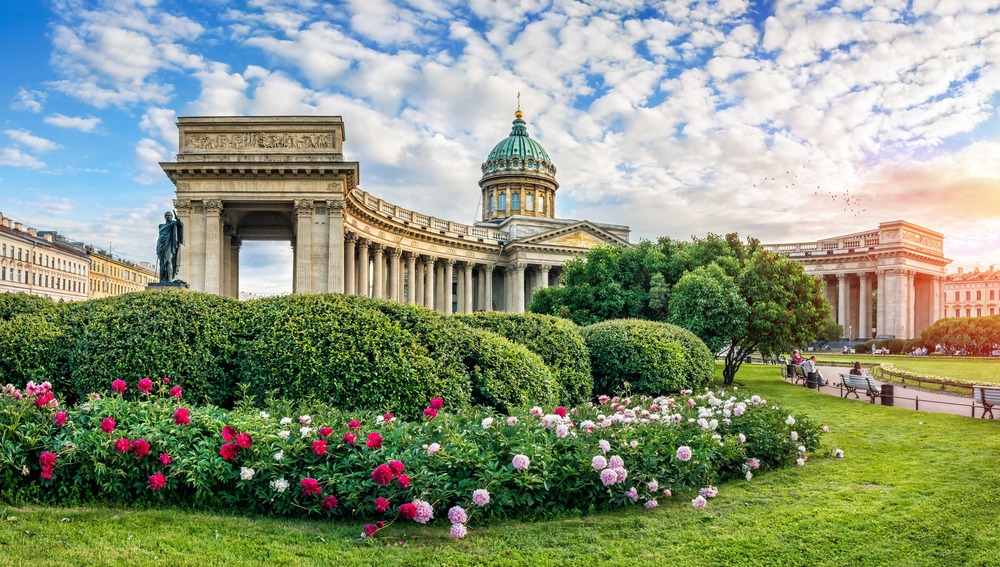
The most recognizable element remains the exterior colonnade, composed of 96 columns forming a wide semicircle opening onto Nevski Prospect. The reference to the Basilica of Saint Peter in Rome is explicit, but Voronikhin adapted the model to the Saint Petersburg urban context. The main bronze door is inspired by the "Gate of Paradise" of the Florence Baptistry, a work by Lorenzo Ghiberti.
The interior and the icon
The interior, more austere than the façade suggests, is articulated by tall columns of rose granite that bring a particular light to the nave. The central piece remains the icon of the Virgin of Kazan, considered miraculous by Orthodox believers. During liturgies, visitor circulation is restricted and reverent comportment is expected.
The statues of Kutuzov and Barclay de Tolly
In front of the cathedral, two statues frame the square: that of Marshal Mikhail Kutuzov and that of Michel Barclay de Tolly, the two principal Russian military commanders of the 1812 campaign. Their presence recalls the commemorative dimension of the site.
Practical information
- Admission: free entry.
- Duration of visit: allow 30 minutes to 1 hour depending on your interest in architecture and iconography.
- Hours: the cathedral is open daily from morning until the end of the last evening service. Exact hours vary; it is best to check on site or online before your visit.
- Dress code: shoulders covered, scarf recommended for women, as in any active Orthodox church.
- Photography: generally tolerated outside; inside, it may be restricted, particularly during liturgies.
How to get there
The cathedral is located in the heart of the historic center, on Nevski Prospect. The nearest metro station is Nevski Prospekt (line 2, blue), a few minutes' walk away. From Moscow Station (Moskovski Vokzal), allow approximately 20 minutes of walking following Prospect westward. Numerous bus and trolleybus lines also serve Nevski Prospect.
What to see nearby
The cathedral's central location allows you to easily combine several visits:
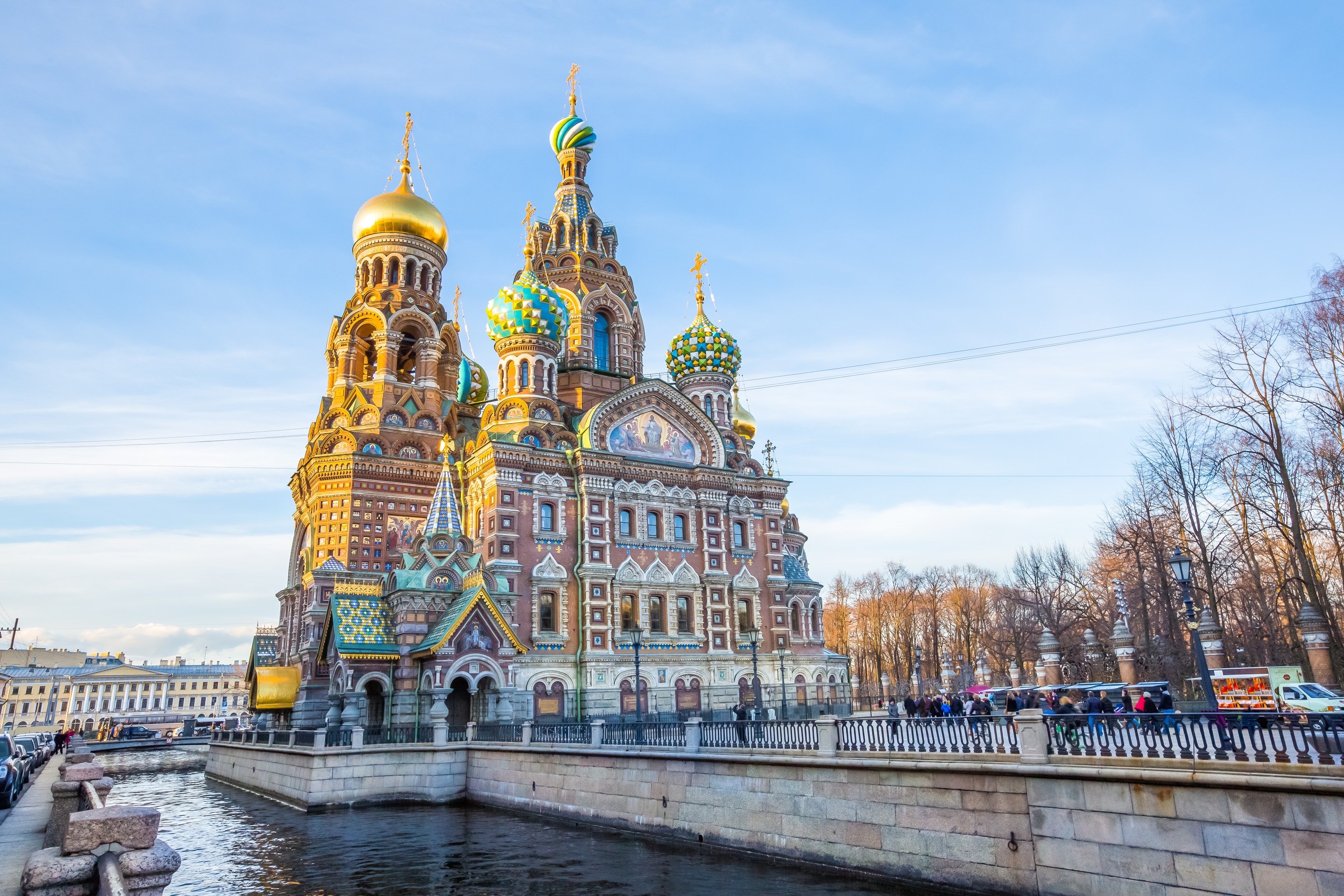
- The Church of the Savior on Spilled Blood, just opposite, accessible via the Griboedov Canal.
- The Kuznechny Market, for a more local pause, about twenty minutes on foot.
- A boat cruise with Radisson Cruise on the Neva to gain perspective on the center.
- If you extend toward Moscow, the Cathedral of Christ the Savior and Red Square offer an interesting counterpoint to Saint Petersburg architecture.
Frequently asked questions
Frequently asked questions
Planning your trip
Kazan Cathedral is part of a broader visit to Saint Petersburg and, more widely, a stay in Russia. To build an itinerary that combines imperial cities, river cruises, and Orthodox heritage, consult our suggestions for travel in Russia.
Nearby
Interested in this visit?
We can include it in your personalised itinerary.