Golden Ring
Eight medieval cities spanning 700 km northeast of Moscow, provincial kremlins, fortified monasteries and 17th-century frescoes preserved in pristine condition.
The Golden Ring traces a loop of roughly 700 kilometres northeast of Moscow, connecting eight medieval cities founded between the 11th and 13th centuries: Sergiev Posad, Pereslavl-Zalessky, Rostov Veliky, Yaroslavl, Kostroma, Ivanovo, Suzdal and Vladimir. These settlements formed the political and religious heart of Kievan Rus before Moscow rose to prominence. Our team considers them the finest entry point for understanding ancient Russian architecture—provincial kremlins, fortified monasteries, and churches crowned with bulbous domes painted in starlit blue.
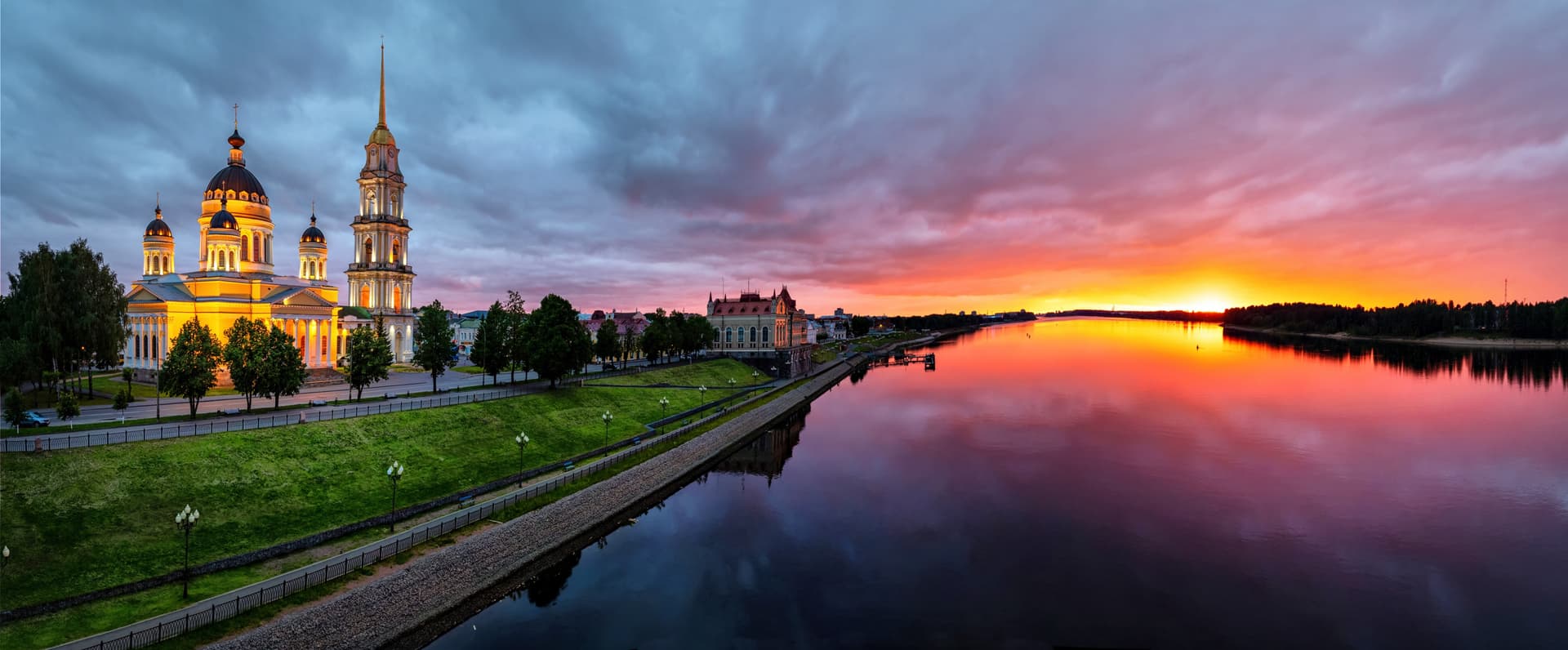
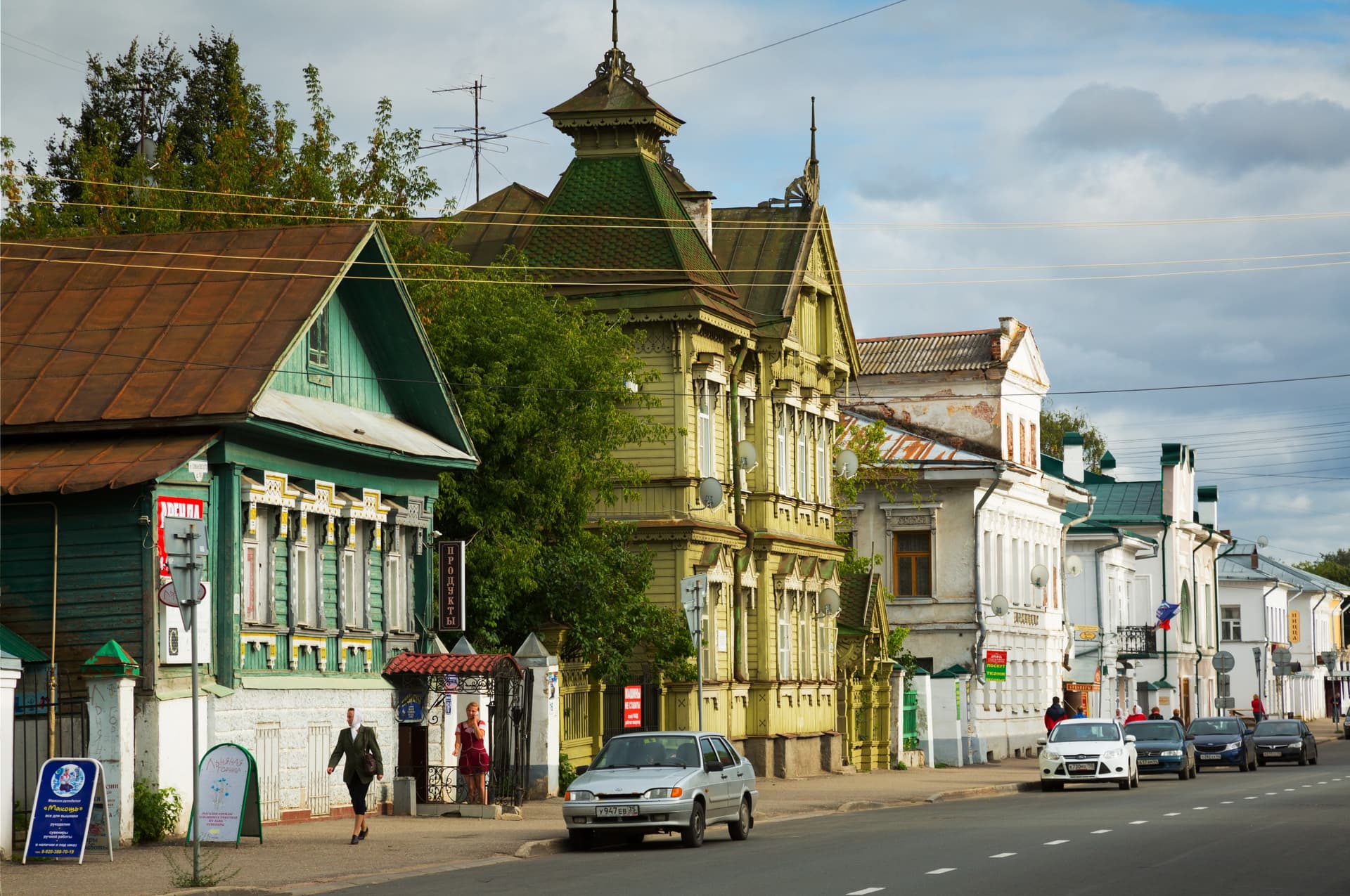
The terrain rolls gently across agricultural plains dotted with mixed forests of birch and conifers, ribboned by wide rivers that structure the landscape. The Volga flows through Yaroslavl and Kostroma; the Klyazma passes Vladimir; Lake Pleshcheyevo borders Pereslavl. The countryside remains rural: wheat fields, wooden dachas with carved windows, dairy herds grazing near Kostroma—still producing the cheese of its name. In Suzdal, 9,000 residents live amid nearly 200 churches, monasteries and chapels scattered throughout the city and beyond, with no building exceeding three storeys, a rarity in Russia where Soviet verticality homogenised everything.
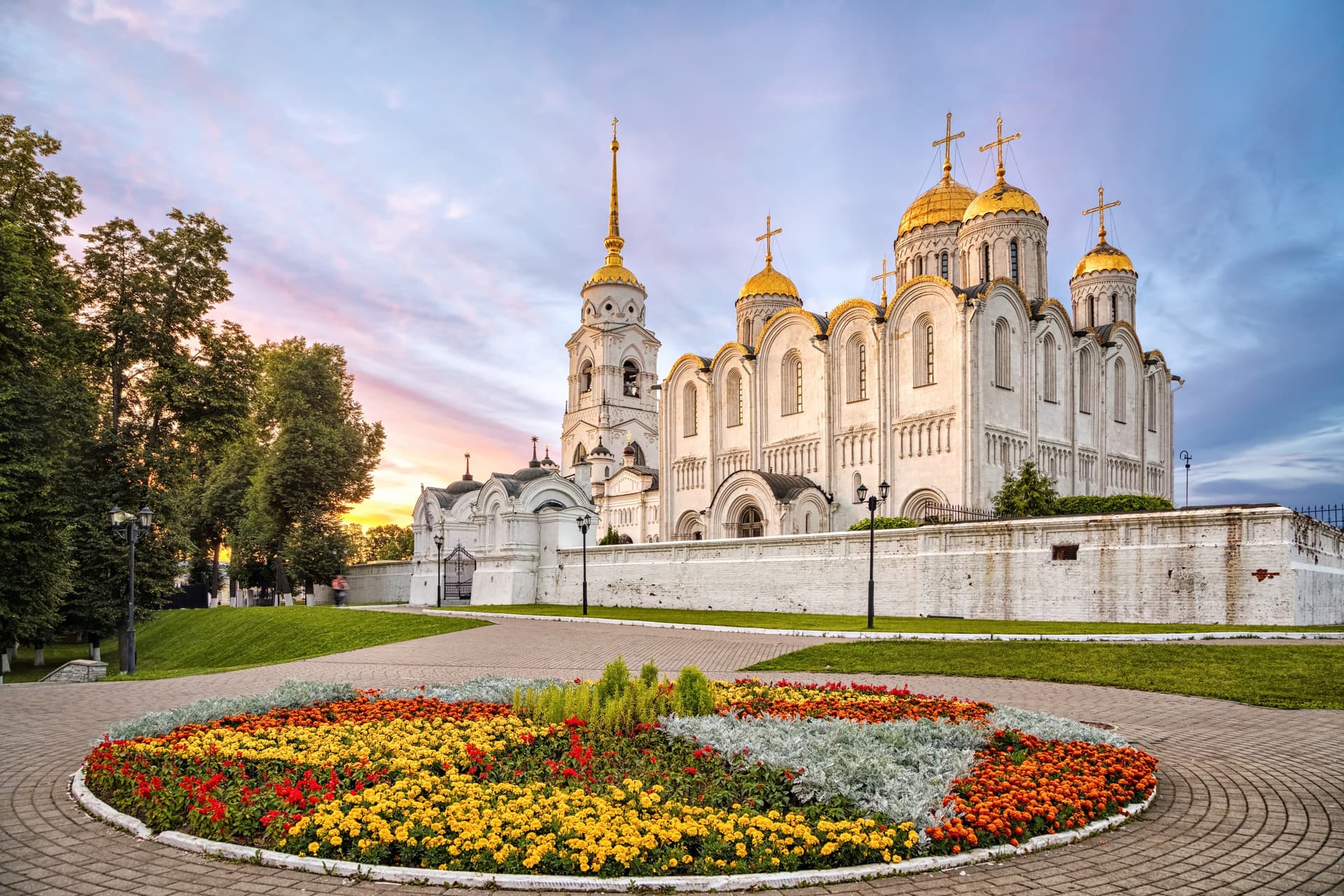
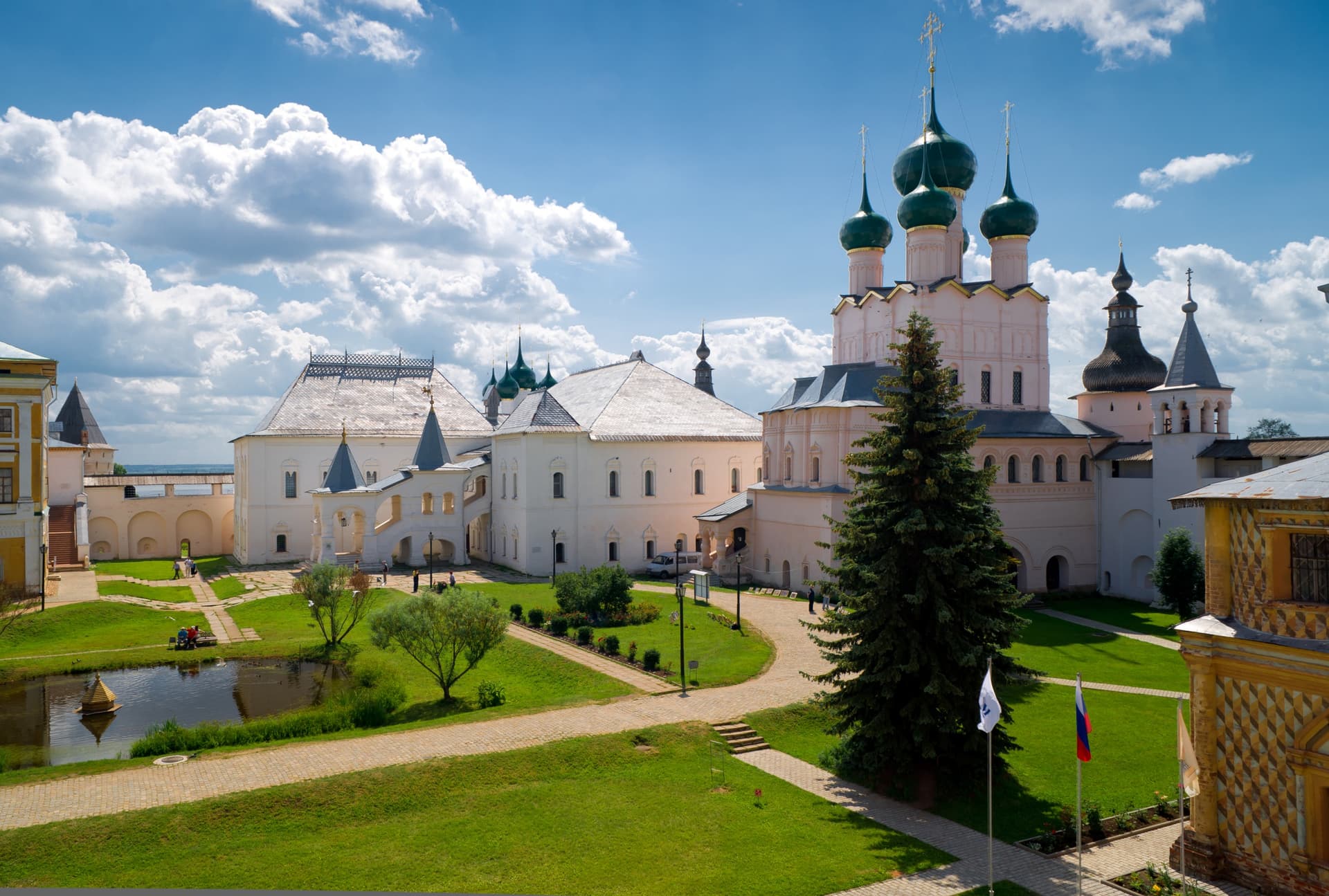
History reads in the walls. Vladimir's Cathedral of the Dormition, completed in 1158, became the model for Moscow's Kremlin cathedral. The Church of the Intercession on the Nerl, kilometres from Vladimir, stands isolated in a flood-prone meadow—among Russia's most photographed structures for its formal balance. In Yaroslavl, a UNESCO site since 2005, the frescoes of the Church of Elijah the Prophet, painted between 1680 and 1681 by Kostroma's master artisans, blanket the interior walls across multiple registers in remarkably pristine condition. Rostov Veliky preserves its lakeside kremlin on the shores of Lake Nero, whose cupolas served as backdrop for the Soviet cult film Ivan Vasilyevich Changes His Profession.
Economic life blends craft, agriculture and domestic tourism. Suzdal partly sustains itself through mead production—a honey-fermented drink served in local taverns with pickled mushrooms and smoked sterlet, a Volga fish. Pavlovo Posad, skirting the standard itinerary, still produces the floral wool shawls worn by Russian grandmothers. In Palekh, east of Ivanovo, workshops have painted lacquered miniatures on papier-mâché since the 1920s, reviving pre-revolutionary iconographic techniques. These are living crafts, not folk kitsch—they continue to employ entire families.
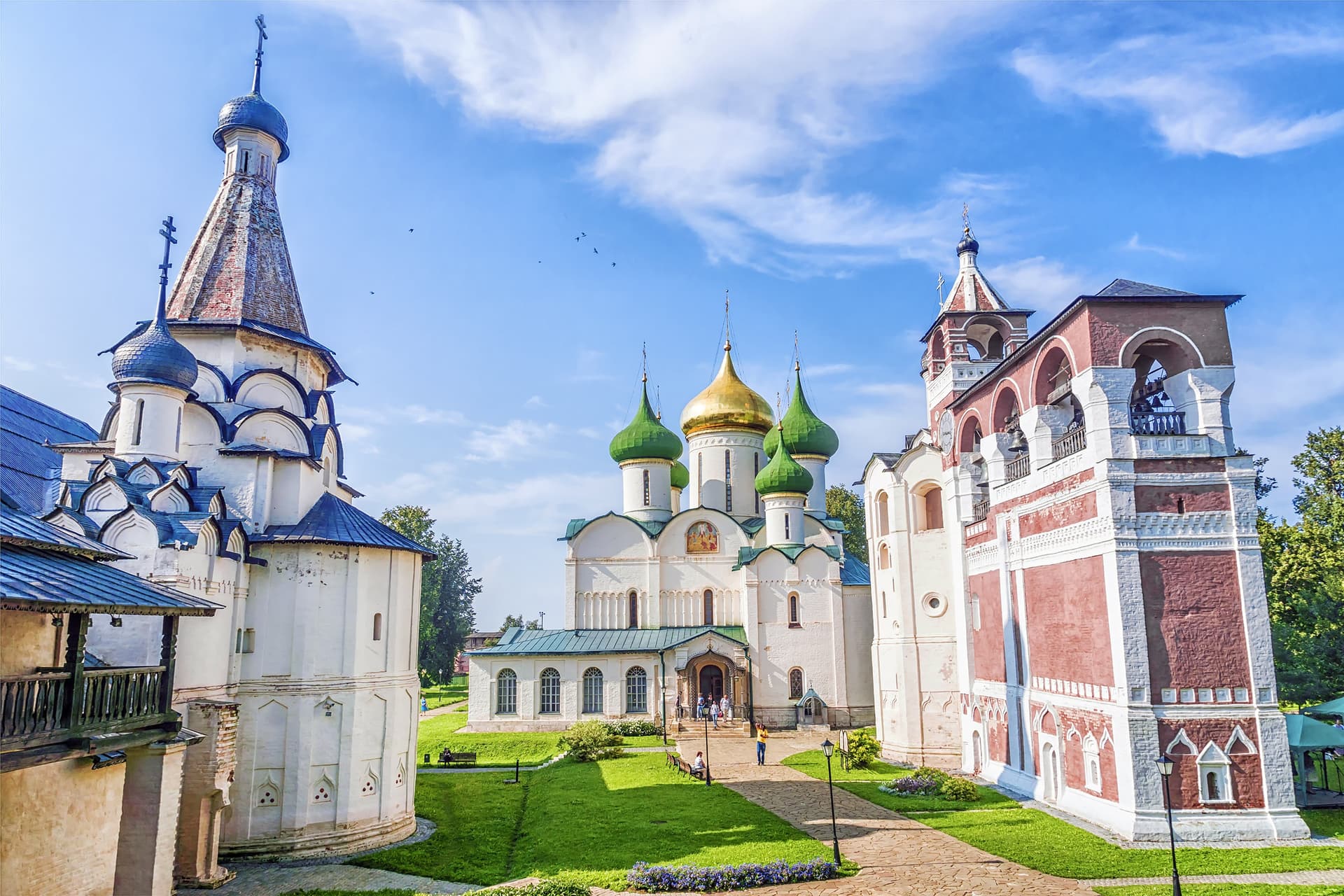
Culturally, the Golden Ring remains profoundly Orthodox. The Trinity Monastery of Saint Sergius in Sergiev Posad, founded in the 14th century, stands as the country's most significant spiritual centre and hosts the Russian Church's principal seminary. Services punctuate each day; Russian pilgrims surge in, especially weekends. At Suzdal, the Monastery of the Saviour and Saint Euthymius once held a tsarist monastic prison, later an NKVD camp in the 1940s where German officers, including Field Marshal Paulus after Stalingrad, were detained. This layering of princely, religious and Soviet histories threads through the entire region.
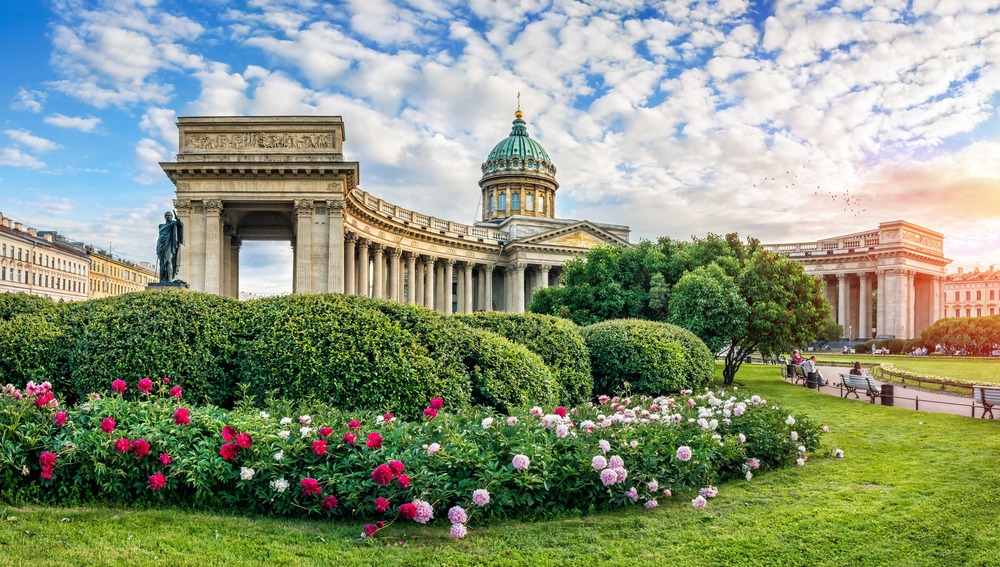
For travellers, the Golden Ring offers an alternative to the two great capitals: less museum-like than Saint Petersburg, more rural and anciently rooted than Moscow. Here you grasp agrarian Russia of wooden homesteads, troikas and provincial markets without venturing thousands of kilometres into Siberia.
Must-see
Suzdal and its Monastery of the Saviour and Saint Euthymius. A living museum town of 9,000 where you sleep in converted wooden homesteads with private banya and blini breakfast. The fortified monastery overlooks the Kamenka river; red brick ramparts date from the 16th century.
Yaroslavl's frescoes. The Church of Saint John the Baptist in Tolchkovo displays 15 domes and over 500 painted wall scenes. At the Church of Elijah the Prophet, the 1680 frescoes chronicle the merchant life of the river city on the Volga.
The Church of the Intercession on the Nerl. A white stone edifice from 1165, isolated on a hillock amid a meadow that floods each spring. Accessed on foot from the village of Bogolyubovo—a twenty-minute walk, vehicles forbidden.
Rostov Veliky's kremlin. Eleven towers and silver cupolas reflected in Lake Nero. You can walk the covered rampart linking the churches, with unobstructed views of dachas and kitchen gardens.
Palekh's lacquer workshops. A thousand-soul village off the beaten path where fifty-odd painters perpetuate papier-mâché miniature work. Ateliers are open for visits and direct purchase; expect €80 to €600 depending on the piece.
When to visit
Favourable conditions run May through late September. May brings the final snowmelt and birch greening, with temperatures between 12 and 20°C. June, July and August stay mild, around 22 to 26°C daytime, with brief afternoon thunderstorms. Late September offers our team's preferred window: golden birch and aspen foliage, raking light on cupolas, and Russian visitor numbers dropping sharply after the school term. Expect 8 to 15°C; bring a warm jacket for mornings.
We advise against April and early May (rasputitsa—the mud season when rural roads become impassable) and November, a grey, damp month before the first hard snows. Winter, mid-December to mid-March, remains feasible on ploughed main roads, yet days are very short (sunrise 9am, sunset 4pm in December) and temperatures swing between -10 and -25°C. Snowy Suzdal holds particular charm, reserved for well-equipped travellers ready for winter's rhythm.
Practical advice
Four to five days suits the tempo of linking Vladimir, Suzdal, Kostroma and Yaroslavl, with a minimum of one night in Suzdal and one in Yaroslavl. In seven days, add Rostov Veliky, Pereslavl-Zalessky and Sergiev Posad, plus a foray to Palekh. Private car with driver remains our recommended formula: distances between cities range from 60 to 130 kilometres; trains serve only Vladimir and Yaroslavl properly; local bus schedules align poorly with monastic site visits.
Moscow is the logical gateway—two hours' drive from Sergiev Posad and three from Vladimir. The Golden Ring combines naturally with Moscow and its surrounds at the beginning or end of your stay, then onward to Saint Petersburg via overnight train or Sapsan express from Moscow. For lengthier journeys, extending into Kazan and the Volga prolongs the riverine and historical themes. Hotel standards are respectable: wooden homestead guesthouses in Suzdal, three and four-star hotels in Yaroslavl and Vladimir, more rustic options in villages. This region suits contemplative travellers, admirers of religious architecture and history, families with curious teenagers. It ill-suits rushed itineraries or purely beach-oriented profiles.