Rostov
Rostov
White-walled Kremlin, monasteries with silver domes, peaceful shores of Lake Nero: Rostov the Great is a highlight of Russia's Golden Ring.
The City of Rostov
Rostov the Great, also known as Rostov Veliki, is one of the most important cities of the famous Russian Golden Ring. Located approximately 194 kilometers northeast of the capital Moscow, in Yaroslavl Oblast, the city owes its renown primarily to the imposing structures it houses. Rostov stands out for its grand churches and vast monasteries, known throughout the world.
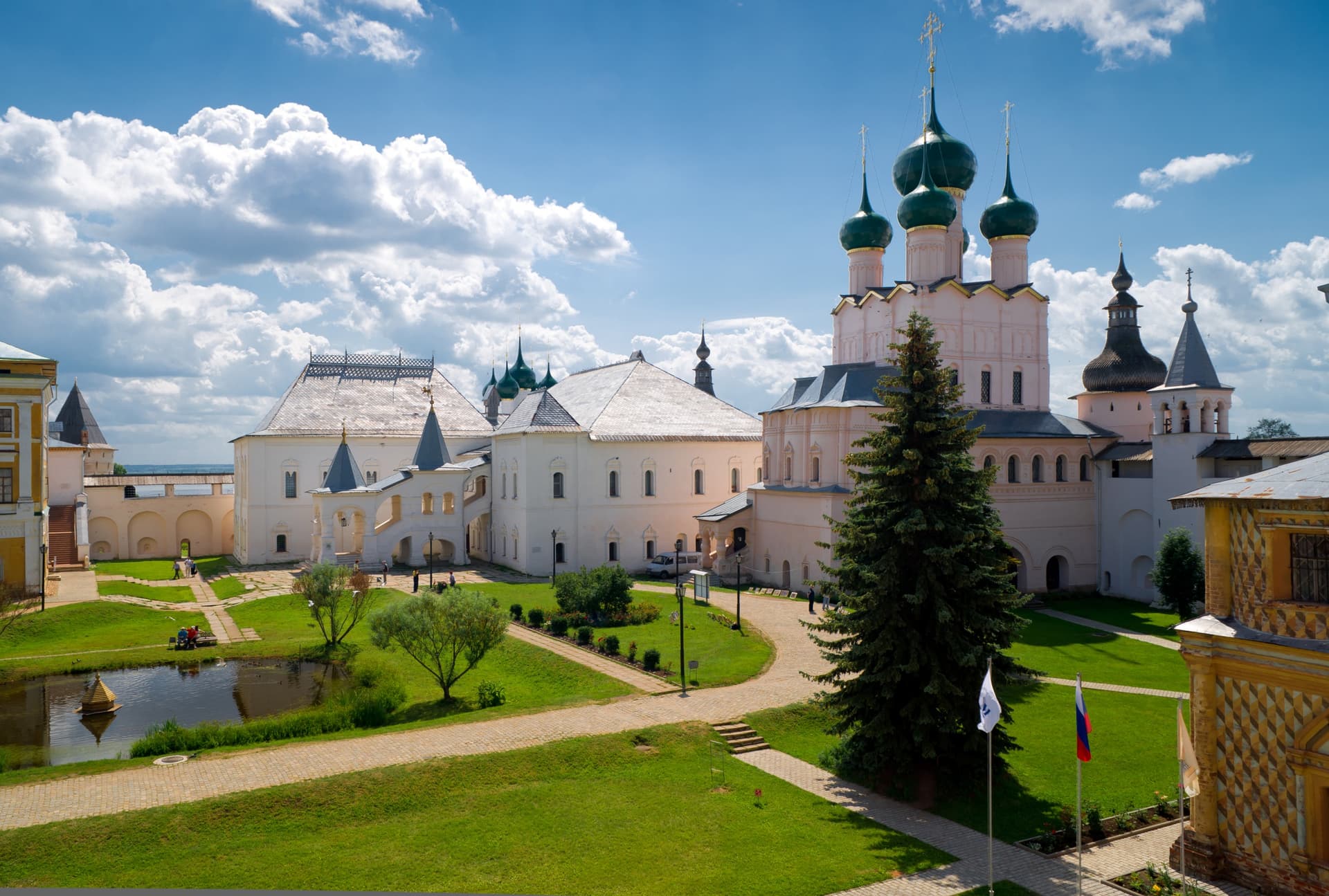
Rostov, one of Russia's oldest cities, is home to a Kremlin at its center. This fortified quarter ranks among the most beautiful and best-preserved in the country. The citadel originally served as the residence of the Metropolitan of the Rostov and Yaroslavl eparchy.
A beautiful destination, the city of Rostov Veliki sits on the shores of Lake Nero, a refreshing haven after the sprawling metropolis of Moscow. Nature enthusiasts will find plenty to enjoy in Rostov. You can take leisurely walks or picnics, boat excursions, fishing, and various other activities.
History
The Rostov region, once inhabited by the Finnic peoples, was later colonized by the Slavs. During this period, the emperor, accompanied by Greek bishops, including Fyodor, traveled to Rostov with the intention of Christianizing the Finnic populations.
Boris, the son of Vladimir the Great, was entrusted with the task of governing the city and principality. But after his death in 1015, Rostov remained without a prince and two bishops were expelled by the inhabitants.
In 1093, Vladimir II, or Vladimir Monomakh, moved the capital of the Vladimir-Suzdal principality from Rostov to Suzdal. The city of Rostov then became a center of enamel work.
Between 1670 and 1683, the Rostov Kremlin was erected under the orders of Metropolitan Jonah Sysoevitch using white stone from the city. It stands as a fine example of Russian religious, civil, and military architecture, with substantial fortifications surrounding the complex. During the time of Jonah Sysoevitch, Rostov became a major religious and commercial center.
Today, the structures inherited from this era are magnificent. Still intact, the churches, monasteries and other buildings of the city invite visitors to immerse themselves in the age of the Tsars.
Rostov Today
Rostov is perhaps the most charming city of the Russian Golden Ring. This ancient city has managed to preserve a unique atmosphere of medieval Russia through the historic monuments, fortresses, churches, and cloisters it houses. These legacies of the past make the city an unmissable open-air museum for history and culture enthusiasts.
Set on the shores of Lake Nero, Rostov is also a destination worth prioritizing for enjoying nature. This large basin allows travelers to admire landscapes and pursue a variety of activities: cruises, fishing…
Today quite touristy, the city hosts numerous accommodations ranging from modest to luxury establishments.
What to Do in Rostov?
- Stroll through downtown Rostov: this area is not large and fairly quiet. It's the ideal place to spend a vacation away from Moscow's bustle. There's a timeless atmosphere here, between buildings crumbling into ruin and others freshly renovated.
- Still in the downtown area, step into one of the typical restaurants to taste local cuisine. There are also small shops where you can find typical items and handcrafted products.
- Continue your walk to see remnants of the Communist era: the Lenin statue… The street names are equally evocative of this period: Leninskaya, Karl Marx Street, Kirov Street…
- Head toward Lake Nero to admire the small isbas, wooden houses, colorful and nestled in verdant surroundings.
- Before entering the Kremlin, you must first walk around its fortifications. It's truly like a fairy tale image.
- Visit the Rostov Kremlin, which has managed to preserve its authenticity. It is, of course, the main tourist attraction of Rostov Veliki.
- Once through the main gate of the Kremlin, you're faced with a green space from which you can admire the buildings. The Orthodox churches with their silver domes are magnificent.
- Visit these buildings. The Cathedral of the Dormition, one of the must-sees, stands in the free section of the Kremlin enclosure, beyond the Holy Gates. Its architecture evokes the cathedral of the same name in the Moscow Kremlin. Its interior is crumbling, but still displays fragments of its original frescoes.
- Visit the churches of the Kremlin: the Savior Church, St. John the Evangelist and the Resurrection Church. These are well-maintained monuments where you can still see paintings, frescoes, and original icons.
- Discover the city's museums: the enamel museum brings fame to Rostov throughout Russia.
- Climb the water tower for a clear view over the Kremlin, the city, and Lake Nero.
- Explore nature: the city sits on the shores of Lake Nero, an ideal spot for a leisurely walk. You can simply follow the shores of this basin to admire the landscapes or take a cruise on the lake, which is very calm.
- In winter, the lake transforms into a vast skating rink. You can also try ice fishing.
- Continue your outing to the Monastery of St. James. You can see from afar its magnificent domes in various colors. Entry to this place of rest and meditation is free. This monastery was founded in the 14th century, but the other buildings present date from the 18th and early 19th centuries.
The city of Rostov is located approximately 190 kilometers northeast of Moscow. There are several transport options available for tourists wishing to reach the city.
By train: from Moscow's Yaroslavl Station, the express train covers the 200-kilometer distance in 2 hours 40 minutes. You can purchase tickets on the official website of Russian Railways. Every day, the first train departs around 7:30 AM, while the last one leaves at 2:45 PM. The stop is Rostov-Yaroslavskii Station. From the station, take a taxi or marshrutka to reach the historic complex.
By car: you can also reach Rostov Veliki by car. This is the fastest way to get to this museum city.
Even though Rostov is small, you'll find buses and taxis to take you to distant sites. The Kremlin, of course, is best explored on foot.
Want to discover this destination?
Our local advisors design your tailor-made trip.